

Voting: voter registration: individuals with disabilities and conservatees.
Summary
(1) Existing law requires that a person be registered as a voter by affidavit of registration and provides that a properly executed registration is deemed effective if it is received on or before the 15th day before an election to be held in the registrant's precinct. Existing law requires the affidavit of registration to show certain information of the affiant and requires the affiant to certify the content of the affidavit as to its truth and correctness, under penalty of perjury, with the signature of the affiant's name and the date of signing, except that if the affiant is unable to write, a mark or cross must be used to sign the affidavit. This bill would authorize an individual with a disability who is otherwise qualified to vote to complete an affidavit of registration with reasonable accommodations as needed. The bill would also authorize an individual with a disability who is under a conservatorship to be registered to vote if he or she has not been disqualified from voting. The bill would authorize an affiant who is an individual with a disability to complete the affidavit of registration with reasonable accommodations as needed. The bill would find and declare that by explicitly adding the concept of reasonable accommodation to state laws on voter qualification, the bill brings the state into compliance with federal standards. (2) Existing law deems a person mentally incompetent, and therefore disqualified from voting if, during certain proceedings including conservatorship proceedings, the court finds that the person is incapable of completing an affidavit of voter registration. Existing law, in certain conservatorship proceedings heard by a jury, requires the jury to unanimously find that the person is incapable of completing an affidavit of registration before the person is disqualified from voting. If an order establishing a conservatorship is made and in connection with the order it is found that the person is incapable of completing an affidavit of voter registration, existing law requires the court to forward the order and determination to the county elections official of the person's county of residence. Existing law, during the yearly or biennial review of certain conservatorships, requires the court investigator to review the person's capability of completing an affidavit of voter registration and, if the conservatee's capability of completing the affidavit of voter registration changes, requires the court investigator to inform the court and the court to hold a hearing regarding that capability. This bill would instead require that a person be presumed competent to vote, regardless of his or her conservatorship status, and would require that a person be deemed mentally incompetent, and therefore disqualified from voting if, during certain proceedings including conservatorship proceedings, the court finds by clear and convincing evidence that the person cannot communicate, with or without reasonable accommodations, a desire to participate in the voting process. In certain conservatorship proceedings heard by a jury, the bill would require the jury to instead unanimously find by clear and convincing evidence that the person cannot communicate, with or without reasonable accommodations, a desire to participate in the voting process before the person is disqualified from voting. The bill would also require an order establishing a conservatorship to instead find by clear and convincing evidence that the person cannot communicate, with or without reasonable accommodations, a desire to participate in the voting process before the court is required to forward the order and determination to the county elections official of the person's county of residence. The bill, during the yearly or biennial review of certain conservatorships, would instead require the court investigator to review the person's capability of communicating, with or without reasonable accommodations, a desire to participate in the voting process, and if the conservatee's capability of communicating that desire has changed, would require the court investigator to inform the court and the court to hold a hearing regarding that capability. (3) Existing law regulates the terms and conditions of conservatorships and requires a court clerk, if a conservatorship petition is filed by a person other than the proposed conservatee, to issue a citation to the proposed conservatee that includes, among other things, a statement that the proposed conservatee may be disqualified from voting if he or she is incapable of completing an affidavit of voter registration, and a statement that the proposed conservatee will not be disqualified from voting if he or she would need to complete the affidavit by signing it with a mark, cross, or signature stamp, or with the assistance of another person. Existing law requires a court hearing on a petition for the appointment of a conservator and requires a court investigator, before the court hearing and as part of periodic review after the appointment of the conservator to, among other things, determine if the proposed conservatee is incapable of completing an affidavit of voter registration, as specified, and may be disqualified from voting. Existing law provides that a conservatee is not disqualified from voting on the basis that he or she would need to complete the affidavit by signing it with a mark, cross, or signature stamp, or with the assistance of another person. This bill would require the court clerk's citation to the proposed conservatee, as described above, to instead include a statement that the proposed conservatee may be disqualified from voting if he or she is incapable of communicating, with or without reasonable accommodations, a desire to participate in the voting process, and a statement that the proposed conservatee will not be disqualified from voting if he or she would also need to complete the affidavit with reasonable accommodations. The bill would require the court investigator, before the court hearing and as part of periodic reviews after the appointment of a conservator to, among other things, instead determine whether the proposed conservatee is incapable of communicating, with or without reasonable accommodations, a desire to participate in the voting process, and may be disqualified from voting. The bill would also provide that a conservatee is not disqualified from voting on the basis that he or she would need to complete the affidavit with reasonable accommodations. By requiring local officials to perform additional duties, the bill would impose a state-mandated local program. (4) This bill would also make technical, nonsubstantive changes to these provisions. (5) This bill would incorporate additional changes to Section 2102 of the Elections Code, proposed by AB 1461, that would become operative only if AB 1461 and this bill are both chaptered and become effective on or before January 1, 2016, and this bill is chaptered last. The bill would also incorporate additional changes to Sections 2150, 2208, and 2209 of the Elections Code, proposed by AB 1020, that would become operative only if AB 1020 and this bill are both chaptered and become effective on or before January 1, 2016, and this bill is chaptered last. (6) The California Constitution requires the state to reimburse local agencies and school districts for certain costs mandated by the state. Statutory provisions establish procedures for making that reimbursement. This bill would provide that with regard to certain mandates no reimbursement is required by this act for a specified reason. With regard to any other mandates, this bill would provide that, if the Commission on State Mandates determines that the bill contains costs so mandated by the state, reimbursement for those costs shall be made pursuant to the statutory provisions noted above.
Bill status
signed
all 5 stages cleared
Introduction
Feb 2015
Committee Review
Aug 2015
Senate Passage
May 2015
Assembly Passage
Aug 2015
Signed into Law
Oct 2015
Introduced Feb 26, 2015
Signed Oct 10, 2015
Floor votes · Senate May 22, 2015 · Assembly Aug 27, 2015
How they voted
25–7
Passed · 2 other
Total votes 34
May 22, 2015
D
Democratic23
100% Yea
R
Republican11
63% Nay
Vote distribution
All Yea
All Nay
Mixed
No data
Full legislative history
Actions timeline
Total actions
32
Key actions
6
Committee
12
Amendments
1
Oct 10, 2015
Signed into law
Approved by the Governor.
legislature
Aug 31, 2015
Upper · Passed
Assembly amendments concurred in. (Ayes 27. Noes 11. Page 2272.) Ordered to engrossing and enrolling.
upper
Aug 27, 2015
Assembly · Passed
Assembly Vote: pass (59-10-6)
assembly
Aug 27, 2015
Introduced
In Senate. Concurrence in Assembly amendments pending.
upper
Jul 15, 2015
Lower · Passed
From committee: Do pass. (Ayes 11. Noes 4.) (July 15).
lower
Jul 7, 2015
Committee
From committee: Do pass and re-refer to Com. on APPR. (Ayes 8. Noes 1.) (July 7). Re-referred to Com. on APPR.
lower
Jul 1, 2015
Committee
From committee: Do pass and re-refer to Com. on JUD. (Ayes 6. Noes 0.) (July 1). Re-referred to Com. on JUD.
lower
Jun 18, 2015
Committee
From committee with author's amendments. Read second time and amended. Re-referred to Com. on E. & R.
lower
Jun 11, 2015
Committee
Referred to Coms. on E. & R. and JUD.
lower
May 22, 2015
Senate · Passed
Senate Vote: pass (25-7-2)
senate
May 11, 2015
Upper · Passed
From committee: Be ordered to second reading pursuant to Senate Rule 28.8.
upper
Apr 29, 2015
Committee
From committee: Do pass and re-refer to Com. on APPR. (Ayes 5. Noes 1. Page 819.) (April 28). Re-referred to Com. on APPR.
upper
Apr 22, 2015
Committee
Re-referred to Com. on JUD.
upper
Apr 22, 2015
Committee
From committee: Do pass and re-refer to Com. on RLS. (Ayes 4. Noes 1. Page 723.) (April 21). Re-referred to Com. on RLS.
upper
Apr 6, 2015
Committee
From committee with author's amendments. Read second time and amended. Re-referred to Com. on E. & C.A.
upper
Mar 12, 2015
Committee
Referred to Com. on E. & C.A.
upper
Feb 26, 2015
Introduced
Introduced. Read first time. To Com. on RLS. for assignment. To print.
upper
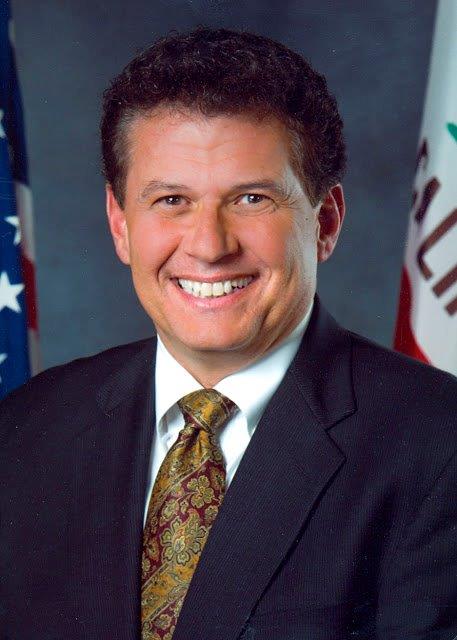
1 primary · 1 co-sponsor
Sponsors

Ask Maddy
·
AI policy assistant
Ask Maddy about SB 589
Scope: CA
Hi! I can help you understand SB 589. What would you like to know?
Try one of these
i
Maddy answers using official bill text and legislative records. Always verify before sharing.
Sources cited inline