

Enhancements: concentrated cannabis.
Summary
Existing law makes it a felony for a person to manufacture, compound, convert, produce, derive, process, or prepare a controlled substance, and to possess specified chemicals with the intent to manufacture a controlled substance. Under existing law, a person convicted of either of these crimes, or an attempt to commit either crime, relating to methamphetamine or phencyclidine, when the commission or attempted commission of the crime occurs in a structure where a child under 16 years of age is present, shall, in addition and consecutive to the punishment prescribed for the felony of which he or she has been convicted, be punished by an additional term of 2 years in the state prison. If the child under 16 years of age suffers great bodily injury, the person shall, in addition and consecutive to the punishment prescribed for the felony of which he or she has been convicted, be punished by an additional term of 5 years in the state prison. If the enhancement is not pled and proved, the fact that a person under 16 years of age resided in a structure where a methamphetamine was manufactured, compounded, converted, produced, derived, processed, or prepared is considered a factor in aggravation at sentencing. This bill would authorize the enhanced sentences for the commission or attempted commission of one of the above crimes, as those crimes relate to concentrated cannabis, in a structure where a child under 16 years of age is present or where a child under 16 years of age suffers great bodily harm. The bill would also require the use of the fact that a child under 16 years of age resided in a structure used for the manufacture, compounding, conversion, production, derivation, processing, or preparing of concentrated cannabis as a factor in aggravation at sentencing if the enhancement is not proved and pled. The bill would define concentrated cannabis for its purposes. By increasing the penalty for an existing crime, this bill would impose a state-mandated local program. The California Constitution requires the state to reimburse local agencies and school districts for certain costs mandated by the state. Statutory provisions establish procedures for making that reimbursement. This bill would provide that no reimbursement is required by this act for a specified reason.
Bill status
in committee
1 of 4 stages cleared
Introduction
Feb 2015
Committee Review
Floor Vote
Governor
Introduced Feb 23, 2015
Last action Feb 1, 2016
Floor votes
How they voted
No floor votes recorded yet.
Full legislative history
Actions timeline
Total actions
13
Key actions
3
Committee
5
May 28, 2015
Upper · Passed
May 28 hearing: Held in committee and under submission.
upper
Apr 27, 2015
Committee
Read second time and amended. Re-referred to Com. on APPR.
upper
Apr 23, 2015
Upper · Passed
From committee: Do pass as amended and re-refer to Com. on APPR. (Ayes 6. Noes 0. Page 595.) (April 14).
upper
Apr 6, 2015
Upper · Passed
April 7 hearing postponed by committee.
upper
Mar 5, 2015
Committee
Referred to Com. on PUB. S.
upper
Feb 23, 2015
Introduced
Introduced. Read first time. To Com. on RLS. for assignment. To print.
upper
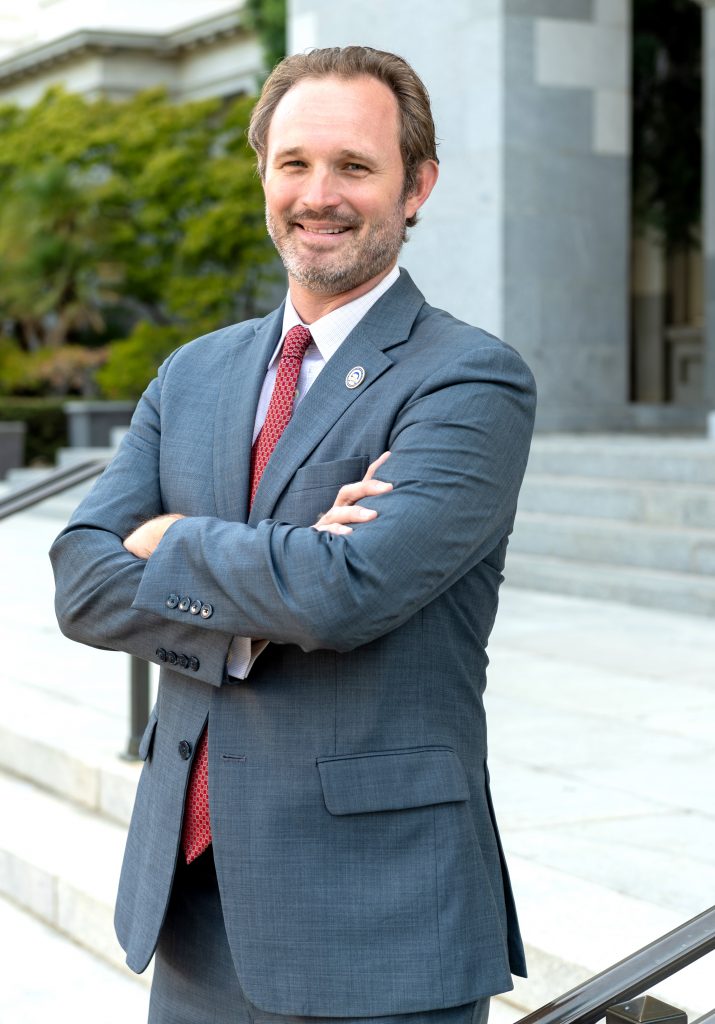
1 primary · 5 co-sponsors
Sponsors



Ask Maddy
·
AI policy assistant
Ask Maddy about SB 305
Scope: CA
Hi! I can help you understand SB 305. What would you like to know?
Try one of these
i
Maddy answers using official bill text and legislative records. Always verify before sharing.
Sources cited inline