

Protection of subsurface installations.
Summary
Existing law requires every operator of a subsurface installation, except the Department of Transportation, to become a member of, participate in, and share in the costs of, a regional notification center. Existing law requires any person who plans to conduct any excavation to contact the appropriate regional notification center before commencing that excavation, as specified. Existing law defines a subsurface installation as any underground pipeline, conduit, duct, wire, or other structure. Existing law requires an operator of a subsurface installation, who receives notification of proposed excavation work, within 2 working days of that notification, excluding weekends and holidays, to mark the approximate location and number of subsurface installations that may be affected by the excavation or to advise that no subsurface installations operated by him or her would be affected. Existing law requires an operator of a subsurface installation that has failed to comply with these provisions to be liable to the excavator for damages, costs, and expenses. This bill, the Dig Safe Act of 2015, would declare the need to clarify and revise these provisions. The bill would define and redefine various terms relating to a regional notification center. The bill would expand the definition of a subsurface installation to include an underground structure or submerged duct, pipeline, or structure, except as specified. The bill would require an excavator planning to conduct an excavation to delineate the area to be excavated before notifying the appropriate regional notification center of the planned excavation, as provided. The bill would require an operator, before the legal start date and time of the excavation, to locate and field mark, within the area delineated for excavation, its subsurface installations. The bill would require an operator to maintain and preserve all plans and records for any subsurface installation owned by that operator as that information becomes known, as specified. This bill would prohibit an excavator that damages a subsurface installation due to an inaccurate field mark, as defined, by an operator from being liable for damages, replacement costs, or other expenses arising from damage to the subsurface installation, provided that the excavator complied with the provisions described above. The bill would also authorize, in any action for reimbursement or indemnification for a claim arising from damage to a subsurface installation in which a court finds that the excavator complied with those provisions, the excavator to be awarded reasonable attorney's fees and expenses. The bill would delete the existing exemptions pertaining to an owner of real property and would instead exempt an owner of residential real property who, as part of improving his or her principal residence, is performing, or is having performed, an excavation using hand tools that does not require a permit, as specified. The bill would also require the Public Utilities Commission and the Office of the State Fire Marshal to enforce the requirement to locate and field mark subsurface installations and lines against operators of natural gas and electric underground infrastructure and hazardous liquid pipelines, unless these operators are municipal utilities. This bill, if specified funds are appropriated by the Legislature and authority to hire sufficient staff is granted to the Contractors' State License Board, would create the California Underground Facilities Safe Excavation Advisory Committee under, and assisted by the staff of, the Contractors' State License Board, in the Department of Consumer Affairs. The bill would require the committee to coordinate education and outreach activities, develop standards, and investigate violations of the provisions described above, as specified. The bill would also require the advisory committee, by December 31, 2017, and in consultation with the Department of Food and Agriculture, to make recommendations, informed by a specified study, that addresses the long-term treatment of agricultural activities in relation to subsurface excavation, and whether those provisions are appropriate or could be modified in ways to promote participation in safe agricultural practices around high priority subsurface installations, as specified. The advisory committee would be composed of 9 members who would serve 2-year terms, and 2 nonvoting ex officio members who may be invited by the appointed members of the committee. The bill would authorize the advisory committee, commencing on January 1, 2017, to use compliance audits in furthering the purposes of these provisions. The bill would require the advisory committee to conduct an annual meeting on or before February 1, 2017, and each year thereafter, to report to the Governor and the Legislature on its activities and any recommendations. The California Building Standards Law requires state agencies that adopt or propose adoption of any building standard to submit the building standard to the California Building Standards Commission for approval and adoption. Under existing law, if a state agency does not have authority to adopt building standards applicable to state buildings, the commission is required to adopt specific building standards, as prescribed. Existing law requires the commission to publish, or cause to be published, editions of the California Building Standards Code in its entirety once every 3 years. Existing law requires the Department of Housing and Community Development to propose the adoption, amendment, or repeal of building standards to the commission and to adopt, amend, and repeal other rules and regulations for the protection of the public health, safety, and general welfare of the occupants and the public involving buildings and building construction. This bill would require the department and the commission to develop, and propose for adoption by the commission, building standards requiring all new residential and nonresidential nonpressurized building sewers that connect from building structures to the public right-of-way or applicable utility easement to include the installation of tracer wire or tape, as specified. The bill would authorize the department and the commission to expend funds from the existing Building Standards Administration Special Revolving Fund for this purpose, upon appropriation. The bill would create the Safe Energy Infrastructure and Excavation Fund in the State Treasury and would provide that moneys deposited into the fund are to be used to cover the administrative expenses of the advisory committee, upon appropriation by the Legislature. The bill would authorize the Public Utilities Commission to use excess moneys in the fund for specified purposes relating to the safety of underground utilities, upon appropriation by the Legislature. The Natural Gas Pipeline Safety Act of 2011, within the Public Utilities Act, designates the Public Utilities Commission as the state authority responsible for regulating and enforcing intrastate gas pipeline transportation and pipeline facilities pursuant to federal law, including the development, submission, and administration of a state pipeline safety program certification for natural gas. Existing federal law requires each operator of a buried gas pipeline to carry out a program to prevent damage to that pipeline from excavation activities, as specified. The bill would require the Public Utilities Commission, no later than February 1, 2019, to report to the Legislature and to the California Underground Facilities Safe Excavation Advisory Committee an analysis of excavation damage to commission-regulated pipeline facilities. The bill would also require each gas corporation, as part of its damage prevention program, to collect certain information until January 1, 2020, to inform its outreach activities, and to report this information annually until January 1, 2020, to the Public Utilities Commission and the California Underground Facilities Safe Excavation Advisory Committee, as specified. The bill would also require each gas corporation to estimate Californians' use of regional notification centers, as specified, and to provide this estimate to the commission and the advisory committee on or before July 1, 2016. Under existing law, a violation of the Public Utilities Act or any order, decision, rule, direction, demand, or requirement of the commission is a crime. Because the requirements described above are within the act, a violation of these requirements would impose a state-mandated local program by creating a new crime. Existing law requires the Public Utilities Commission to develop and implement a safety enforcement program that is applicable to gas corporations and electrical corporations and that includes procedures for monitoring, data tracking and analysis, and investigations, as well as issuance of citations by commission staff, under the direction of the executive director of the commission, for correction and punishment of safety violations. That law requires the commission to develop and implement an appeals process to govern issuance and appeal of citations, or resolution of corrective action orders. That law requires the commission to implement the safety enforcement program for gas safety by July 1, 2014, and for electrical safety by January 1, 2015. This bill would require that moneys collected as a result of the issuance of citations to gas corporations and electrical corporations pursuant to the above-described law be deposited in the Safe Energy Infrastructure and Excavation Fund. The bill would make other conforming and clarifying changes. The California Constitution requires the state to reimburse local agencies and school districts for certain costs mandated by the state. Statutory provisions establish procedures for making that reimbursement. This bill would provide that no reimbursement is required by this act for a specified reason.
Bill status
vetoed
4 of 5 stages cleared
Introduction
Jan 2015
Committee Review
Sep 2015
Senate Passage
Jun 2015
Assembly Passage
Sep 2015
Vetoed
Apr 2016
Introduced Jan 14, 2015
Vetoed Apr 25, 2016
Floor votes · Senate Jun 2, 2015 · Assembly Sep 8, 2015
How they voted
22–10
Passed · 3 other
Total votes 35
Jun 2, 2015
D
Democratic24
91% Yea
R
Republican11
81% Nay
Vote distribution
All Yea
All Nay
Mixed
No data
Full legislative history
Actions timeline
Total actions
45
Key actions
9
Committee
18
Amendments
3
Apr 25, 2016
Vetoed
Last day to consider Governors veto pursuant to Joint Rule 58.5.
upper
Oct 10, 2015
Vetoed
In Senate. Consideration of Governor's veto pending.
upper
Oct 10, 2015
Vetoed
Vetoed by the Governor.
upper
Sep 10, 2015
Upper · Passed
Assembly amendments concurred in. (Ayes 37. Noes 3. Page 2660.) Ordered to engrossing and enrolling.
upper
Sep 8, 2015
Assembly · Passed
Assembly Vote: pass (70-2-3)
assembly
Sep 8, 2015
Introduced
In Senate. Concurrence in Assembly amendments pending.
upper
Aug 31, 2015
Lower · Passed
Read second time and amended. Ordered to second reading.
lower
Aug 28, 2015
Lower · Passed
From committee: Do pass as amended. (Ayes 12. Noes 3.) (August 27).
lower
Aug 17, 2015
Committee
From committee with author's amendments. Read second time and amended. Re-referred to Com. on APPR.
lower
Jul 14, 2015
Committee
From committee: Do pass and re-refer to Com. on APPR. (Ayes 8. Noes 1.) (July 14). Re-referred to Com. on APPR.
lower
Jul 7, 2015
Committee
From committee: Do pass and re-refer to Com. on JUD. (Ayes 13. Noes 0.) (July 6). Re-referred to Com. on JUD.
lower
Jul 1, 2015
Committee
From committee with author's amendments. Read second time and amended. Re-referred to Com. on U. & C.
lower
Jun 16, 2015
Committee
From committee with author's amendments. Read second time and amended. Re-referred to Com. on U. & C.
lower
Jun 11, 2015
Committee
Referred to Com. on U. & C.
lower
Jun 2, 2015
Senate · Passed
Senate Vote: pass (22-10-3)
senate
Jun 1, 2015
Upper · Passed
Read second time and amended. Ordered to third reading.
upper
May 28, 2015
Upper · Passed
From committee: Do pass as amended. (Ayes 5. Noes 2. Page 1147.) (May 28).
upper
May 18, 2015
Upper · Passed
May 18 hearing postponed by committee.
upper
May 12, 2015
Committee
From committee with author's amendments. Read second time and amended. Re-referred to Com. on APPR.
upper
May 5, 2015
Committee
Read second time and amended. Re-referred to Com. on APPR.
upper
May 4, 2015
Upper · Passed
From committee: Do pass as amended and re-refer to Com. on APPR. (Ayes 5. Noes 1. Page 817.) (April 28).
upper
Apr 20, 2015
Committee
From committee with author's amendments. Read second time and amended. Re-referred to Com. on JUD.
upper
Apr 14, 2015
Committee
From committee: Do pass and re-refer to Com. on JUD. (Ayes 9. Noes 2. Page 591.) (April 14). Re-referred to Com. on JUD.
upper
Apr 6, 2015
Committee
From committee: Do pass and re-refer to Com. on G.O. (Ayes 8. Noes 0. Page 506.) (April 6). Re-referred to Com. on G.O.
upper
Apr 6, 2015
Committee
From committee with author's amendments. Read second time and amended. Re-referred to Com. on B., P. & E.D.
upper
Feb 5, 2015
Committee
Referred to Coms. on B., P. & E.D., G.O., and JUD.
upper
Jan 14, 2015
Introduced
Introduced. Read first time. To Com. on RLS. for assignment. To print.
upper
1 primary · 0 co-sponsors
Sponsors
Role
Legislator
Party
State
District
P
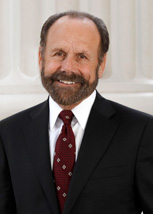
Jerry Hill
DDemocratic
Ask Maddy
·
AI policy assistant
Ask Maddy about SB 119
Scope: CA
Hi! I can help you understand SB 119. What would you like to know?
Try one of these
i
Maddy answers using official bill text and legislative records. Always verify before sharing.
Sources cited inline