

Conditions of employment: wage differential: race or ethnicity.
Summary
Existing law prohibits an employer from paying any of its employees at wage rates less than the rates paid to employees of the opposite sex for substantially similar work, when viewed as a composite of skill, effort, and responsibility, and performed under similar working conditions, unless the employer demonstrates that specific, reasonably applied factors account for the entire wage differential. Existing law authorizes an employee paid lesser wages in violation of this prohibition to file a complaint with the Division of Labor Standards Enforcement, and authorizes the employee, the division, or the Department of Industrial Relations to commence a civil action for the wages the employee was deprived of because of the violation, interest on those wages, and liquidated damages. Under existing law, an employer or other person who violates or causes a violation of that prohibition, or who reduces the wages of any employee in order to comply with that prohibition, is guilty of a misdemeanor. This bill would also prohibit an employer from paying any of its employees at wage rates less than the rates paid to employees of another race or ethnicity for substantially similar work, as specified above. By expanding the scope of a crime, this bill would impose a state-mandated local program. This bill would incorporate additional changes in Section 1197.5 of the Labor Code proposed by AB 1676 that would become operative only if AB 1676 and this bill are both chaptered and become effective on or before January 1, 2017, and this bill is chaptered last. The California Constitution requires the state to reimburse local agencies and school districts for certain costs mandated by the state. Statutory provisions establish procedures for making that reimbursement. This bill would provide that no reimbursement is required by this act for a specified reason.
Bill status
signed
all 5 stages cleared
Introduction
Feb 2016
Committee Review
Aug 2016
Senate Passage
May 2016
Assembly Passage
Aug 2016
Signed into Law
Sep 2016
Introduced Feb 16, 2016
Signed Sep 30, 2016
Floor votes · Senate May 31, 2016 · Assembly Aug 23, 2016
How they voted
23–10
Passed
Total votes 33
May 31, 2016
D
Democratic23
100% Yea
R
Republican10
100% Nay
Vote distribution
All Yea
All Nay
Mixed
No data
Full legislative history
Actions timeline
Total actions
32
Key actions
6
Committee
8
Amendments
1
Sep 30, 2016
Signed into law
Approved by the Governor.
legislature
Aug 25, 2016
Upper · Passed
Assembly amendments concurred in. (Ayes 26. Noes 13. Page 5403.) Ordered to engrossing and enrolling.
upper
Aug 23, 2016
Assembly · Passed
Assembly Vote: pass (53-12-6)
assembly
Aug 23, 2016
Introduced
In Senate. Concurrence in Assembly amendments pending.
upper
Aug 12, 2016
Lower · Passed
From committee: Do pass. (Ayes 14. Noes 5.) (August 11).
lower
Jun 23, 2016
Committee
From committee: Do pass and re-refer to Com. on APPR. (Ayes 5. Noes 1.) (June 22). Re-referred to Com. on APPR.
lower
Jun 6, 2016
Committee
Referred to Com. on L. & E.
lower
May 31, 2016
Senate · Passed
Senate Vote: pass (23-10)
senate
May 27, 2016
Upper · Passed
From committee: Do pass. (Ayes 5. Noes 2. Page 4002.) (May 27).
upper
Apr 20, 2016
Committee
From committee with author's amendments. Read second time and amended. Re-referred to Com. on APPR.
upper
Apr 13, 2016
Committee
From committee: Do pass and re-refer to Com. on APPR. (Ayes 4. Noes 1. Page 3520.) (April 13). Re-referred to Com. on APPR.
upper
Feb 25, 2016
Committee
Referred to Com. on L. & I.R.
upper
Feb 16, 2016
Introduced
Introduced. Read first time. To Com. on RLS. for assignment. To print.
upper
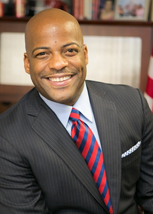
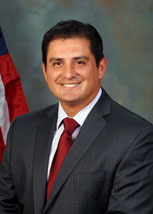
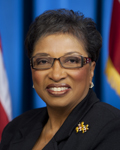
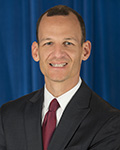
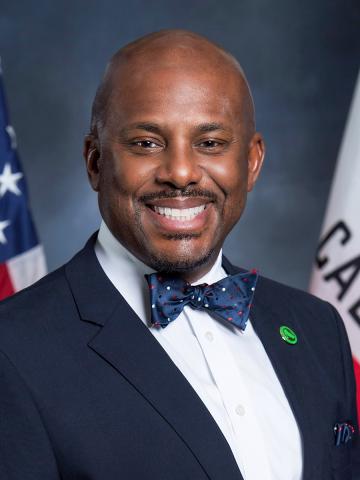
1 primary · 8 co-sponsors
Sponsors

Ask Maddy
·
AI policy assistant
Ask Maddy about SB 1063
Scope: CA
Hi! I can help you understand SB 1063. What would you like to know?
Try one of these
i
Maddy answers using official bill text and legislative records. Always verify before sharing.
Sources cited inline