

Law enforcement: racial profiling.
Summary
Existing law creates the Commission on Peace Officer Standards and Training and requires it to develop and disseminate guidelines and training for all law enforcement officers, as described. Existing law prohibits a peace officer from engaging in racial profiling and requires the training to prescribe patterns, practices, and protocols that prevent racial profiling, as defined. Existing law requires the Legislative Analyst's Office to conduct a study of the data that is voluntarily collected by jurisdictions that have instituted a program of data collection with regard to racial profiling. This bill would enact the Racial and Identity Profiling Act of 2015, which would, among other changes, revise the definition of racial profiling to instead refer to racial or identity profiling, and make a conforming change to the prohibition against peace officers engaging in that practice. The bill would require, beginning July 1, 2016, the Attorney General to establish the Racial and Identity Profiling Advisory Board (RIPA) to eliminate racial and identity profiling and improve diversity and racial and identity sensitivity in law enforcement. The bill would specify the composition of the board. The bill would require the board, among other duties, to investigate and analyze state and local law enforcement agencies' racial and identity profiling policies and practices across geographic areas in California, to annually make publicly available its findings and policy recommendations, to hold public meetings annually, as specified, and to issue the board's first annual report no later than January 1, 2018. The bill would require each state and local agency that employs peace officers to annually report to the Attorney General data on all stops, as defined, conducted by the agency's peace officers, and require that data to include specified information, including the time, date, and location of the stop, and the reason for the stop. The bill would require an agency that employs 1,000 or more peace officers to issue its first annual report by April 1, 2019. The bill would require an agency that employs 667 or more but less than 1,000 peace officers to issue its first annual report by April 1, 2020. The bill would require an agency that employs 334 or more but less than 667 peace officers to issue its first annual report by April 1, 2022. The bill would require an agency that employs one or more but less than 334 peace officers to issue its first annual report by April 1, 2023. By imposing a higher level of service on local entities that employ peace officers, the bill would impose a state-mandated local program. The California Constitution requires the state to reimburse local agencies and school districts for certain costs mandated by the state. Statutory provisions establish procedures for making that reimbursement. This bill would provide that, if the Commission on State Mandates determines that the bill contains costs mandated by the state, reimbursement for those costs shall be made pursuant to these statutory provisions.
Bill status
signed
all 5 stages cleared
Introduction
Feb 2015
Committee Review
Sep 2015
Assembly Passage
Jun 2015
Senate Passage
Sep 2015
Signed into Law
Oct 2015
Introduced Feb 26, 2015
Signed Oct 3, 2015
Floor votes · Senate Sep 9, 2015 · Assembly Jun 3, 2015
How they voted
24–10
Passed · 1 other
Total votes 35
Sep 9, 2015
D
Democratic24
95% Yea
R
Republican11
90% Nay
Vote distribution
All Yea
All Nay
Mixed
No data
Full legislative history
Actions timeline
Total actions
29
Key actions
8
Committee
12
Amendments
5
Oct 3, 2015
Signed into law
Approved by the Governor.
legislature
Sep 10, 2015
Lower · Passed
Senate amendments concurred in. To Engrossing and Enrolling. (Ayes 43. Noes 30. Page 3079.).
lower
Sep 9, 2015
Senate · Passed
Senate Vote: pass (24-10-1)
senate
Sep 9, 2015
Introduced
In Assembly. Concurrence in Senate amendments pending.
lower
Aug 31, 2015
Upper · Passed
Read second time and amended. Ordered to third reading.
upper
Aug 27, 2015
Introduced
From committee: Amend, and do pass as amended. (Ayes 5. Noes 2.) (August 27).
upper
Aug 17, 2015
Committee
In committee: Referred to APPR. suspense file.
upper
Jul 7, 2015
Committee
From committee: Do pass and re-refer to Com. on APPR. (Ayes 5. Noes 1.) (July 7). Re-referred to Com. on APPR.
upper
Jun 30, 2015
Committee
From committee chair, with author's amendments: Amend, and re-refer to committee. Read second time, amended, and re-referred to Com. on PUB. S.
upper
Jun 18, 2015
Committee
Referred to Com. on PUB. S.
upper
Jun 3, 2015
Assembly · Passed
Assembly Vote: pass (42-25-8)
assembly
Jun 1, 2015
Lower · Passed
Read second time and amended. Ordered returned to second reading.
lower
May 28, 2015
Introduced
From committee: Amend, and do pass as amended. (Ayes 12. Noes 5.) (May 28).
lower
May 13, 2015
Committee
In committee: Set, first hearing. Referred to APPR. suspense file.
lower
Apr 22, 2015
Committee
From committee: Do pass and re-refer to Com. on APPR. (Ayes 5. Noes 2.) (April 21). Re-referred to Com. on APPR.
lower
Apr 20, 2015
Committee
Re-referred to Com. on PUB. S.
lower
Apr 14, 2015
Lower · Passed
In committee: Set, first hearing. Hearing canceled at the request of author.
lower
Apr 6, 2015
Committee
Re-referred to Com. on PUB. S.
lower
Mar 26, 2015
Committee
Referred to Com. on PUB. S.
lower
Feb 27, 2015
Lower · Passed
From printer. May be heard in committee March 29.
lower
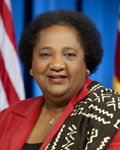
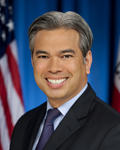
1 primary · 1 co-sponsor
Sponsors
Ask Maddy
·
AI policy assistant
Ask Maddy about AB 953
Scope: CA
Hi! I can help you understand AB 953. What would you like to know?
Try one of these
i
Maddy answers using official bill text and legislative records. Always verify before sharing.
Sources cited inline