

Electricity: distributed generation.
Summary
Under existing law, the Public Utilities Commission has regulatory authority over public utilities, including electrical corporations, as defined. Existing law authorizes the Public Utilities Commission to fix the rates and charges for every public utility, and requires that those rates and charges be just and reasonable. Existing law requires the Public Utilities Commission to require each electrical corporation under the operational control of the Independent System Operator as of January 1, 2001, to modify tariffs so that all customers that install new distributed energy resources, as defined, in accordance with specified criteria are served under rates, rules, and requirements identical to those of a customer within the same rate schedule that does not use distributed energy resources, and to withdraw any provisions in otherwise applicable tariffs that activate other tariffs, rates, or rules if a customer uses distributed energy resources. Existing law provides, notwithstanding these requirements, that a customer that installs new distributed energy resources not be exempted from (1) reasonable interconnection charges, (2) charges imposed pursuant to the Reliable Electric Service Investment Act, and (3) charges imposed to repay the Department of Water Resources for electricity procurement expenses incurred in response to the electricity crisis of 2000–01. Existing law requires the Public Utilities Commission, in establishing the rates applicable to customers that install new distributed energy resources, to create a firewall that segregates distribution cost recovery so that any net costs, taking into account the actual costs and benefits of distributed energy resources, proportional to each customer class, as determined by the Public Utilities Commission, resulting from the tariff modifications granted to members of each customer class may be recovered only from that class. This bill would, to the extent authorized by federal law, require the Public Utilities Commission, by July 1, 2016, to do both of the following for those electrical corporation customers that install clean distributed energy resources, as defined, after January 1, 2016: (1) require each electrical corporation to collect all applicable nonbypassable charges fixed, implemented, administered, or imposed by the Public Utilities Commission based only on the actual metered consumption of electricity delivered to the customer through the electrical corporation's transmission or distribution system, which charges are to be at the same rate per kilowatthour as paid by other customers that do not employ a clean distributed energy resource, and (2) calculate a reserve capacity for standby service, if applicable, based on the capacity needed by an electrical corporation to serve a customer's electrical demand during an outage of the clean distributed energy resource providing electric service for that customer. The bill would require each electrical corporation to identify the total amount of nonbypassable charges that would be collected each year from customers served by clean distributed energy resources installed after January 1, 2016, based on gross consumption without any adjustment for the generation of the clean distributed energy resources. The bill would require that this total amount be fully recovered from customers in the same customer class as those customers served by clean distributed energy resources installed after January 1, 2016, and would prohibit any amount from being shifted to any other customer class. The bill would require a customer served by a clean distributed energy resource, upon request, to provide relevant data to the Public Utilities Commission and the State Air Resources Board and the facility be subject to onsite inspection, to verify equipment operation and performance, including capacity, thermal output, and usage to verify criteria air pollutant and greenhouse gases emissions performance. The bill would require the State Energy Resources Conservation and Development Commission to report to the Legislature and the relevant policy committees of the Legislature on the impact of its provisions on specified issues by July 1, 2021. Under existing law, a violation of the Public Utilities Act or any order, decision, rule, direction, demand, or requirement of the commission is a crime. Because the provisions of this bill would be a part of the act and because a violation of an order or decision of the commission implementing its requirements would be a crime, the bill would impose a state-mandated local program by creating a new crime. The California Constitution requires the state to reimburse local agencies and school districts for certain costs mandated by the state. Statutory provisions establish procedures for making that reimbursement. This bill would provide that no reimbursement is required by this act for a specified reason.
Bill status
failed
1 of 4 stages cleared
Introduction
Feb 2015
Committee Review
Floor Vote
Governor
Introduced Feb 25, 2015
Last action Feb 1, 2016
Floor votes
How they voted
No floor votes recorded yet.
Full legislative history
Actions timeline
Total actions
19
Key actions
4
Committee
9
Amendments
4
May 28, 2015
Lower · Passed
In committee: Held under submission.
lower
May 27, 2015
Committee
In committee: Set, first hearing. Referred to APPR. suspense file.
lower
May 6, 2015
Committee
Re-referred to Com. on APPR.
lower
May 5, 2015
Lower · Passed
Read second time and amended.
lower
May 4, 2015
Introduced
From committee: Amend, and do pass as amended and re-refer to Com. on APPR. (Ayes 8. Noes 1.) (April 27).
lower
Apr 20, 2015
Committee
Re-referred to Com. on NAT. RES.
lower
Apr 16, 2015
Committee
Re-referred to Com. on NAT. RES. pursuant to Assembly Rule 96.
lower
Apr 16, 2015
Lower · Passed
Read second time and amended.
lower
Apr 15, 2015
Introduced
From committee: Amend, and do pass as amended and re-refer to Com. on APPR. (Ayes 10. Noes 4.) (April 13).
lower
Apr 7, 2015
Committee
Re-referred to Com. on U. & C.
lower
Mar 26, 2015
Committee
Re-referred to Com. on U. & C.
lower
Mar 9, 2015
Committee
Referred to Com. on U. & C.
lower
Feb 26, 2015
Lower · Passed
From printer. May be heard in committee March 28.
lower
1 primary · 0 co-sponsors
Sponsors
Role
Legislator
Party
State
District
P
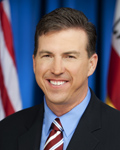
Kevin Mullin
DDemocratic
Ask Maddy
·
AI policy assistant
Ask Maddy about AB 674
Scope: CA
Hi! I can help you understand AB 674. What would you like to know?
Try one of these
i
Maddy answers using official bill text and legislative records. Always verify before sharing.
Sources cited inline