

Medical cannabis.
Summary
(1) Existing law, the Compassionate Use Act of 1996, an initiative measure enacted by the approval of Proposition 215 at the November 6, 1996, statewide general election, authorizes the use of marijuana for medical purposes. Existing law enacted by the Legislature requires the establishment of a program for the issuance of identification cards to qualified patients so that they may lawfully use marijuana for medical purposes, and requires the establishment of guidelines for the lawful cultivation of marijuana grown for medical use. Existing law provides for the licensure of various professions by the Department of Consumer Affairs. Existing law, the Sherman Food, Drug, and Cosmetic Law, provides for the regulation of food, drugs, devices, and cosmetics, as specified. A violation of that law is a crime. This bill would enact the Medical Cannabis Regulation and Control Act and would establish within the office of the Governor, the Governor's Office of Marijuana Regulation to coordinate and provide oversight of the licensing and regulation of various commercial cannabis activities, as defined. The bill would establish the Division of Medical Cannabis Regulation, which is established within the State Board of Equalization, for the licensure and regulation of medical cannabis dispensaries and transporters. The bill would establish the Division of Medical Cannabis Manufacturing and Testing within the State Department of Public Health for the licensing and regulation of medical cannabis manufacturers and certified testing laboratories. The bill would also require the Division of Medical Cannabis Manufacturing and Testing to set specified standards for edible cannabis products. The bill would also establish the Division of Medical Cannabis Cultivation within the Department of Food and Agriculture for the licensure and regulation of medical cannabis cultivators. The bill would set forth the duties of these various divisions. The bill would require the office, by March 1, 2016, to convene a task force to advise the office on the development of standards for the regulation of medical cannabis. This bill would provide for the enforcement of the provisions of the act and of local ordinances relating to medical cannabis by the state and local governments and would require the office to develop an enforcement framework that clarifies the enforcement roles of the state and local governments. The bill would provide that the director of the office and other prescribed persons employed by licensing and law enforcement authorities are peace officers for purposes of enforcing the provisions of this act. The bill would specify that it does not supersede the provisions of Measure D, approved by the voters of the City of Los Angeles on the May 21, 2013, ballot. This bill would require, before a business granted a state license commences operation, that the business also obtain a license or permit from the local jurisdiction and would authorize the local jurisdiction to regulate commercial cannabis activity in specified ways. The bill would provide for provisional licensure to engage in commercial cannabis activity, as specified, until the state license application is either granted or denied or until July 1, 2017. This bill would, by January 1, 2017, require the Division of Labor Standards and Enforcement to develop a certification program for cannabis employees. The bill would require, by January 1, 2019, that all persons who perform work as cannabis employees be certified or participating in an apprenticeship program, as provided. This bill would establish the Medical Cannabis Regulation Fund and various accounts within that fund for the collection of fines and fees imposed on the licensees conducting commercial cannabis activities. (2) Existing law establishes the Division of Apprenticeship Standards, which audits and regulates apprenticeship programs for various trades, including electricians. This bill would require the division to investigate, approve, or reject applications for apprenticeship employees of a licensed cultivation site or a licensed dispensing facility, as defined. (3) Existing law, the Medical Practice Act, provides for the licensure and regulation of physicians and surgeons by the Medical Board of California. Existing law requires the board to prioritize investigations and prosecutions of physicians and surgeons representing the greatest threat of harm, as specified. Existing law identifies the cases that are to be given priority, which include cases of repeated acts of excessively prescribing, furnishing, or administering controlled substances without a good faith prior examination of the patient. Existing law sets forth the conduct that would constitute unprofessional conduct for a physician and surgeon, including, but not limited to, prescribing certain drugs without an appropriate examination or medical indication. Existing law provides that a violation of the Medical Practice Act is a crime. This bill would require the board to consult with the Center for Medicinal Cannabis Research on developing and adopting medical guidelines for the appropriate administration and use of marijuana. The bill would also make it a misdemeanor for a physician and surgeon who recommends marijuana to a patient for a medical purpose to accept, solicit, or offer any remuneration from or to a licensed dispensing facility in which the physician and surgeon or his or her immediate family has a financial interest. By creating a new crime, the bill would impose a state-mandated local program. This bill would specify that recommending marijuana to patients without an appropriate prior examination and a medical indication is unprofessional conduct. The bill would provide that specified acts of recommending marijuana for medical purposes without a good faith examination are among the types of cases that should be given priority for investigation and prosecution by the board, as described above. The bill would further prohibit a physician and surgeon from recommending medical marijuana to a patient unless that person is the patient's attending physician, as defined. Because a violation of that provision would be a crime, the bill would impose a state-mandated local program. (4) Existing law authorizes the legislative body of a city or county to impose various taxes, including a transactions and use tax at a rate of 0.25%, or a multiple thereof, if approved by the required vote of the legislative body and the required vote of qualified voters, and limits the combined rate of transactions and use taxes within a city or county to 2%. This bill would authorize the board of supervisors of a county to impose a tax on the privilege of cultivating, dispensing, producing, processing, preparing, storing, providing, donating, selling, or distributing marijuana or products containing marijuana. The bill would authorize the tax to be imposed for either general or specific governmental purposes. The bill would require a tax imposed pursuant to this authority to be subject to any applicable voter approval requirement. (5) Existing law exempts qualified patients, persons with valid identification cards, and the designated primary caregivers of qualified patients and persons with identification cards from certain crimes, including possession of concentrated cannabis and marijuana, cultivation of marijuana, and possession of marijuana for sale. This bill, commencing 180 days after the Division of Medical Cannabis Regulation within the State Board of Equalization posts a notice on its Internet Web site that the licensing authorities have commenced issuing provisional licenses, would repeal those provisions. (6) Existing law establishes the Department of the California Highway Patrol. Existing law also prohibits and establishes standards for driving under the influence of alcohol. This bill would require the Department of the California Highway Patrol to establish protocols to determine whether a driver is operating a vehicle under the influence of cannabis, and to develop protocols setting forth best practices to assist law enforcement agencies. (7) Existing law regulates the labor practices of agricultural employers. Existing law establishes the Occupational Safety and Health Standards Board within the Department of Industrial Relations to adopt, amend, and repeal occupational safety and health standards and establishes the Division of Occupational Safety and Health to enforce those standards. This bill would include licensed cultivation sites in the definition of agricultural employer. The bill would require the division to convene an advisory committee to evaluate whether there is a need to develop industry-specific regulations relating to facilities issued a conditional license. (8) This bill would provide that its provisions are severable. (9) Existing constitutional provisions require that a statute that limits the right of access to the meetings of public bodies or the writings of public officials and agencies be adopted with findings demonstrating the interest protected by the limitation and the need for protecting that interest. This bill would make legislative findings to that effect. (10) The California Constitution requires the state to reimburse local agencies and school districts for certain costs mandated by the state. Statutory provisions establish procedures for making that reimbursement. This bill would provide that with regard to certain mandates no reimbursement is required by this act for a specified reason. With regard to any other mandates, this bill would provide that, if the Commission on State Mandates determines that the bill contains costs so mandated by the state, reimbursement for those costs shall be made pursuant to the statutory provisions noted above.
Bill status
failed
1 of 4 stages cleared
Introduction
Dec 2014
Committee Review
Floor Vote
Governor
Introduced Dec 1, 2014
Last action Feb 1, 2016
Floor votes
How they voted
No floor votes recorded yet.
Full legislative history
Actions timeline
Total actions
23
Key actions
5
Committee
11
Amendments
4
Jun 3, 2015
Committee
Re-referred to Com. on APPR.
lower
Jun 2, 2015
Lower · Passed
Read second time and amended.
lower
Jun 1, 2015
Lower · Passed
In committee: Held under submission.
lower
Jun 1, 2015
Introduced
From committee: Amend, and re-refer to Com. on APPR. (Ayes 12. Noes 0.) (May 28).
lower
May 27, 2015
Committee
In committee: Set, second hearing. Referred to APPR. suspense file.
lower
May 21, 2015
Committee
Re-referred to Com. on APPR.
lower
May 20, 2015
Lower · Passed
In committee: Set, first hearing. Hearing canceled at the request of author.
lower
May 6, 2015
Committee
Re-referred to Com. on APPR.
lower
May 5, 2015
Lower · Passed
Read second time and amended.
lower
May 4, 2015
Introduced
From committee: Amend, and do pass as amended and re-refer to Com. on APPR. (Ayes 9. Noes 4.) (April 28).
lower
Apr 27, 2015
Committee
Re-referred to Com. on B. & P.
lower
Apr 21, 2015
Committee
Re-referred to Com. on B. & P.
lower
Apr 6, 2015
Committee
Re-referred to Com. on B. & P.
lower
Mar 26, 2015
Committee
Referred to Com. on B. & P.
lower
Dec 2, 2014
Lower · Passed
From printer. May be heard in committee January 1.
lower
1 primary · 2 co-sponsors
Sponsors
Role
Legislator
Party
State
District
P
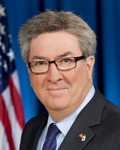
Ken Cooley
DDemocratic
Co
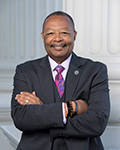
Reggie Jones-Sawyer
DDemocratic
Co
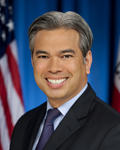
Rob Bonta
DDemocratic
Ask Maddy
·
AI policy assistant
Ask Maddy about AB 34
Scope: CA
Hi! I can help you understand AB 34. What would you like to know?
Try one of these
i
Maddy answers using official bill text and legislative records. Always verify before sharing.
Sources cited inline