

Sales and use taxes: deficiency determinations: qualifying retailers: income and corporation taxes: disclosure agreements.
Summary
The State Board of Equalization, if not satisfied with a return or the amount of sales tax, may compute and determine the amount required to be paid, as specified. Existing law provides that if the board finds that a qualifying retailer's failure to make a timely return or payment is due to reasonable cause and circumstances beyond its control, as provided, the qualifying retailer shall be relieved of specified penalties. Existing law additionally provides that requests for the relief of those penalties shall be filed under penalty of perjury. This bill would revise the definition of a "qualifying retailer" to include a retailer that had gross receipts of less than $1,000,000 in the previous 4 calendar quarters. By requiring the qualifying retailer to file certain information under penalty of perjury, thereby expanding the crime of perjury, this bill would impose a state-mandated local program. The California Constitution requires the state to reimburse local agencies and school districts for certain costs mandated by the state. Statutory provisions establish procedures for making that reimbursement. This bill would provide that no reimbursement is required by this act for a specified reason. The Personal Income Tax Law and the Corporation Tax Law impose various penalties for failure to file specified returns. Existing law authorizes the Franchise Tax Board to enter into voluntary disclosure agreements, as specified, with any qualified entity, qualified shareholder, qualified member, or a qualified beneficiary of a qualified trust, as defined, that permits, under the authority of the voluntary disclosure agreement, the Franchise Tax Board to waive its authority to assess taxes, additions to taxes, fees, or penalties, as described. This bill would expand the above authorization to allow the Franchise Tax Board to enter into voluntary disclosure agreements with out-of-state limited partnerships and qualified small businesses, as defined, and would revise the definition of qualified trust to allow the trust to have resident beneficiaries, as provided.
Bill status
in committee
1 of 4 stages cleared
Introduction
Feb 2016
Committee Review
Floor Vote
Governor
Introduced Feb 19, 2016
Last action May 27, 2016
Floor votes
How they voted
No floor votes recorded yet.
Full legislative history
Actions timeline
Total actions
11
Key actions
4
Committee
7
Amendments
2
May 27, 2016
Lower · Passed
In committee: Held under submission.
lower
May 11, 2016
Committee
In committee: Set, first hearing. Referred to APPR. suspense file.
lower
Apr 27, 2016
Committee
Re-referred to Com. on APPR.
lower
Apr 26, 2016
Lower · Passed
Read second time and amended.
lower
Apr 25, 2016
Introduced
From committee: Amend, and do pass as amended and re-refer to Com. on APPR. (Ayes 9. Noes 0.) (April 18).
lower
Apr 18, 2016
Committee
In committee: Set, second hearing. Referred to REV. & TAX. suspense file.
lower
Apr 4, 2016
Lower · Passed
In committee: Set, first hearing. Hearing canceled at the request of author.
lower
Mar 10, 2016
Committee
Referred to Com. on REV. & TAX.
lower
Feb 21, 2016
Lower · Passed
From printer. May be heard in committee March 22.
lower
Feb 19, 2016
Introduced
Introduced. To print.
lower
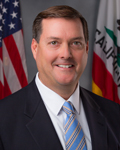
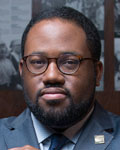
1 primary · 1 co-sponsor
Sponsors
Ask Maddy
·
AI policy assistant
Ask Maddy about AB 2692
Scope: CA
Hi! I can help you understand AB 2692. What would you like to know?
Try one of these
i
Maddy answers using official bill text and legislative records. Always verify before sharing.
Sources cited inline