

Special elections to fill vacancies.
Summary
The California Constitution requires the Governor to immediately call an election to fill a vacancy in the Legislature. Existing law provides specific procedures for the nomination and election of candidates at any special election to fill a vacancy in the office of State Senator or Member of the Assembly. Exiting law, the Political Reform Act of 1974, provides that contributions deposited into a campaign account are deemed to be held in trust for expenses associated with the election of a candidate or for expenses associated with holding office. The act provides that campaign funds under the control of a former candidate or elected officer are considered surplus campaign funds at a prescribed time, and it prohibits the use of surplus campaign funds except for specified purposes. This bill would prohibit a State Senator or Member of the Assembly who decides to resign from office before the expiration of his or her term from subsequently using campaign funds held in trust for any purpose other than paying outstanding campaign debts or reasonable expenses. The bill would amend the list of specified purposes allowable for the use of surplus campaign funds to include the payment of expenses to hold a special election to fill the vacancy created by the Member's resignation and would require the former Member to pay from his or her surplus campaign funds such election-related expenses, to the extent he or she has funds available to do so. Once election-related expenses are paid, this bill would limit the use of excess surplus funds to certain purposes. This bill would further make a Member who, after deciding to resign, uses campaign funds for purposes other than those authorized in that circumstance personally liable for expenses to hold a special election. A violation of the provisions of the Political Reform Act of 1974 is punishable as a misdemeanor. By expanding the scope of an existing crime, this bill would impose a state-mandated local program. The California Constitution requires the state to reimburse local agencies and school districts for certain costs mandated by the state. Statutory provisions establish procedures for making that reimbursement. This bill would provide that no reimbursement is required by this act for a specified reason. The Political Reform Act of 1974, an initiative measure, provides that the Legislature may amend the act to further the act's purposes upon a 23 vote of each house and compliance with specified procedural requirements. This bill would declare that it furthers the purposes of the act.
Bill status
failed
1 of 4 stages cleared
Introduction
Feb 2016
Committee Review
Floor Vote
Governor
Introduced Feb 18, 2016
Last action May 16, 2016
Floor votes
How they voted
No floor votes recorded yet.
Full legislative history
Actions timeline
Total actions
10
Key actions
3
Committee
6
May 16, 2016
Lower · Passed
From committee: Without further action pursuant to Joint Rule 62(a).
lower
Apr 7, 2016
Committee
Re-referred to Com. on E. & R.
lower
Mar 30, 2016
Lower · Passed
In committee: Hearing postponed by committee.
lower
Mar 29, 2016
Committee
Re-referred to Com. on E. & R.
lower
Mar 3, 2016
Committee
Referred to Com. on E. & R.
lower
Feb 19, 2016
Lower · Passed
From printer. May be heard in committee March 20.
lower
1 primary · 0 co-sponsors
Sponsors
Role
Legislator
Party
State
District
P
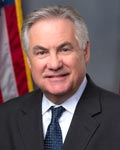
Jim Patterson
RRepublican
Ask Maddy
·
AI policy assistant
Ask Maddy about AB 2284
Scope: CA
Hi! I can help you understand AB 2284. What would you like to know?
Try one of these
i
Maddy answers using official bill text and legislative records. Always verify before sharing.
Sources cited inline