

Public postsecondary education: faculty royalty income disclosure.
Summary
(1) Existing law, known as the Donahoe Higher Education Act, sets forth the missions and functions of the segments of postsecondary education in this state. The California State University, under the administration of the Trustees of the California State University, the California Community Colleges, under the administration of the Board of Governors of the California Community Colleges, and the University of California, under the administration of the Regents of the University of California, constitute the 3 segments of public postsecondary education in this state. Provisions of the Donahoe Higher Education Act apply to the University of California only to the extent that the regents act, by appropriate resolution, to make those provisions applicable. An existing chapter of the Donahoe Higher Education Act relates to the use of academic materials, and provides that a court of competent jurisdiction is authorized to grant relief that is necessary to enforce the provisions of this chapter, including through the issuance of an injunction. This chapter also includes the College Textbook Transparency Act which, among other things, provides that certain faculty members, defined as adopters, are authorized to receive royalties or other compensation from sales of course materials that include the instructor's writing or other work, subject to the employer's standing policies or collective bargaining agreements relating to employee conflicts of interest. This bill would add to this chapter a provision that requires the trustees and the governing board of each community college district, and requests the regents, to require their faculty members to annually disclose, on or before April 15, 2017, and on or before April 15 of each year thereafter, on a form and in a manner to be determined by the trustees, the governing board, or the regents, as appropriate, all of the income he or she received in the immediately preceding calendar year from a publisher, periodical, or provider of online content for royalties, advances, consulting services, or for any other purpose. The bill would require faculty members to whom the bill is applicable to file a form even if they have no disclosable income in the calendar year. The bill would require that these forms be filed under penalty of perjury, thereby imposing a state-mandated local program by expanding the scope of the crime of perjury. The bill would require that the information provided by the faculty members under this bill be available to the public on the Internet Web site of the institution at which the faculty members teach, as specified. The bill would authorize the trustees, community college governing boards, or regents to require a faculty member who does not file the information required under this bill in a timely manner to pay an administrative fine of up to $50, as specified. The bill would authorize the trustees and the community college district governing boards to expend the proceeds of these fines for general educational purposes at the campuses at which the faculty members who were assessed the fines were employed. With respect to the California State University, the bill would establish the California State University Faculty Royalty Disclosure Fund as a continuously appropriated fund for the deposit of fine proceeds and their allocation to the appropriate campuses. The bill would request the regents to allocate the proceeds of any administrative fines they collect pursuant to the bill in a manner similar to that described for the California State University. To the extent that this provision would impose new duties on community college districts, this bill would constitute a state-mandated local program. (2) The California Constitution requires the state to reimburse local agencies and school districts for certain costs mandated by the state. Statutory provisions establish procedures for making that reimbursement. This bill would provide that with regard to certain mandates no reimbursement is required by this act for a specified reason. With regard to any other mandates, this bill would provide that, if the Commission on State Mandates determines that the bill contains costs so mandated by the state, reimbursement for those costs shall be made pursuant to the statutory provisions noted above.
Bill status
in committee
1 of 4 stages cleared
Introduction
Feb 2016
Committee Review
Floor Vote
Governor
Introduced Feb 18, 2016
Last action May 27, 2016
Floor votes
How they voted
No floor votes recorded yet.
Full legislative history
Actions timeline
Total actions
8
Key actions
2
Committee
6
May 27, 2016
Lower · Passed
In committee: Held under submission.
lower
Apr 27, 2016
Committee
In committee: Set, first hearing. Referred to APPR. suspense file.
lower
Apr 13, 2016
Committee
From committee: Do pass and re-refer to Com. on APPR. (Ayes 11. Noes 2.) (April 12). Re-referred to Com. on APPR.
lower
Mar 29, 2016
Committee
Re-referred to Com. on HIGHER ED.
lower
Mar 3, 2016
Committee
Referred to Com. on HIGHER ED.
lower
Feb 19, 2016
Lower · Passed
From printer. May be heard in committee March 20.
lower
1 primary · 5 co-sponsors
Sponsors



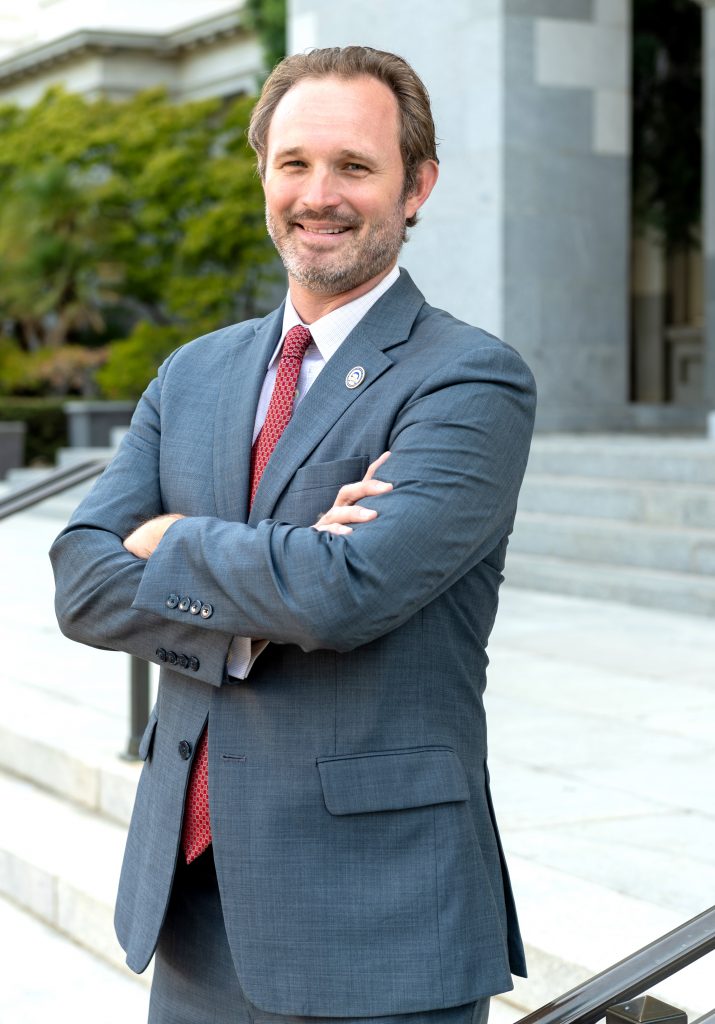

Ask Maddy
·
AI policy assistant
Ask Maddy about AB 2214
Scope: CA
Hi! I can help you understand AB 2214. What would you like to know?
Try one of these
i
Maddy answers using official bill text and legislative records. Always verify before sharing.
Sources cited inline