

Wards: termination of juvenile court jurisdiction.
Summary
Existing law establishes the jurisdiction of the juvenile court, which may adjudge a minor to be a ward of the court on the basis of the minor's delinquent behavior. Under existing law, the jurisdiction of the juvenile court may continue until the ward attains 21 or 25 years of age, depending on the nature of the offense. Existing law requires the juvenile court to hold a hearing prior to terminating jurisdiction over a ward who is subject to an order of foster care, as specified. Under existing law, whenever the juvenile court terminates jurisdiction over a ward who has also been designated a dependent of the court or previously placed into foster care, the probation or parole officer is required to provide the ward with specified information and documents relating to benefits for former foster children. This bill would prohibit the juvenile court from terminating jurisdiction over a ward who has attained 17 years of age until the court conducts a hearing and finds that the probation department has provided, or made reasonable efforts to provide, certain information, documents, and services to the ward. The bill would authorize a juvenile court, at its discretion, to make these provisions applicable to a ward under 17 years of age, if requested by the ward, and if the court finds that doing so is in the ward's best interest. By imposing duties on probation officers, this bill would impose a state-mandated local program. The bill would also direct the Judicial Council to develop and implement standards and forms necessary to implement these provisions. The California Constitution requires the state to reimburse local agencies and school districts for certain costs mandated by the state. Statutory provisions establish procedures for making that reimbursement. This bill would provide that, if the Commission on State Mandates determines that the bill contains costs mandated by the state, reimbursement for those costs shall be made pursuant to these statutory provisions.
Bill status
passed
3 of 5 stages cleared
Introduction
Feb 2016
Committee Review
Aug 2016
Assembly Passage
Jun 2016
Senate Passage
Governor
Introduced Feb 16, 2016
Last action Aug 11, 2016
Floor votes · Assembly Jun 3, 2016
How they voted
67–8
Passed · 3 other
Total votes 78
Jun 3, 2016
D
Democratic52
100% Yea
I
Independent1
100% Yea
R
Republican25
56% Yea
Vote distribution
All Yea
All Nay
Mixed
No data
Full legislative history
Actions timeline
Total actions
17
Key actions
4
Committee
9
Amendments
2
Aug 11, 2016
Upper · Passed
In committee: Held under submission.
upper
Aug 1, 2016
Committee
In committee: Referred to APPR. suspense file.
upper
Jun 29, 2016
Committee
From committee: Do pass and re-refer to Com. on APPR. (Ayes 6. Noes 0.) (June 28). Re-referred to Com. on APPR.
upper
Jun 15, 2016
Committee
Referred to Com. on PUB. S.
upper
Jun 3, 2016
Assembly · Passed
Assembly Vote: pass (67-8-3)
assembly
May 31, 2016
Lower · Passed
Read second time and amended. Ordered returned to second reading.
lower
May 27, 2016
Introduced
From committee: Amend, and do pass as amended. (Ayes 17. Noes 2.) (May 27).
lower
May 11, 2016
Committee
In committee: Set, first hearing. Referred to APPR. suspense file.
lower
Mar 29, 2016
Committee
From committee: Do pass and re-refer to Com. on APPR. (Ayes 9. Noes 1.) (March 29). Re-referred to Com. on APPR.
lower
Mar 29, 2016
Committee
Re-referred to Com. on JUD.
lower
Feb 25, 2016
Committee
Referred to Com. on JUD.
lower
Feb 17, 2016
Lower · Passed
From printer. May be heard in committee March 18.
lower
1 primary · 0 co-sponsors
Sponsors
Role
Legislator
Party
State
District
P
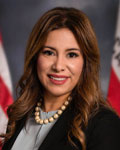
Nora Campos
DDemocratic
Ask Maddy
·
AI policy assistant
Ask Maddy about AB 2000
Scope: CA
Hi! I can help you understand AB 2000. What would you like to know?
Try one of these
i
Maddy answers using official bill text and legislative records. Always verify before sharing.
Sources cited inline