

Telecommunications: California Advanced Services Fund.
Summary
Under existing law, the Public Utilities Commission has regulatory authority over public utilities, including telephone corporations. Existing law establishes, among other funds related to telecommunications, the California Advanced Services Fund (CASF) in the State Treasury. Existing law requires the commission to develop, implement, and administer the CASF to encourage deployment of high-quality advanced communications services to all Californians that will promote economic growth, job creation, and the substantial social benefits of advanced information and communications technologies, as provided in specified decisions of the commission and in the CASF statute. Existing law requires the commission to give priority to projects that provide last-mile broadband access to households that are unserved by an existing facilities-based broadband provider. Existing law establishes that the goal of the program is, no later than December 31, 2015, to approve funding for infrastructure projects that will provide broadband access to no less than 98% of California households. Existing law authorizes the commission to collect a surcharge for deposit into the CASF not to exceed $315,000,000 in total and authorizes the surcharge until 2020. This bill would extend to December 31, 2023, the time period for meeting the program goal and would specify the threshold speeds to be met in achieving the goal. The bill would also specify as a program goal the achievement of a statewide 90% adoption rate of high-speed Internet access by December 31, 2023. The bill would require the commission to give priority to projects that provide advanced communication services at those threshold speeds to unserved and underserved households until the goal is achieved. The bill would authorize the commission, once that goal is achieved, to prioritize funding for other specified projects. The bill would require the commission and the California Broadband Council, in consultation with relevant state agencies, to develop a plan to implement these provisions in a manner that fosters public-private collaboration. The bill would authorize the commission to allocate up to $10 million from the Broadband Infrastructure Grant Account in the CASF to a specified nonprofit organization for specified purposes. The bill would make various legislative findings, including findings regarding deployment of broadband speeds of at least 25 megabits per second (Mbps) downstream and 3 Mbps upstream. The bill would establish the High-Speed Internet Access Adoption Account within the CASF and would authorize the commission to award grants to eligible community-based organizations for education and outreach to low-income households to facilitate the adoption of high-speed Internet access by these households. The bill would authorize the commission to collect an additional $350,000,000, would specify the distribution of the additional moneys among the accounts in the CASF, and would authorize the collection through 2026. By increasing the collection for deposit in the CASF, the bill would constitute a change in state statute that would result in a taxpayer paying a higher tax within the meaning of Section 3 of Article XIII A of the California Constitution, and thus would require for passage the approval of 23 of the membership of each house of the Legislature. Existing law requires a certain amount of moneys from the Broadband Infrastructure Grant Account and the Broadband Revolving Loan Account to be transferred to the Broadband Public Housing Account and requires the commission to award grants and loans from the Broadband Public Housing Account to eligible publicly supported communities. Existing law requires any moneys in the Broadband Public Housing Account not awarded by December 31, 2016, to be transferred back to the other 2 accounts. This bill would repeal the requirement to transfer back the moneys in the Broadband Public Housing Account that are not awarded. Because the provisions of this bill are within the Public Utilities Act, a violation of which is a crime, this bill would impose a state-mandated local program by extending a crime. The California Constitution requires the state to reimburse local agencies and school districts for certain costs mandated by the state. Statutory provisions establish procedures for making that reimbursement. This bill would provide that no reimbursement is required by this act for a specified reason.
Bill status
in committee
1 of 4 stages cleared
Introduction
Feb 2016
Committee Review
Floor Vote
Governor
Introduced Feb 2, 2016
Last action Apr 21, 2016
Floor votes
How they voted
No floor votes recorded yet.
Full legislative history
Actions timeline
Total actions
9
Key actions
5
Committee
7
Apr 21, 2016
Lower · Passed
From committee: Without further action pursuant to Joint Rule 62(a).
lower
Apr 19, 2016
Lower · Passed
In committee: Set, final hearing. Hearing canceled at the request of author.
lower
Mar 28, 2016
Committee
Re-referred to Com. on U. & C.
lower
Mar 17, 2016
Lower · Passed
In committee: Set, second hearing. Hearing canceled at the request of author.
lower
Mar 9, 2016
Lower · Passed
In committee: Set, first hearing. Hearing canceled at the request of author.
lower
Feb 18, 2016
Committee
Referred to Com. on U. & C.
lower
Feb 3, 2016
Lower · Passed
From printer. May be heard in committee March 4.
lower
1 primary · 3 co-sponsors
Sponsors
Role
Legislator
Party
State
District
P

Mark Stone
DDemocratic
Co
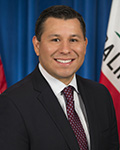
Eduardo Garcia
DDemocratic
Co

Marc Levine
DDemocratic
Co

Mike McGuire
DDemocratic
Ask Maddy
·
AI policy assistant
Ask Maddy about AB 1758
Scope: CA
Hi! I can help you understand AB 1758. What would you like to know?
Try one of these
i
Maddy answers using official bill text and legislative records. Always verify before sharing.
Sources cited inline