

Transportation funding.
Summary
(1) Existing law provides various sources of funding for transportation purposes, including funding for the state highway system and the local street and road system. These funding sources include, among others, fuel excise taxes, commercial vehicle weight fees, local transactions and use taxes, and federal funds. Existing law imposes certain registration fees on vehicles, with revenues from these fees deposited in the Motor Vehicle Account and used to fund the Department of Motor Vehicles and the Department of the California Highway Patrol. Existing law provides for the monthly transfer of excess balances in the Motor Vehicle Account to the State Highway Account. This bill would create the Road Maintenance and Rehabilitation Program to address deferred maintenance on the state highway system and the local street and road system. The bill would require the California Transportation Commission to adopt performance criteria to ensure efficient use of the funds available for the program. The bill would provide for the deposit of various funds for the program in the Road Maintenance and Rehabilitation Account, which the bill would create in the State Transportation Fund, including revenues attributable to a $0.225 per gallon increase in the motor vehicle fuel (gasoline) tax imposed by the bill, including an inflation adjustment as provided, an increase of $38 in the annual vehicle registration fee, and a new $165 annual vehicle registration fee applicable to zero-emission motor vehicles, as defined. The bill would continuously appropriate the funds in the account for road maintenance and rehabilitation purposes and would allocate 5% of available funds to counties that approve a transactions and use tax on or after July 1, 2016, with the remaining funds to be allocated 50% for maintenance of the state highway system or to the state highway operation and protection program, and 50% to cities and counties pursuant to a specified formula. The bill would impose various requirements on agencies receiving these funds. The bill would authorize a city or county to spend its apportionment of funds under the program on transportation priorities other than those allowable pursuant to the program if the city's or county's average Pavement Condition Index meets or exceeds 85. (2) Existing law provides for loans of revenues from various transportation funds and accounts to the General Fund, with various repayment dates specified. This bill would require the Department of Finance, on or before March 1, 2016, to compute the amount of outstanding loans made from specified transportation funds. The bill would require the Department of Transportation to prepare a loan repayment schedule and would require the outstanding loans to be repaid pursuant to that schedule to the accounts from which the loans were made, as prescribed. The bill would appropriate funds for that purpose from the Budget Stabilization Account. The bill would require the repaid funds to be transferred to cities and counties pursuant to a specified formula. (3) The Highway Safety, Traffic Reduction, Air Quality, and Port Security Bond Act of 2006 (Proposition 1B) created the Trade Corridors Improvement Fund and provided for allocation by the California Transportation Commission of $2 billion in bond funds for infrastructure improvements on highway and rail corridors that have a high volume of freight movement, and specified categories of projects eligible to receive these funds. Existing law continues the Trade Corridors Improvement Fund in existence in order to receive revenues from sources other than the bond act for these purposes. The bill would deposit the revenues attributable to a $0.30 per gallon increase in the diesel fuel excise tax imposed by the bill into the Trade Corridors Improvement Fund. Existing law specifies projects eligible for funding from the Trade Corridors Improvement Fund, including, among other things, projects for truck corridor improvements, including dedicated truck facilities, or truck toll facilities. This bill would include truck parking among the truck corridor capital improvements eligible to be funded and would authorize the expenditure of moneys in the fund for certain system efficiency improvements, including the development, demonstration, and deployment of promising Intelligent Transportation System applications. The bill would require the California Transportation Commission, in evaluating potential projects to be funded from the fund, to give priority to projects demonstrating one or more of certain characteristics. (4) Existing law requires all moneys, except for fines and penalties, collected by the State Air Resources Board from the auction or sale of allowances as part of a market-based compliance mechanism relative to reduction of greenhouse gas emissions to be deposited in the Greenhouse Gas Reduction Fund. Existing law, to the extent moneys are transferred to the Trade Corridors Improvement Fund from the Greenhouse Gas Reduction Fund, requires projects funded with those moneys to be subject to all of the requirements of existing law applicable to the expenditure of moneys appropriated from the Greenhouse Gas Reduction Fund, including, among other things, furthering the regulatory purposes of the California Global Warming Solutions Act of 2006. Existing law continuously appropriates 10% of the annual proceeds of the fund to the Transit and Intercity Rail Capital Program. This bill would, beginning in the 2016–17 fiscal year, instead continuously appropriate 20% of those annual proceeds to the Transit and Intercity Rail Capital Program, thereby making an appropriation, and, transfer 20% of those annual proceeds to the Trade Corridors Improvement Fund. (5) Existing law, as of July 1, 2011, increases the sales and use tax on diesel and decreases the excise tax, as provided. Existing law requires the State Board of Equalization to annually modify both the gasoline and diesel excise tax rates on a going-forward basis so that the various changes in the taxes imposed on gasoline and diesel are revenue neutral. This bill would eliminate the annual rate adjustment to maintain revenue neutrality for the gasoline and diesel excise tax rates. This bill would, beginning July 1, 2019, and every 3rd year thereafter, require the board to recompute the gasoline and diesel excise tax rates based upon the percentage change in the California Consumer Price Index transmitted to the board by the Department of Finance, as prescribed. (6) Existing law requires the Department of Transportation to prepare a state highway operation and protection program every other year for the expenditure of transportation capital improvement funds for projects that are necessary to preserve and protect the state highway system, excluding projects that add new traffic lanes. The program is required to be based on an asset management plan, as specified. Existing law requires the department to specify, for each project in the program, the capital and support budget and projected delivery date for various components of the project. Existing law provides for the California Transportation Commission to review and adopt the program, and authorizes the commission to decline and adopt the program if it determines that the program is not sufficiently consistent with the asset management plan. This bill, on and after February 1, 2017, would require the commission to make an allocation of all capital and support costs for each project in the program, and would require the department to submit a supplemental project allocation request to the commission for each project that experiences cost increases above the amounts in its allocation. The bill would require the commission to establish guidelines to provide exceptions to the requirement for a supplemental project allocation requirement that the commission determines are necessary to ensure that projects are not unnecessarily delayed. (7) Existing law imposes weight fees on the registration of commercial motor vehicles and provides for the deposit of net weight fee revenues into the State Highway Account. Existing law provides for the transfer of certain weight fee revenues from the State Highway Account to the Transportation Debt Service Fund to reimburse the General Fund for payment of debt service on general obligation bonds issued for transportation purposes. Existing law also provides for the transfer of certain weight fee revenues to the Transportation Bond Direct Payment Account for direct payment of debt service on designated bonds, which are defined to be certain transportation general obligation bonds issued pursuant to Proposition 1B of 2006. Existing law also provides for loans of weight fee revenues to the General Fund to the extent the revenues are not needed for bond debt service purposes, with the loans to be repaid when the revenues are later needed for those purposes, as specified. This bill, notwithstanding these provisions or any other law, would prohibit weight fee revenues from being transferred from the State Highway Account to the Transportation Debt Service Fund, the Transportation Bond Direct Payment Account, or any other fund or account for the purpose of payment of the debt service on transportation general obligation bonds, and would also prohibit loans of weight fee revenues to the General Fund. (8) This bill would declare that it is to take effect immediately as an urgency statute.
Bill status
in committee
1 of 4 stages cleared
Introduction
Jan 2016
Committee Review
Floor Vote
Governor
Introduced Jan 6, 2016
Last action Feb 1, 2016
Floor votes
How they voted
No floor votes recorded yet.
Full legislative history
Actions timeline
Total actions
3
Key actions
1
Committee
2
Feb 1, 2016
Committee
Referred to Coms. on TRANS. and REV. & TAX.
lower
Jan 7, 2016
Lower · Passed
From printer. May be heard in committee February 6.
lower
1 primary · 0 co-sponsors
Sponsors
Role
Legislator
Party
State
District
P
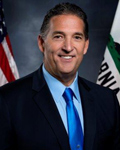
Jim Frazier
DDemocratic
Ask Maddy
·
AI policy assistant
Ask Maddy about AB 1591
Scope: CA
Hi! I can help you understand AB 1591. What would you like to know?
Try one of these
i
Maddy answers using official bill text and legislative records. Always verify before sharing.
Sources cited inline