

Medi-Cal: beneficiary maintenance needs: home upkeep allowances: transitional personal needs funds.
Summary
Existing law provides for the Medi-Cal program, which is administered by the State Department of Health Care Services, under which qualified low-income individuals receive health care services. The Medi-Cal program is, in part, governed and funded by federal Medicaid provisions. Qualified individuals under the Medi-Cal program include medically needy persons and medically needy family persons who meet the required eligibility criteria, including applicable income requirements. Existing law requires the department to establish income levels for maintenance need at the lowest levels that reasonably permit a medically needy individual to meet his or her basic needs for food, clothing, and shelter, and for which federal financial participation will still be provided under applicable federal law. In calculating the income of a medically needy individual in a medical institution or nursing facility, or a person receiving institutional or noninstitutional services from a Program of All-Inclusive Care for the Elderly organization, the required monthly maintenance amount includes, among other things, an amount providing for the upkeep and maintenance of the individual's home. This amount is also referred to as the home upkeep allowance. Existing law requires that the maintenance of need amount provide for personal and incidental needs in an amount not less than $35 for a person in a medical institution or nursing facility, or for a person receiving institutional or noninstitutional services from a Program of All-Inclusive Care for the Elderly organization. Existing law authorizes the Director of Health Care Services to adopt, amend, or repeal reasonable rules and regulations to carry out the purposes and intent of the Medi-Cal program, that are not inconsistent with any state statute. The department has adopted regulatory requirements relating to the determination of the home upkeep allowance described above. This bill would establish eligibility and other requirements for providing the home upkeep allowance or transitional personal needs fund, to Medi-Cal patients residing in a long-term care facility, as specified. The bill would prescribe general requirements as well as specific requirements both for facility residents who intend to leave the facility and return to an existing home, who would receive the home upkeep allowance, and residents who intend to leave the facility and establish a new home, who would establish a transitional personal needs fund, as part of the personal needs allowance provided to the resident. The bill would require the department to adopt implementing regulations, and to advise appropriate long-term care facility residents and other specified personnel and health care facilities of the existence and availability of the home upkeep allowance and transitional personal needs fund. The bill would require the department, on or before July 1, 2016, to seek federal approval to implement these provisions, and would require these provisions to be implemented only if, and to the extent that, federal financial participation is available and any necessary federal approvals have been obtained. Because counties are required to make Medi-Cal eligibility determinations and this bill would impose new eligibility requirements for purposes of these allowances, this bill would impose a state-mandated local program. The California Constitution requires the state to reimburse local agencies and school districts for certain costs mandated by the state. Statutory provisions establish procedures for making that reimbursement. This bill would provide that, if the Commission on State Mandates determines that the bill contains costs mandated by the state, reimbursement for those costs shall be made pursuant to these statutory provisions.
Bill status
passed
3 of 5 stages cleared
Introduction
Feb 2015
Committee Review
Aug 2015
Assembly Passage
Jun 2015
Senate Passage
Governor
Introduced Feb 27, 2015
Last action Aug 27, 2015
Floor votes · Assembly Jun 3, 2015
How they voted
74–1
Passed
Total votes 75
Jun 3, 2015
D
Democratic50
100% Yea
I
Independent1
100% Yea
R
Republican24
95% Yea
Vote distribution
All Yea
All Nay
Mixed
No data
Full legislative history
Actions timeline
Total actions
22
Key actions
5
Committee
12
Amendments
1
Aug 27, 2015
Upper · Passed
In committee: Held under submission.
upper
Aug 17, 2015
Committee
In committee: Referred to APPR. suspense file.
upper
Jul 7, 2015
Committee
Read second time and amended. Re-referred to Com. on APPR.
upper
Jul 6, 2015
Introduced
From committee: Amend, and do pass as amended and re-refer to Com. on APPR. (Ayes 8. Noes 0.) (July 1).
upper
Jun 18, 2015
Committee
Referred to Com. on HEALTH.
upper
Jun 3, 2015
Assembly · Passed
Assembly Vote: pass (74-1)
assembly
May 28, 2015
Lower · Passed
From committee: Do pass. (Ayes 17. Noes 0.) (May 28).
lower
May 13, 2015
Committee
In committee: Set, first hearing. Referred to APPR. suspense file.
lower
Apr 29, 2015
Committee
From committee: Do pass and re-refer to Com. on APPR. (Ayes 19. Noes 0.) (April 28). Re-referred to Com. on APPR.
lower
Apr 27, 2015
Committee
Re-referred to Com. on HEALTH.
lower
Apr 21, 2015
Lower · Passed
In committee: Set, first hearing. Hearing canceled at the request of author.
lower
Apr 6, 2015
Committee
Re-referred to Com. on HEALTH.
lower
Mar 26, 2015
Committee
Referred to Com. on HEALTH.
lower
Mar 1, 2015
Lower · Passed
From printer. May be heard in committee March 31.
lower
Feb 27, 2015
Introduced
Introduced. To print.
lower
1 primary · 0 co-sponsors
Sponsors
Role
Legislator
Party
State
District
P
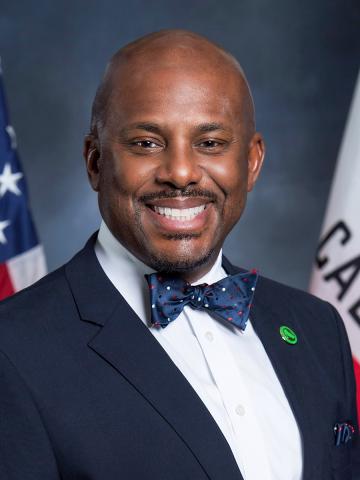
Mike Gipson
DDemocratic
Ask Maddy
·
AI policy assistant
Ask Maddy about AB 1235
Scope: CA
Hi! I can help you understand AB 1235. What would you like to know?
Try one of these
i
Maddy answers using official bill text and legislative records. Always verify before sharing.
Sources cited inline