

Proprietary security services.
Summary
The Proprietary Security Services Act generally regulates the proprietary private security vocation, and requires a proprietary private security officer to, among other things, register with the Department of Consumer Affairs and complete specified training. The act defines a proprietary private security officer as an unarmed individual who, among other qualifications, meets 2 specific criteria of being required to wear a distinctive uniform clearly identifying him or her as a security officer and of being likely to interact with the public while performing his or her duties. The act exempts specified persons from its requirements. This bill, on and after January 1, 2017, would expand the definition of a proprietary private security officer by instead requiring one of the 2 specific criteria to be met. The bill would revise one of the criteria, on and after January 1, 2017, to require the likelihood of interacting with the public while providing security services, as defined to include, among other things, acting to prevent or deter unapproved or unlawful entry. The bill would also exempt, on and after January 1, 2017, from the act an unarmed person who is employed by a retailer of merchandise at a retail merchandise store to report or prevent theft from the store and who wears plain clothes or clothes with only the logo or business name of the retailer of merchandise. The bill would also exempt, on and after that date, an employee at an entertainment or sports venue, as specified, whose primary duties consist of screening guests and their personal items before venue entry, checking admission tickets, or directing guests, and seeking assistance from law enforcement or security personnel when that would be the ordinary and customary response of an employee under specified circumstances. The Private Security Services Act provides for the licensure and regulation of private patrol operators by the Bureau of Security and Investigative Services in the Department of Consumer Affairs. Existing law defines a private patrol operator as a person who, for consideration, agrees to furnish, or furnishes, a watchman, guard patrolperson, or other person to protect persons or property or to prevent the theft, unlawful taking, loss, embezzlement, misappropriation, or concealment of any property; or performs the service of a watchman, guard, patrolperson, or other person, for any of these purposes. Existing law defines a security guard as an employee of a private patrol operator who performs those above-referenced functions on or about the premises owned or controlled by the customer of the private patrol operator or by the guard's employer or in the company of persons being protected. Existing law generally requires that an employee of a temporary services employer, as defined, be paid weekly. Existing law provides that a violation of these provisions is punishable as a misdemeanor. This bill would provide for that weekly pay requirement to apply to a security officer employed by a private patrol operator who is a temporary services employer, as provided. By expanding the scope of crime, the bill would impose a state-mandated local program. The California Constitution requires the state to reimburse local agencies and school districts for certain costs mandated by the state. Statutory provisions establish procedures for making that reimbursement. This bill would provide that no reimbursement is required by this act for a specified reason.
Bill status
vetoed
4 of 5 stages cleared
Introduction
Feb 2015
Committee Review
Sep 2015
Assembly Passage
May 2015
Senate Passage
Sep 2015
Vetoed
Oct 2015
Introduced Feb 26, 2015
Vetoed Oct 8, 2015
Floor votes · Senate Sep 10, 2015 · Assembly May 28, 2015
How they voted
38–0
Passed · 2 other
Total votes 40
Sep 10, 2015
D
Democratic26
96% Yea
R
Republican14
92% Yea
Vote distribution
All Yea
All Nay
Mixed
No data
Full legislative history
Actions timeline
Total actions
30
Key actions
8
Committee
12
Amendments
4
Jan 15, 2016
Vetoed
Consideration of Governor's veto stricken from file.
lower
Oct 8, 2015
Vetoed
Vetoed by Governor.
lower
Sep 10, 2015
Senate · Passed
Senate Vote: pass (38-0-2)
senate
Sep 10, 2015
Lower · Passed
Senate amendments concurred in. To Engrossing and Enrolling. (Ayes 80. Noes 0. Page 3064.).
lower
Sep 9, 2015
Introduced
In Assembly. Concurrence in Senate amendments pending.
lower
Aug 24, 2015
Upper · Passed
From committee: Do pass. (Ayes 7. Noes 0.) (August 24).
upper
Aug 18, 2015
Committee
From committee chair, with author's amendments: Amend, and re-refer to committee. Read second time, amended, and re-referred to Com. on APPR.
upper
Aug 17, 2015
Upper · Passed
In committee: Hearing postponed by committee.
upper
Jul 8, 2015
Committee
From committee: Do pass and re-refer to Com. on APPR. (Ayes 5. Noes 0.) (July 8). Re-referred to Com. on APPR.
upper
Jun 29, 2015
Committee
Re-referred to Com. on L. & I.R.
upper
Jun 23, 2015
Committee
Read second time and amended. Re-referred to Com. on RLS.
upper
Jun 22, 2015
Introduced
From committee: Amend, and do pass as amended and re-refer to Com. on RLS. (Ayes 8. Noes 1.) (June 22).
upper
Jun 11, 2015
Committee
Referred to Coms. on B., P. & E.D. and APPR.
upper
May 28, 2015
Assembly · Passed
Assembly Vote: pass (76-0-2)
assembly
May 18, 2015
Lower · Passed
Read second time and amended. Ordered returned to second reading.
lower
May 14, 2015
Introduced
From committee: Amend, and do pass as amended. (Ayes 14. Noes 0.) (May 5).
lower
Apr 28, 2015
Lower · Passed
In committee: Hearing postponed by committee.
lower
Apr 21, 2015
Committee
Re-referred to Com. on B. & P.
lower
Mar 19, 2015
Committee
Referred to Com. on B. & P.
lower
Feb 27, 2015
Lower · Passed
From printer. May be heard in committee March 29.
lower
1 primary · 0 co-sponsors
Sponsors
Role
Legislator
Party
State
District
P
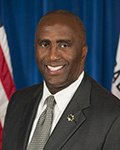
Jim Cooper
DDemocratic
Ask Maddy
·
AI policy assistant
Ask Maddy about AB 1042
Scope: CA
Hi! I can help you understand AB 1042. What would you like to know?
Try one of these
i
Maddy answers using official bill text and legislative records. Always verify before sharing.
Sources cited inline