

Prisoners: DNA testing.
Summary
(1) Existing law allows an incarcerated person who has been convicted of a felony to make a written motion for the performance of forensic deoxyribonucleic acid (DNA) testing according to a specified procedure. Existing law allows the court to order a hearing on the motion in the court's discretion. This bill would instead allow the court to order a hearing on the motion if the court determines the convicted person has met specified requirements and that the hearing is necessary. This bill would, upon request of the convicted person or the convicted person's counsel, allow a court to order the prosecutor to make all reasonable efforts to obtain, and police agencies and law enforcement laboratories to make all reasonable efforts to provide, copies of DNA lab reports, copies of evidence logs, and other specified documents. (2) Existing law requires notice of a motion for DNA testing to be served on the Attorney General, the district attorney in the county of conviction, and, if known, the governmental agency or laboratory holding the evidence sought to be retested. Existing law requires the response, if any, to be filed within 60 days of the date on which the Attorney General and the district attorney are served with the motion, unless a continuance is granted for good cause. This bill would extend the time for filing a response to 90 days. The bill would also allow either party to request an additional 60 days to brief certain specified issues. (3) Existing law requires a court to grant the motion for DNA testing if it determines, among other things, that the convicted person has made a prima facie showing that the evidence sought to be tested is material to the issue of the convicted persons' identity as the perpetrator of, or accomplice to, the crime that resulted in the conviction and that the requested DNA testing results would raise a reasonable probability that, in light of all the evidence, the convicted person's verdict or sentence would have been more favorable if the results of DNA testing had been available at the time of conviction. This bill would state that the convicted person is only required to demonstrate that the DNA testing would be relevant to, rather than dispositive of, the issue of identity and is not required to show that a favorable test result would conclusively establish his or her innocence before the court may grant a motion for DNA testing. The bill would prohibit a court, in determining whether the convicted person is entitled to develop potentially exculpatory evidence, from deciding whether, assuming a DNA test result favorable to the convicted person, he or she is entitled to some form of ultimate relief. If the court grants a motion for DNA testing and a profile of an unknown contributor is generated, the bill would allow the court to conduct a hearing to determine if the DNA profile should be uploaded into the State Index System, and if appropriate, the Federal DNA Index System, if certain conditions are met, as specified. The bill would revise the requirements that a laboratory is required to meet in order to conduct testing pursuant to a motion for DNA retesting, as specified. (4) Existing law requires the appropriate governmental entity to retain all biological material that is secured in connection with a criminal case for the period of time that any person remains incarcerated in connection with the case. Existing law allows the governmental entity to dispose of biological material before the expiration of this time period if the governmental entity notifies the inmate and his or her counsel, and the notifying entity does not receive, within 90 days of sending the notification, a motion for DNA testing, a request that the material not be destroyed because a motion for DNA testing will be filed within 180 days, or a declaration of innocence that has been filed with the court within 180 days of the judgment of conviction. This bill would allow the governmental entity to dispose of biological material before the expiration of the time that the person remains incarcerated in connection with the case if the governmental entity notifies the inmate and his or her counsel, and the notifying entity does not receive, within 180 days of sending the notification, a motion for DNA testing, a request that the material not be destroyed because a motion for DNA testing will be filed within one year, or a declaration of innocence that has been filed with the court within one year of the judgment of conviction. By increasing the duties of local governmental entities in regard to the retention of biological material, this bill would impose a state-mandated local program. The California Constitution requires the state to reimburse local agencies and school districts for certain costs mandated by the state. Statutory provisions establish procedures for making that reimbursement. This bill would provide that, if the Commission on State Mandates determines that the bill contains costs mandated by the state, reimbursement for those costs shall be made pursuant to these statutory provisions.
Bill status
signed
all 5 stages cleared
Introduction
Feb 2014
Committee Review
Aug 2014
Senate Passage
May 2014
Assembly Passage
Aug 2014
Signed into Law
Sep 2014
Introduced Feb 11, 2014
Signed Sep 25, 2014
Floor votes · Senate May 29, 2014 · Assembly Aug 27, 2014
How they voted
21–9
Passed · 5 other
Total votes 35
May 29, 2014
D
Democratic25
80% Yea
R
Republican10
90% Nay
Vote distribution
All Yea
All Nay
Mixed
No data
Full legislative history
Actions timeline
Total actions
33
Key actions
13
Committee
14
Amendments
1
Sep 25, 2014
Signed into law
Approved by the Governor.
legislature
Aug 29, 2014
Upper · Passed
Assembly amendments concurred in. (Ayes 32. Noes 3. Page 4967.) Ordered to engrossing and enrolling.
upper
Aug 27, 2014
Assembly · Passed
Assembly Vote: pass (63-1-1)
assembly
Aug 27, 2014
Introduced
In Senate. Concurrence in Assembly amendments pending.
upper
Aug 18, 2014
Lower · Passed
From committee: Do pass as amended. (Ayes 13. Noes 0.) (August 14).
lower
Aug 6, 2014
Committee
Set, first hearing. Referred to APPR. suspense file.
lower
Aug 4, 2014
Lower · Passed
From committee with author's amendments. Read second time and amended. Re-referred to Com. on APPR.
lower
Jun 25, 2014
Lower · Passed
From committee: Do pass and re-refer to Com. on APPR. (Ayes 5. Noes 0.) (June 24). Re-referred to Com. on APPR.
lower
Jun 19, 2014
Lower · Passed
From committee with author's amendments. Read second time and amended. Re-referred to Com. on PUB. S.
lower
Jun 9, 2014
Committee
Referred to Com. on PUB. S.
lower
May 29, 2014
Senate · Passed
Senate Vote: pass (21-9-5)
senate
May 23, 2014
Upper · Passed
From committee: Do pass as amended. (Ayes 5. Noes 2. Page 3706.) (May 23).
upper
May 7, 2014
Upper · Passed
From committee with author's amendments. Read second time and amended. Re-referred to Com. on APPR.
upper
Apr 28, 2014
Upper · Passed
Hearing postponed by committee.
upper
Apr 22, 2014
Upper · Passed
From committee: Do pass and re-refer to Com. on APPR. (Ayes 5. Noes 2. Page 3217.) (April 22). Re-referred to Com. on APPR.
upper
Mar 19, 2014
Committee
Re-referred to Com. on PUB. S.
upper
Mar 17, 2014
Upper · Passed
From committee with author's amendments. Read second time and amended. Re-referred to Com. on RLS.
upper
Feb 20, 2014
Committee
Referred to Com. on RLS.
upper
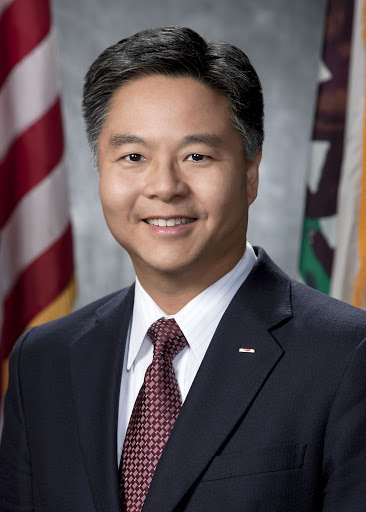
1 primary · 1 co-sponsor
Sponsors
Ask Maddy
·
AI policy assistant
Ask Maddy about SB 980
Scope: CA
Hi! I can help you understand SB 980. What would you like to know?
Try one of these
i
Maddy answers using official bill text and legislative records. Always verify before sharing.
Sources cited inline