

Residential care facilities for the elderly.
Summary
(1) Existing law, the California Residential Care Facilities for the Elderly Act, provides for the licensure and regulation of residential care facilities for the elderly by the State Department of Social Services. A person who violates the act is guilty of a misdemeanor and subject to civil penalty and suspension or revocation of his or her license. Existing law requires an administrator of a residential care facility for the elderly to successfully complete a department-approved certification program prior to employment that requires, among other things, a minimum of 40 hours of classroom instruction on a uniform core of knowledge, which includes resident admission, retention, and assessment procedures, and passage of a written test administered by the department. This bill would change the minimum hours of classroom instruction to 80 hours, including 60 hours of in-person instruction, and would add additional topics to the uniform core of knowledge, including the adverse effects of psychotropic drugs for use in controlling the behavior of persons with dementia. The bill would also require the department to take specific actions with regard to the test, including ensuring that it consists of at least 100 questions. This bill would prohibit a licensee, or officer or employee of the licensee, from discriminating or retaliating against any person receiving the services of the licensee's residential care facility for the elderly, or against any employee of the licensee's facility, on the basis, or for the reason that, the person, employee, or any other person dialed or called 911. This bill would require a residential care facility for the elderly that accepts or retains residents with prohibited health conditions, as defined by the department, to assist residents with accessing home health or hospice services by appropriately skilled professionals, acting within their scope of practice, to ensure that residents receive medical care as prescribed by the resident's physician and contained in the resident's service plan. The bill would define an "appropriately skilled professional" as an individual who has training and is licensed to perform the necessary medical procedures prescribed by a physician, which includes, but is not limited to, a registered nurse, licensed vocational nurse, physical therapist, occupational therapist, or respiratory therapist. The bill would provide that an appropriately skilled professional is not required if a resident is providing self-care, as defined by the department, and there is documentation in the resident's service plan that the resident is capable of providing self-care. (2) Existing law requires the Director of Social Services to ensure that licensees, administrators, and staffs of residential care facilities for the elderly have appropriate training to provide the care and services for which a license or certificate is issued. Existing law requires the department to develop a uniform core of knowledge for the continuing education of administrators of residential care facilities for the elderly. This bill would also require the department to develop a uniform core of knowledge jointly with the California Department of Aging for the initial certification of administrators, and add additional topics to the uniform core of knowledge, including, but not limited to, applicable laws and regulations and residents' rights. (3) Existing law requires that employees who assist residents with the self-administration of medications at a licensed residential care facility for the elderly, which provides care for 16 or more persons, complete 16 hours of initial training, consisting of 8 hours of hands-on shadowing training and 8 hours of other training or instruction, to be completed within the first 2 weeks of employment. If that facility provides care for 15 or fewer persons, existing law requires employees to complete 6 hours of initial training, consisting of 2 hours of hands-on shadowing training and 4 hours of other training or instruction, to be completed within the first 2 weeks of employment. This bill would require employees at a licensed residential care facility for the elderly that provides care for 16 or more persons, to complete 24 hours of initial training, consisting of 16 hours of hands-on shadowing training and 8 hours of other training or instruction, to be completed within the first 4 weeks of employment. For facilities providing care for 15 or fewer persons, the bill would increase those training requirements to 10 hours of initial training, consisting of 6 hours of hands-on shadowing training, and 4 hours of other training, to be completed within the first 2 weeks of employment. This bill would require all residential care facilities for the elderly to provide training to direct care staff on postural supports, restricted conditions or health services, and hospice care that includes 4 hours of training on the care, supervision, and special needs of those residents, prior to providing direct care to residents. The bill also would require 4 hours of training thereafter of in-service training per year on the subject of serving those residents. (4) Because a violation of any of the above provisions would be a misdemeanor, this bill would impose a state-mandated local program. The California Constitution requires the state to reimburse local agencies and school districts for certain costs mandated by the state. Statutory provisions establish procedures for making that reimbursement. This bill would provide that no reimbursement is required by this act for a specified reason. (5) This bill would make its provisions operative on January 1, 2016. (6) This bill would become operative only if AB 1570 is enacted and takes effect on or before January 1, 2015.
Bill status
signed
all 5 stages cleared
Introduction
Jan 2014
Committee Review
Aug 2014
Senate Passage
May 2014
Assembly Passage
Aug 2014
Signed into Law
Sep 2014
Introduced Jan 23, 2014
Signed Sep 28, 2014
Floor votes · Senate May 28, 2014 · Assembly Aug 27, 2014
How they voted
23–9
Passed · 3 other
Total votes 35
May 28, 2014
D
Democratic25
92% Yea
R
Republican10
90% Nay
Vote distribution
All Yea
All Nay
Mixed
No data
Full legislative history
Actions timeline
Total actions
34
Key actions
13
Committee
12
Amendments
2
Sep 28, 2014
Signed into law
Approved by the Governor.
legislature
Aug 28, 2014
Upper · Passed
Assembly amendments concurred in. (Ayes 34. Noes 0. Page 4942.) Ordered to engrossing and enrolling.
upper
Aug 27, 2014
Assembly · Passed
Assembly Vote: pass (54-6-5)
assembly
Aug 27, 2014
Introduced
In Senate. Concurrence in Assembly amendments pending.
upper
Aug 18, 2014
Lower · Passed
From committee: Do pass as amended. (Ayes 12. Noes 0.) (August 14).
lower
Aug 6, 2014
Committee
Set, first hearing. Referred to APPR. suspense file.
lower
Jun 25, 2014
Lower · Passed
From committee: Do pass and re-refer to Com. on APPR. (Ayes 5. Noes 0.) (June 24). Re-referred to Com. on APPR.
lower
Jun 19, 2014
Lower · Passed
Read second time and amended. Re-referred to Com. on AGING & L.T.C.
lower
Jun 18, 2014
Lower · Passed
From committee: Do pass as amended and re-refer to Com. on AGING & L.T.C. (Ayes 6. Noes 1.) (June 17).
lower
Jun 5, 2014
Committee
Referred to Coms. on HUM. S. and AGING & L.T.C.
lower
May 28, 2014
Senate · Passed
Senate Vote: pass (23-9-3)
senate
May 23, 2014
Upper · Passed
From committee: Do pass as amended. (Ayes 5. Noes 2. Page 3704.) (May 23).
upper
Apr 9, 2014
Upper · Passed
From committee: Do pass and re-refer to Com. on APPR. (Ayes 3. Noes 2. Page 3120.) (April 8). Re-referred to Com. on APPR.
upper
Mar 27, 2014
Upper · Passed
From committee with author's amendments. Read second time and amended. Re-referred to Com. on HUMAN S.
upper
Mar 5, 2014
Upper · Passed
Hearing postponed by committee.
upper
Mar 4, 2014
Upper · Passed
From committee with author's amendments. Read second time and amended. Re-referred to Com. on HUMAN S.
upper
Feb 6, 2014
Committee
Referred to Com. on HUMAN S.
upper
1 primary · 10 co-sponsors
Sponsors
Role
Legislator
Party
State
District
P
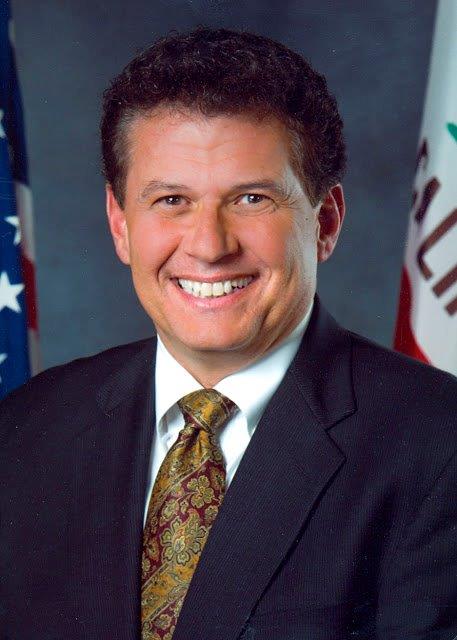
Marty Block
DDemocratic
Co
Bob Wieckowski
DDemocratic
Co
Cheryl R. Brown
DDemocratic
Co
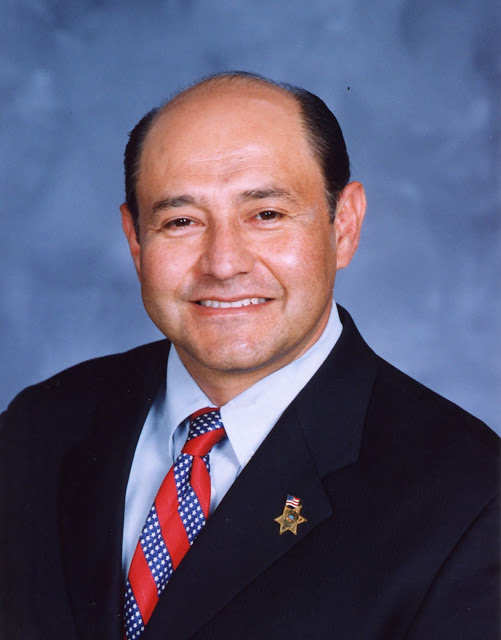
Lou Correa
DDemocratic
Co
MY
Mariko Yamada
DDemocratic
Co
ML
Mark Leno
DDemocratic
Co
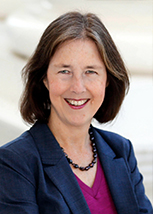
Nancy Skinner
DDemocratic
Co
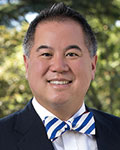
Phil Ting
DDemocratic
Co
RJ
Rocky J. Chávez
RRepublican
Co
TA
Tom Ammiano
DDemocratic
Co
WC
Wesley Chesbro
DDemocratic
Ask Maddy
·
AI policy assistant
Ask Maddy about SB 911
Scope: CA
Hi! I can help you understand SB 911. What would you like to know?
Try one of these
i
Maddy answers using official bill text and legislative records. Always verify before sharing.
Sources cited inline