

Finance lenders: nonprofit organizations: zero-interest, low-cost loans: exemptions.
Summary
Existing law, the California Finance Lenders Law, provides for the licensure and regulation of finance lenders and brokers by the Commissioner of Business Oversight who is the chief officer of the Department of Business Oversight. Existing law prohibits a person from engaging in the business of a finance lender or broker without obtaining a license from the commissioner. Under existing law, a finance lender includes any person who is engaged in the business of making consumer loans or making commercial loans and the business of making those loans includes lending money and taking, in the name of the lender, or in any other name, in whole or in part, as security for a loan, any contract or obligation involving the forfeiture of rights in or to personal property, the use and possession of which property is retained by other than the mortgagee or lender, or any lien on, assignment of, or power of attorney relative to wages, salary, earnings, income, or commission. Under existing law, a broker includes any person who is engaged in the business of negotiating or performing any act as broker in connection with loans made by a finance lender. Existing law makes certain persons and entities exempt from, or not subject to, the law if certain requirements are met. In any proceeding, under this law, the burden of proving an exemption is upon the person or entity claiming it. This bill would make exempt from this law a nonprofit organization that facilitates one or more zero-interest, low-cost loans with a minimum principal amount upon origination of $250 and a maximum principal amount upon origination of $2,500 if certain requirements are met, including, among other things, that the organization is exempt from federal income taxes, no part of the net earnings of the organization inures to the benefit of private persons, and that the loan terms meet certain requirements. The bill would authorize any organization wishing to operate pursuant to an exemption to file a specified application with, and pay a fee in an amount to be determined by, the commissioner. The bill would authorize the commissioner to refuse to grant an exemption, or to suspend or revoke an exemption, if he or she makes a specified finding and finds that such action is in the best interests of the public. The bill would require an organization granted an exemption, referred to as an exempt organization, to, among other things, offer a borrower a credit education program or seminar at no cost to the borrower, report each borrower's payment performance to at least one consumer reporting agency, and underwrite each loan and ensure that a loan is not made if the organization determines that the borrower's total monthly debt service payments exceeds a specified amount. This bill would make the law inapplicable to a nonprofit organization that partners with an exempt organization for the purpose of facilitating zero-interest, low-cost loans, if certain requirements are met, including, but not limited to, that this nonprofit organization, to be known as the partnering organization, meet specified requirements for federal income tax exemption, that no part of the net earnings of the organization shall inure to the benefit of private persons, and that the loan terms meet certain requirements. The bill would require the partnership of each exempt organization and each partnering organization to be formalized through a specified written agreement to be provided to the commissioner upon his or her request. The bill would require each exempt organization to provide the commissioner with notice and certain information upon entering into a written agreement with a partnering organization. Upon a determination that a partnering organization has acted in violation of certain requirements, the bill would authorize the commissioner to, among other things, disqualify that partnering organization from facilitating zero-interest, low-cost loans, bar that partnering organization from performing services at one or more specific locations, terminate a written agreement, and prohibit the use of that partnering organization by all organizations granted exemptions if the commissioner determines it is in the public interest. The bill would authorize the commissioner to examine each exempt organization and each partnering organization for compliance with these provisions upon reasonable notice. The bill would require any examined organization to make available to the commissioner all books and records requested by the commissioner. The bill would require the cost of any such examination to be paid by the exempt organization. The bill would require every exempt organization whose exemption is approved to file an annual report with the commissioner on or before March 15 containing specified information. The bill would also require an exempt organization to include information regarding the loans facilitated by a partnering organization in this annual report. On or before July 1 annually, the bill would require the commissioner to post a report on the department's Internet Web site that summarizes information relating to exempt organizations, partnering organizations, and the facilitation of these zero-interest, low-cost loans including that information compiled by the commissioner from the annual reports submitted by the exempt organizations. Existing constitutional provisions require that a statute that limits the right of access to the meetings of public bodies or the writings of public officials and agencies be adopted with findings demonstrating the interest protected by the limitation and the need for protecting that interest. This bill would make legislative findings to that effect.
Bill status
signed
all 5 stages cleared
Introduction
Jan 2014
Committee Review
Jul 2014
Senate Passage
May 2014
Assembly Passage
Aug 2014
Signed into Law
Aug 2014
Introduced Jan 13, 2014
Signed Aug 15, 2014
Floor votes · Senate May 19, 2014 · Assembly Aug 4, 2014
How they voted
29–0
Passed · 6 other
Total votes 35
May 19, 2014
D
Democratic25
84% Yea
R
Republican10
80% Yea
Vote distribution
All Yea
All Nay
Mixed
No data
Full legislative history
Actions timeline
Total actions
25
Key actions
8
Committee
7
Aug 15, 2014
Signed into law
Approved by the Governor.
legislature
Aug 4, 2014
Assembly · Passed
Assembly Vote: pass (61-0-4)
assembly
Jul 2, 2014
Lower · Passed
From committee: Do pass. (Ayes 16. Noes 0.) (July 2).
lower
Jun 24, 2014
Lower · Passed
From committee: Do pass and re-refer to Com. on APPR. (Ayes 12. Noes 0.) (June 23). Re-referred to Com. on APPR.
lower
Jun 5, 2014
Committee
Referred to Com. on B. & F.
lower
May 19, 2014
Senate · Passed
Senate Vote: pass (29-0-6)
senate
Apr 28, 2014
Upper · Passed
From committee: Do pass. (Ayes 6. Noes 0. Page 3277.) (April 28).
upper
Apr 10, 2014
Upper · Passed
From committee: Do pass and re-refer to Com. on APPR. (Ayes 9. Noes 0. Page 3161.) (April 9). Re-referred to Com. on APPR.
upper
Feb 18, 2014
Upper · Passed
From committee with author's amendments. Read second time and amended. Re-referred to Com. on B. & F.I.
upper
Jan 23, 2014
Committee
Referred to Com. on B. & F.I.
upper
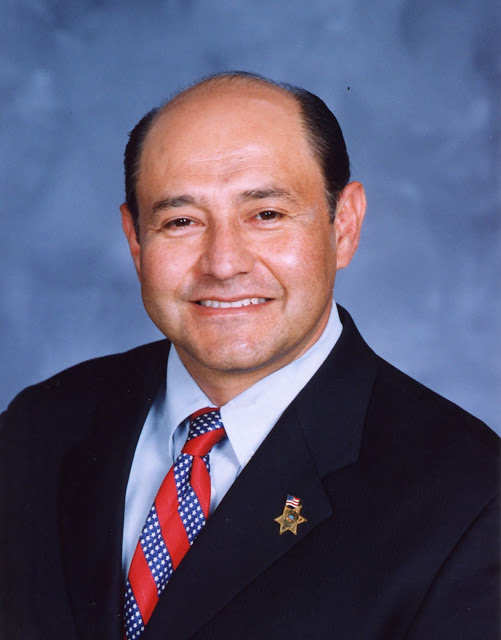
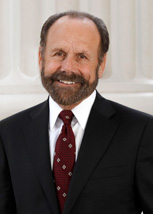
1 primary · 1 co-sponsor
Sponsors
Ask Maddy
·
AI policy assistant
Ask Maddy about SB 896
Scope: CA
Hi! I can help you understand SB 896. What would you like to know?
Try one of these
i
Maddy answers using official bill text and legislative records. Always verify before sharing.
Sources cited inline