

School employees: discipline: dismissal and suspension.
Summary
(1) Existing law prohibits a permanent school employee from being dismissed except for one or more specified reasons. Existing law authorizes a governing board of a school district to suspend without pay for a specific period of time on grounds of unprofessional conduct a permanent certificated employee, or, in a school district with an average daily attendance of less than 250 pupils, a probationary employee, as provided. Existing law additionally authorizes the governing board of a school district to immediately suspend a permanent employee for specified reasons, as provided. This bill would, among other things, add egregious conduct, as defined, to the list of specified reasons for which a permanent employee may be dismissed. The bill would also revise the reasons for which the governing board of a school district is authorized to immediately suspend a permanent employee. (2) Existing law establishes a Commission on Professional Competence for each dismissal or suspension hearing requested by an employee, consisting of one member selected by the governing board, one member selected by the employee, and an administrative law judge as the 3rd member. Existing law requires in a dismissal or suspension proceeding against a permanent employee, if a hearing is requested by the employee, that the hearing be commenced within 60 days from the date of the employee's demand for a hearing. Existing law prescribes various procedures for the hearing, including, among others, a prohibition against the use of evidence of any nature relating to matters occurring more than 4 years prior to the filing of a notice in a decision relating to the termination or suspension of any employee. This bill would instead require, for specified charges, that a commission on professional competence to be comprised of only an administrative law judge, and that the matter be submitted for decision within 12 months from the date of the employee's demand for a hearing, as provided. For those same charges, the bill would authorize testimony to be given or evidence introduced relating to matters that occurred more than 4 years before the date of the filing of the notice unless it is not relevant, and would provide for the allocation of costs for the hearing and any appeals by requiring, among other things, that the employee pay for the costs of the hearing if the administrative law judge determines that the employee's decision to demand a hearing was a frivolous tactic that wasted public resources. (3) Existing law authorizes a governing board of a school district to give notice to a permanent employee of its intention to dismiss or suspend him or her for specified causes at the expiration of 30 days from the date of service of the notice, unless the employee demands a hearing. Existing law prohibits that notice from being given between May 15 and September 15 in any year. This bill would instead authorize the governing board of a school district to give the notice at any time of year, except as specified, provided that a notice of dismissal or suspension given outside of the instructional year of the schoolsite where the employee is physically employed is in writing served upon the employee personally. The bill would provide that a notice of the governing board of the school district to an employee of its intention to dismiss or suspend the employee, together with written charges filed or formulated pursuant to those procedures, is sufficient to initiate a hearing, as prescribed, and would prohibit the governing board of the school district from being required to file or serve a separate accusation. The bill would, if an employee demands a hearing, authorize the governing board to either rescind its action or schedule a hearing on the matter. The bill also would, for specified charges, authorize the governing board to rescind the notice at any time before the matter is submitted for decision. (4) Existing law prohibits information of a derogatory nature to be entered into an employee's personnel records unless the employee is given an opportunity to review and comment on that information. This bill would, notwithstanding that provision, prohibit, among other things, the governing board of a school district or its authorized representative from amending, renewing, or entering into an agreement that requires the removal from a school employee's records any evidence of credible complaints, substantiated investigations, or discipline relating to the school employee's commission, or alleged commission, of egregious conduct or other misconduct, as specified. (5) Existing law provides that a certificated employee may be charged with a mandatory leave of absence offense or an optional leave of absence offense for certain sex offenses or certain offenses involving controlled substances other than marijuana, mescaline, peyote, or tetrahydrocannabinols. Existing law requires the governing board of a school district to immediately place a certificated employee on compulsory leave of absence if the employee is charged with a mandatory leave of absence offense and authorizes the governing board to immediately place the employee on compulsory leave of absence if the employee is charged with an optional leave of absence offense. This bill would additionally authorize a certificated employee to be charged with a mandatory leave of absence offense for the commission of a violent or serious felony, as specified. The bill would also add controlled substances offenses involving marijuana, mescaline, peyote, or tetrahydrocannabinols to the lists of mandatory and optional leave of absence offenses, as specified. Because this bill would increase the number of employees subject to immediate placement on compulsory leave of absence, thereby increasing the duties of school districts, the bill would impose a state-mandated local program. (6) This bill would also make conforming changes and numerous nonsubstantive changes, and would delete obsolete references. (7) The California Constitution requires the state to reimburse local agencies and school districts for certain costs mandated by the state. Statutory provisions establish procedures for making that reimbursement. This bill would provide that, if the Commission on State Mandates determines that the bill contains costs mandated by the state, reimbursement for those costs shall be made pursuant to these statutory provisions.
Bill status
failed
1 of 4 stages cleared
Introduction
Jan 2014
Committee Review
Floor Vote
Governor
Introduced Jan 7, 2014
Last action Nov 30, 2014
Floor votes
How they voted
No floor votes recorded yet.
Full legislative history
Actions timeline
Total actions
11
Key actions
3
Committee
4
Apr 21, 2014
Upper · Passed
From committee with author's amendments. Read second time and amended. Re-referred to Com. on ED.
upper
Apr 16, 2014
Upper · Passed
Hearing postponed by committee.
upper
Feb 25, 2014
Upper · Passed
From committee with author's amendments. Read second time and amended. Re-referred to Com. on ED.
upper
Jan 23, 2014
Committee
Referred to Com. on ED.
upper
1 primary · 0 co-sponsors
Sponsors
Role
Legislator
Party
State
District
P
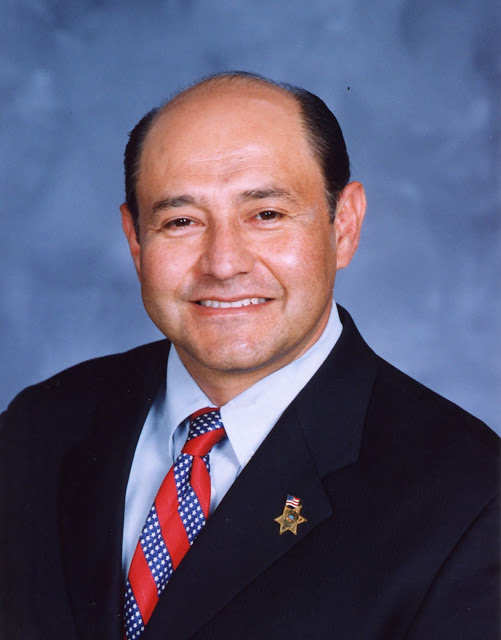
Lou Correa
DDemocratic
Ask Maddy
·
AI policy assistant
Ask Maddy about SB 843
Scope: CA
Hi! I can help you understand SB 843. What would you like to know?
Try one of these
i
Maddy answers using official bill text and legislative records. Always verify before sharing.
Sources cited inline