

Environmental quality: transit oriented infill projects, judicial review streamlining for environmental leadership development projects, and entertainment and sports center in the City of Sacramento.
Summary
(1) The Jobs and Economic Improvement Through Environmental Leadership Act of 2011 requires a party bringing an action or proceeding alleging that a lead agency's approval of a project certified by the Governor as an environmental leadership development project is in violation of the California Environmental Quality Act to file the action or proceeding with the Court of Appeal with geographic jurisdiction over the project and requires the Court of Appeal to issue its decision within 175 days of the filing of the petition. The Jobs and Economic Improvement Through Environmental Leadership Act of 2011 requires the lead agency to concurrently prepare the record of proceeding for the leadership project with the review and consideration of the project. The Jobs and Economic Improvement Through Environmental Leadership Act of 2011 provides that the above provision does not apply to a project for which a lead agency fails to certify an environmental impact report on or before June 1, 2014. The Jobs and Economic Improvement Through Environmental Leadership Act of 2011 is repealed by its own terms on January 1, 2015. This bill would instead require the Judicial Council, on or before July 1, 2014, to adopt a rule of court to establish procedures applicable to actions or proceedings seeking judicial review of a public agency's action in certifying the environmental impact report and in granting project approval that requires the actions or proceedings, including any appeals therefrom, be resolved, within 270 days of the certification of the record of proceedings. The bill would extend the operation of the judicial review procedures unless the lead agency fails to certify an environmental impact report for an environmental leadership project on or before January 1, 2016. The bill would provide that the above provisions do not apply to a project if the Governor does not certify the project as an environmental leadership development project prior to January 1, 2016. Because this bill would extend the time period for which a lead agency would be required to concurrently prepare the record of proceeding with the review and consideration of the environmental leadership development projects, this bill would impose a state-mandated local program. The bill would require the lead agency, within 10 days of the Governor's certification, to issue, at the applicant's expense, a specified public notice, thereby imposing a state-mandated local program. The bill would repeal the Jobs and Economic Improvement Through Environmental Leadership Act of 2011 on January 1, 2017. (2) The California Environmental Quality Act, commonly known as CEQA, requires a lead agency, as defined, to prepare, or cause to be prepared, and certify the completion of, an environmental impact report on a project that it proposes to carry out or approve that may have a significant effect on the environment or to adopt a negative declaration if it finds that the project will not have that effect. CEQA also requires a lead agency to prepare a mitigated negative declaration for a project that may have a significant effect on the environment if revisions in the project would avoid or mitigate that effect and there is no substantial evidence that the project, as revised, would have a significant effect on the environment. CEQA establishes a procedure by which a person may seek judicial review of the decision of the lead agency made pursuant to CEQA. This bill would provide that aesthetic and parking impacts of a residential, mixed-use residential, or employment center project, as defined, on an infill site, as defined, within a transit priority area, as defined, shall not be considered significant impacts on the environment. The bill would require the Office of Planning and Research to prepare and submit to the Secretary of the Natural Resources Agency, and the secretary to certify and adopt, revisions to the guidelines for the implementation of CEQA establishing criteria for determining the significance of transportation impacts of projects within transit priority areas. This bill would, except for specified circumstances, exempt from CEQA residential, employment center, and mixed-use development projects meeting specified criteria. Because a lead agency would be required to determine the applicability of this exemption, this bill would impose a state-mandated local program. This bill would require the public agency, in certifying the environmental impact report and in granting approvals for a specified entertainment and sports center project located in the City of Sacramento, including the concurrent preparation of the record of proceedings and the certification of the record of proceeding within 5 days of the filing of a specified notice, to comply with specified procedures. Because a public agency would be required to comply with those new procedures, this bill would impose a state-mandated local program. The bill would require the Judicial Council, on or before July 1, 2014, to adopt a rule of court to establish procedures applicable to actions or proceedings seeking judicial review of a public agency's action in certifying the environmental impact report and in granting project approval that requires the actions or proceedings, including any appeals therefrom, be resolved, to the extent feasible, within 270 days of the certification of the record of proceedings. The bill would provide that the above provisions are inoperative and repealed on January 1 of the following year if the applicant fails to notify the lead agency before the release of the draft environmental impact report for public comment that the applicant is electing to proceed pursuant to the above provisions. (3) Existing law requires the development, adoption, and updating of a congestion management program for each county that includes an urbanized area, as defined. The plan is required to contain specified elements and to be submitted to regional agencies, as defined, for determination of whether the program is consistent with regional transportation plans. The regional agency is then directed to monitor the implementation of all elements of each congestion management program. The required elements include traffic level of service standards for a system of designated highways and roadways. Existing law defines "infill opportunity zone" for purposes of the above-described provisions and exempts streets and highways in an infill opportunity zone from the level of service standards specified in the above-described provisions and instead requires alternate level of service standards to be applied. Existing law prohibits a city or county from designating an infill opportunity zone after December 31, 2009. This bill would revise the definition of "infill opportunity zone," as specified. The bill would authorize the designation of an infill opportunity zone that is a transit priority area within a sustainable communities strategy or alternative planning strategy adopted by an applicable metropolitan planning organization. (4) Existing law terminates the designation of an infill opportunity zone if no development project is completed within that zone within 4 years from the date of the designation. This bill would repeal this provision. This bill would make findings and declarations as to the necessity of a special statute for the City of Sacramento. (5) The California Constitution requires the state to reimburse local agencies and school districts for certain costs mandated by the state. Statutory provisions establish procedures for making that reimbursement. This bill would provide that no reimbursement is required by this act for a specified reason.
Bill status
signed
all 5 stages cleared
Introduction
Feb 2013
Committee Review
Sep 2013
Senate Passage
Apr 2013
Assembly Passage
Sep 2013
Signed into Law
Sep 2013
Introduced Feb 22, 2013
Signed Sep 27, 2013
Floor votes · Senate Apr 22, 2013 · Assembly Sep 13, 2013
How they voted
34–0
Passed
Total votes 34
Apr 22, 2013
D
Democratic25
100% Yea
R
Republican9
100% Yea
Vote distribution
All Yea
All Nay
Mixed
No data
Full legislative history
Actions timeline
Total actions
38
Key actions
11
Committee
13
Amendments
1
Sep 27, 2013
Signed into law
Approved by the Governor.
legislature
Sep 13, 2013
Assembly · Passed
Assembly Vote: pass (43-14-6)
assembly
Sep 12, 2013
Upper · Passed
Assembly amendments concurred in. (Ayes 32. Noes 5. Page 2421.) Ordered to engrossing and enrolling.
upper
Sep 12, 2013
Upper · Passed
From committee: That the Assembly amendments be concurred in. (Ayes 6. Noes 0. Page 2453.)
upper
Sep 12, 2013
Committee
From committee: Be re-referred to Com. on E.Q. pursuant to Senate Rule 29.10. (Ayes 4. Noes 0. Page 2419.) Re-referred to Com. on E.Q.
upper
Sep 12, 2013
Committee
Re-referred to Com. on RLS. pursuant to Senate Rule 29.10.
upper
Sep 12, 2013
Introduced
In Senate. Concurrence in Assembly amendments pending.
upper
Sep 11, 2013
Lower · Passed
From committee: Do pass as amended. (Ayes 6. Noes 1.) (September 11).
lower
Sep 11, 2013
Lower · Passed
From committee: Do pass and re-refer to Com. on L. GOV. (Ayes 8. Noes 0.) (September 11). Re-referred to Com. on L. GOV.
lower
Sep 9, 2013
Committee
Re-referred to Coms. on NAT. RES. and L. GOV. pursuant to Assembly Rule 77.2.
lower
Aug 14, 2013
Lower · Passed
From committee: Do pass. Ordered to consent calendar. (Ayes 17. Noes 0.) (August 14).
lower
Aug 5, 2013
Lower · Passed
From committee: Do pass and re-refer to Com. on APPR. (Ayes 15. Noes 0.) (July 1). Re-referred to Com. on APPR.
lower
May 16, 2013
Committee
Referred to Com. on U. & C.
lower
Apr 22, 2013
Senate · Passed
Senate Vote: pass (34-0)
senate
Apr 15, 2013
Upper · Passed
From committee: Be placed on second reading file pursuant to Senate Rule 28.8.
upper
Apr 2, 2013
Upper · Passed
From committee: Do pass and re-refer to Com. on APPR. (Ayes 11. Noes 0. Page 389.) (April 2). Re-referred to Com. on APPR.
upper
Mar 11, 2013
Committee
Referred to Com. on E., U., & C.
upper
Feb 22, 2013
Introduced
Introduced. To Com. on RLS. for assignment. To print.
upper
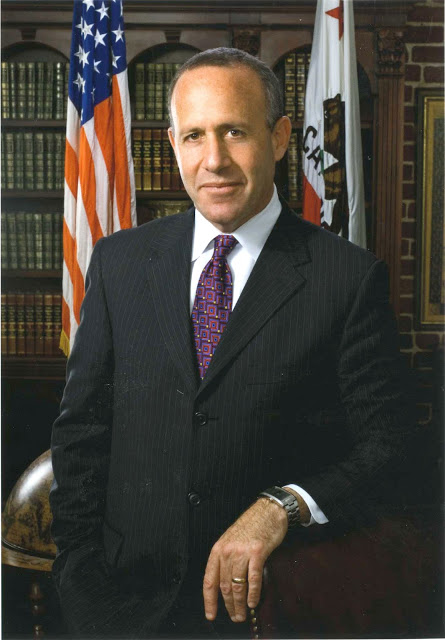
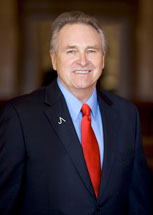
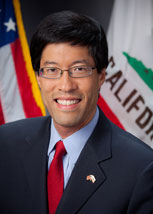
1 primary · 7 co-sponsors
Sponsors



Ask Maddy
·
AI policy assistant
Ask Maddy about SB 743
Scope: CA
Hi! I can help you understand SB 743. What would you like to know?
Try one of these
i
Maddy answers using official bill text and legislative records. Always verify before sharing.
Sources cited inline