

Natural resources: parks: carryout bags.
Summary
(1) Existing law requires an operator of a store, as defined, to establish an at-store recycling program that provides to customers the opportunity to return clean plastic carryout bags to that store. This requirement is repealed on January 1, 2013. Existing law prohibits a city, county, or other local public agency from taking specified regulatory actions with regard to the recycling of plastic carryout bags. Existing law provides for the enforcement of those provisions by local agencies and by the state and requires the civil penalties collected by the state to be expended by the Attorney General, upon appropriation by the Legislature, to implement these requirements. This bill would require a retail establishment, as defined, to collect a charge of $0.05 for each single-use carryout bag provided to a customer. The bill would require the retail establishment to retain $0.005 of that charge and would allow a retail establishment to retain an additional $0.005 if the retail establishment credits the consumer no less than $0.05 for each carryout bag provided by the consumer for packaging his or her purchases, and meets other requirements. The bill would require the retail establishment to remit the collected charges to the State Board of Equalization, which would be required to collect the charges pursuant to the Fee Collection Procedures Law. Since certain violations of that law are a crime, the bill would impose a state-mandated local program. The bill would allow the governing body of a city or county to adopt an ordinance that provides that the charge does not apply in that city or county. The bill would require the collected charges to be deposited in the Local Environmental Enhancement Fund, which this bill would create in the State Treasury. The bill would provide that the money deposited in the fund is available for expenditure by the Natural Resources Agency, upon appropriation by the Legislature. The bill would require the agency, after retaining no more than 5% of the moneys for the implementation of the bill, to allocate the remaining revenues in the fund to issue grants to a city or county for local parks and for local programs aimed at reducing and cleaning up litter. The bill would allow a city or county to apply for grants up to an amount that does not exceed the total amount of revenues generated by the city or county in which the park or program is located, except as specified with regard to administrative costs. The bill would require cities and counties eligible to receive grants from the Natural Resources Agency to develop, through a public process, criteria for determining eligibility to receive and for awarding local grants. The bill would require the Natural Resources Agency to annually post on a publicly accessible Internet Web site a list of cities and counties receiving funding and the amounts received, and would require the cities and counties receiving grant funding to annually post on a publicly accessible Internet Web site a list of the projects receiving local grants and the amounts received. The bill would require the Bureau of State Audits and Evaluations to review the Natural Resources Agency grants to the cities and counties and the local grant programs administered by the cities and counties. This bill would constitute a change in state statute that would result in a taxpayer paying a higher tax within the meaning of Section 3 of Article XIII   A of the California Constitution, and thus would require for passage the approval of 23 of the membership of each house of the Legislature. (2) This bill would provide that it would not take effect if Senate Bill 405 of the 2013–14 Regular Session amends state law to prohibit the provision of single-use carryout bags to a customer at a point of sale, and that bill is enacted and becomes operative on or before January 1, 2014. (3) The California Constitution requires the state to reimburse local agencies and school districts for certain costs mandated by the state. Statutory provisions establish procedures for making that reimbursement. This bill would provide that no reimbursement is required by this act for a specified reason.
Bill status
in committee
1 of 4 stages cleared
Introduction
Feb 2013
Committee Review
Floor Vote
Governor
Introduced Feb 22, 2013
Last action Feb 3, 2014
Floor votes
How they voted
No floor votes recorded yet.
Full legislative history
Actions timeline
Total actions
18
Key actions
6
Committee
6
Amendments
1
May 23, 2013
Upper · Passed
Held in committee and under submission.
upper
May 2, 2013
Upper · Passed
From committee: Do pass and re-refer to Com. on APPR. (Ayes 6. Noes 3. Page 789.) (May 1). Re-referred to Com. on APPR.
upper
Apr 23, 2013
Upper · Passed
From committee with author's amendments. Read second time and amended. Re-referred to Com. on E.Q.
upper
Apr 15, 2013
Upper · Passed
Read second time and amended. Re-referred to Com. on E.Q.
upper
Apr 11, 2013
Upper · Passed
From committee: Do pass as amended and re-refer to Com. on E.Q. (Ayes 6. Noes 2. Page 467.) (April 9).
upper
Apr 2, 2013
Upper · Passed
From committee with author's amendments. Read second time and amended. Re-referred to Com. on N.R. & W.
upper
Mar 11, 2013
Committee
Referred to Coms. on N.R. & W. and E.Q.
upper
Feb 22, 2013
Introduced
Introduced. To Com. on RLS. for assignment. To print.
upper
1 primary · 1 co-sponsor
Sponsors
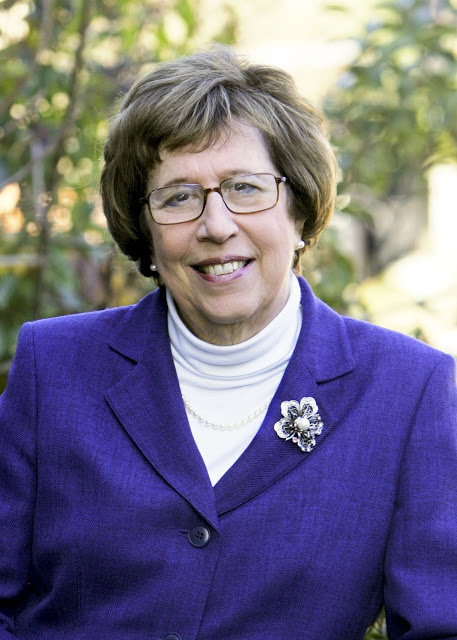
Ask Maddy
·
AI policy assistant
Ask Maddy about SB 700
Scope: CA
Hi! I can help you understand SB 700. What would you like to know?
Try one of these
i
Maddy answers using official bill text and legislative records. Always verify before sharing.
Sources cited inline