

Employment: retaliation.
Summary
Existing law establishes grounds for suspension or revocation of certain business and professional licenses. This bill would subject those business licenses to suspension or revocation, with a specified exception, if the licensee has been determined by the Labor Commissioner or the court to have violated specified law and the court or Labor Commissioner has taken into consideration any harm such a suspension or revocation would cause to employees of the licensee, as well as the good faith efforts of the licensee to resolve any alleged violations after receiving notice. The bill would subject a licensee of an agency within the Department of Consumer Affairs who has been found by the Labor Commissioner or the court to have violated specified law to disciplinary action by his or her respective licensing agency. The State Bar Act establishes specific causes for the disbarment or suspension of a member of the State Bar. This bill would make it a cause for suspension, disbarment, or other discipline for any member of the State Bar to report suspected immigration status or threaten to report suspected immigration status of a witness or party to a civil or administrative action or his or her family member, as defined, to a federal, state, or local agency because the witness or party exercises or has exercised a right related to his or her employment. Existing law establishes various rights and protections relating to employment and civil rights that may be enforced by civil action. This bill would provide that it is not necessary to exhaust administrative remedies or procedures in order to bring a civil action enforcing designated rights. Under the bill, reporting or threatening to report an employee's, former employee's, or prospective employee's suspected citizenship or immigration status, or the suspected citizenship or immigration status of the employee's or former employee's family member, as defined, to a federal, state, or local agency because the employee, former employee, or prospective employee exercises a designated right would constitute an adverse action for purposes of establishing a violation of the designated right. Because a violation of certain of those designated rights is a misdemeanor, this bill would impose a state-mandated local program by changing the definition of a crime. Existing law prohibits an employer from discharging an employee or in any manner discriminating against any employee or applicant for employment because the employee or applicant has engaged in prescribed protected conduct relating to the enforcement of the employee's or applicant's rights. Existing law makes it a misdemeanor for an employer to take adverse employment action against employees who file bona fide complaints. This bill would also prohibit an employer from retaliating or taking any adverse action against any employee or applicant for employment because the employee or applicant has engaged in protected conduct. The bill would expand the protected conduct to include a written or oral complaint by an employee that he or she is owed unpaid wages. The bill would subject an employer to a civil penalty of up to $10,000 per violation of these provisions. Existing law entitles an employee to reinstatement and reimbursement for lost wages and benefits if the employee has been discharged, demoted, suspended, or in any way discriminated against because the employee engaged in protected conduct or because the employee made a bona fide complaint or claim or initiated any action or notice, as prescribed. This bill would similarly grant these entitlements to an employee who is retaliated against or subjected to an adverse action. Existing law prohibits an employer from making, adopting, or enforcing any rule, regulation, or policy preventing an employee from disclosing information to a government or law enforcement agency, where the employee has reasonable cause to believe that the information discloses a violation of state or federal statute, or a violation or noncompliance with a state or federal rule or regulation. Existing law further prohibits an employer from retaliating against an employee for such a disclosure. Under existing law, a violation of these provisions by an employer is a crime. This bill would additionally prohibit any person acting on behalf of the employer from making, adopting, or enforcing any rule, regulation, or policy preventing an employee from disclosing information to a government or law enforcement agency, as provided, and would extend those prohibitions to preventing an employee from, or retaliating against an employee for, providing information to, or testifying before, any public body conducting an investigation, hearing, or inquiry. Because a violation of these provisions by an employer would be a crime, this bill would impose a state-mandated local program. This bill would incorporate additional changes to Section 1102.5 of the Labor Code proposed by SB 496 that would become operative if this bill and SB 496 are enacted and this bill is enacted last. The California Constitution requires the state to reimburse local agencies and school districts for certain costs mandated by the state. Statutory provisions establish procedures for making that reimbursement. This bill would provide that no reimbursement is required by this act for a specified reason.
Bill status
signed
all 5 stages cleared
Introduction
Feb 2013
Committee Review
Sep 2013
Senate Passage
May 2013
Assembly Passage
Sep 2013
Signed into Law
Oct 2013
Introduced Feb 22, 2013
Signed Oct 5, 2013
Floor votes · Senate May 28, 2013 · Assembly Sep 9, 2013
How they voted
29–5
Passed · 1 other
Total votes 35
May 28, 2013
D
Democratic26
100% Yea
R
Republican9
55% Nay
Vote distribution
All Yea
All Nay
Mixed
No data
Full legislative history
Actions timeline
Total actions
36
Key actions
14
Committee
13
Amendments
2
Oct 5, 2013
Signed into law
Approved by the Governor.
legislature
Sep 10, 2013
Upper · Passed
Assembly amendments concurred in. (Ayes 32. Noes 2. Page 2297.) Ordered to engrossing and enrolling.
upper
Sep 9, 2013
Assembly · Passed
Assembly Vote: pass (40-15-8)
assembly
Sep 9, 2013
Introduced
In Senate. Concurrence in Assembly amendments pending.
upper
Aug 21, 2013
Lower · Passed
From committee: Do pass as amended. (Ayes 12. Noes 1.) (August 21).
lower
Aug 5, 2013
Lower · Passed
From committee with author's amendments. Read second time and amended. Re-referred to Com. on APPR.
lower
Jun 27, 2013
Lower · Passed
From committee: Do pass and re-refer to Com. on APPR. (Ayes 7. Noes 0.) (June 26). Re-referred to Com. on APPR.
lower
Jun 18, 2013
Lower · Passed
From committee: Do pass and re-refer to Com. on L. & E. (Ayes 7. Noes 0.) (June 18). Re-referred to Com. on L. & E.
lower
Jun 10, 2013
Committee
Referred to Coms. on JUD. and L. & E.
lower
May 28, 2013
Senate · Passed
Senate Vote: pass (29-5-1)
senate
May 23, 2013
Upper · Passed
From committee: Do pass. (Ayes 5. Noes 2. Page 1018.) (May 23).
upper
May 7, 2013
Upper · Passed
Read second time and amended. Re-referred to Com. on APPR.
upper
May 6, 2013
Upper · Passed
From committee: Do pass as amended and re-refer to Com. on APPR. (Ayes 6. Noes 1. Page 754.) (April 30).
upper
Apr 24, 2013
Upper · Passed
From committee: Do pass and re-refer to Com. on JUD. (Ayes 4. Noes 0. Page 664.) (April 24). Re-referred to Com. on JUD.
upper
Apr 11, 2013
Upper · Passed
From committee with author's amendments. Read second time and amended. Re-referred to Com. on L. & I.R.
upper
Apr 3, 2013
Committee
Re-referred to Coms. on L. & I.R. and JUD.
upper
Apr 1, 2013
Upper · Passed
From committee with author's amendments. Read second time and amended. Re-referred to Com. on RLS.
upper
Mar 11, 2013
Committee
Referred to Com. on RLS.
upper
Feb 22, 2013
Introduced
Introduced. To Com. on RLS. for assignment. To print.
upper
1 primary · 6 co-sponsors
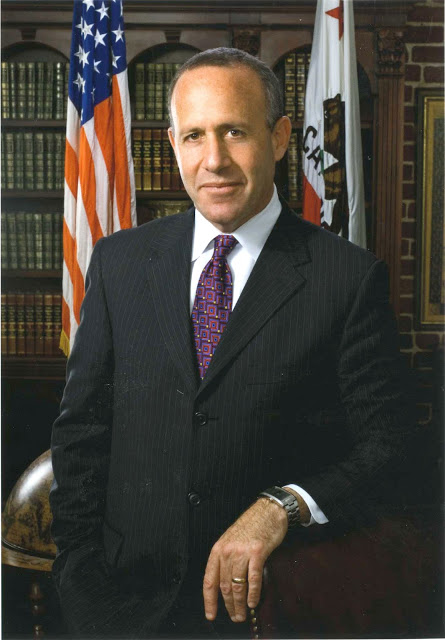
Sponsors





Ask Maddy
·
AI policy assistant
Ask Maddy about SB 666
Scope: CA
Hi! I can help you understand SB 666. What would you like to know?
Try one of these
i
Maddy answers using official bill text and legislative records. Always verify before sharing.
Sources cited inline