

California Environmental Quality Act.
Summary
(1) The California Environmental Quality Act, referred to as CEQA requires a lead agency, as defined, to prepare, or cause to be prepared, and certify the completion of, an environmental impact report, referred to as an EIR on a project that it proposes to carry out or approve that may have a significant effect on the environment or to adopt a negative declaration if it finds that the project will not have that effect. CEQA also requires a lead agency to prepare a mitigated negative declaration for a project that may have a significant effect on the environment if revisions in the project would avoid or mitigate that effect and there is no substantial evidence that the project, as revised, would have a significant effect on the environment. CEQA authorizes the Secretary of the Natural Resources Agency to certify a regulatory program that meets specified requirements. CEQA provides that written documentation required by those certified regulatory programs may be submitted in lieu of an EIR. CEQA requires an administering agency to file with the secretary a notice of decision made pursuant to the certified regulatory program, which is required to be available for public inspection. CEQA requires a lead agency to call a scoping meeting for specified projects and provide a notice of the meeting to specified entities. CEQA requires the lead agency or a project proponent to file a notice of approval or determination with the Office of Planning and Research if the lead agency is a state agency or with the county clerk if the lead agency is a local agency. CEQA requires a public agency that has completed an EIR to file with the Office of Planning and Research a notice of completion. CEQA requires a lead agency determining that an EIR is required for a project to send a notice of that determination to specified public agencies. CEQA requires a lead agency preparing an EIR, a negative declaration, or making a specified determination regarding a subsequent project to provide a public notice within a reasonable time period before the certification of the EIR, or the adoption of a negative declaration, or making the specified determination. CEQA requires those notices to be posted in the office of the county clerk in each county in which the project is located and requires the notices to remain posted for 30 days. CEQA requires the county clerk to post the notice within 24 hours of receipt. This bill would additionally require the above mentioned notices to be filed with both the Office of Planning and Research and the county clerk and be posted by the county clerk for public review. The bill would require the county clerk to post the notices within one business day, as defined, of receipt and stamp on the notice the date on which the notices were actually posted. By expanding the services provided by the lead agency and the county clerk, this bill would impose a state-mandated local program. The bill would require the county clerk to post the notices for at least 30 days. The bill would require the Office of Planning and Research to post the notices on a publicly available online database established and maintained by the office. The bill would require the office to stamp the notices with the date on which the notices were actually posted for online review and would require the notices to be posted for at least 30 days. The bill would authorize the office to charge an administrative fee not to exceed $10 per notice filed. The bill would specify that a time period or limitation period specified by CEQA does not commence until the notice is actually posted for public review by the county clerk or is available in the online database, whichever is later. The bill would require the notice of determination to be filed solely by the lead agency. (2) CEQA authorizes, for a project that is determined by a state agency to be exempted from the requirements of CEQA, a state agency or a project proponent to file a notice of determination with the Office of Planning and Research. CEQA authorizes, for a project that is determined by a local agency to be exempted from the requirements of CEQA, a local agency or a project proponent to file a notice of determination with the county clerk of the county in which the project is located. This bill would require that notice of determination be filed with both the Office of Planning and Research and the county clerk. By requiring a county clerk to receive and post that notice of determination filed by a state agency, this bill would impose a state-mandated local program. The bill would provide that notice of determination be filed by the lead agency only. (3) This bill would require the Office of Planning and Research and the county clerk, after the posting of the notices filed with them, to return the notice to the filing agency with a notation of the period the notice was posted. By requiring a county clerk to return the notice, this bill would impose a state-mandated local program. (4) CEQA defines "environment" and "significant effect on the environment" for its purposes. CEQA requires the EIR to include a detailed statement setting forth specified facts. This bill would revise those definitions, as specified. This bill would additionally require the lead agency to include in the EIR a detailed statement on any significant effects that may result from locating the proposed project near, or attracting people to, existing or reasonably foreseeable natural hazards or adverse environmental conditions. Because the lead agency would be required to undertake this additional consideration, this bill would impose a state-mandated local program. (5) The bill would repeal certain exemptions from the requirements of CEQA related to the California Men's Colony West Facility, a prison facility at or in the vicinity of Corcoran, a certain prison facility in the County of King, and the Napa Valley Wine Train. (6) The California Constitution requires the state to reimburse local agencies and school districts for certain costs mandated by the state. Statutory provisions establish procedures for making that reimbursement. This bill would provide that no reimbursement is required by this act for a specified reason.
Bill status
died
1 of 4 stages cleared
Introduction
Feb 2013
Committee Review
Floor Vote
Governor
Introduced Feb 22, 2013
Last action Feb 6, 2014
Floor votes
How they voted
No floor votes recorded yet.
Full legislative history
Actions timeline
Total actions
16
Key actions
4
Committee
5
May 24, 2013
Upper · Passed
From committee: Do pass as amended. (Ayes 5. Noes 2. Page 1018.) (May 23).
upper
May 2, 2013
Upper · Passed
From committee: Do pass and re-refer to Com. on APPR. (Ayes 7. Noes 2. Page 789.) (May 1). Re-referred to Com. on APPR.
upper
Apr 4, 2013
Upper · Passed
Hearing postponed by committee.
upper
Apr 1, 2013
Upper · Passed
From committee with author's amendments. Read second time and amended. Re-referred to Com. on E.Q.
upper
Mar 11, 2013
Committee
Referred to Com. on E.Q.
upper
Feb 22, 2013
Introduced
Introduced. To Com. on RLS. for assignment. To print.
upper
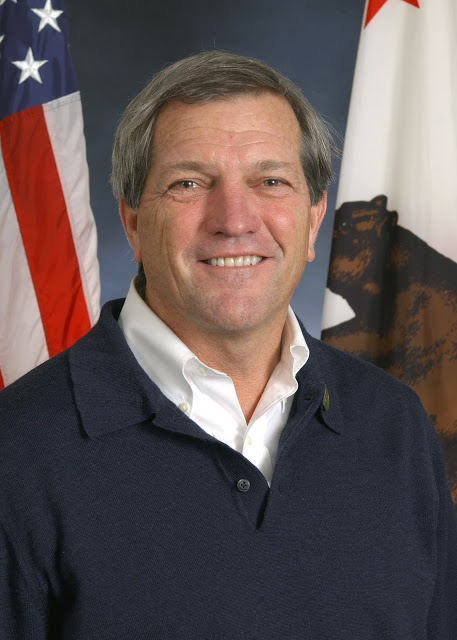
1 primary · 1 co-sponsor
Sponsors
Ask Maddy
·
AI policy assistant
Ask Maddy about SB 617
Scope: CA
Hi! I can help you understand SB 617. What would you like to know?
Try one of these
i
Maddy answers using official bill text and legislative records. Always verify before sharing.
Sources cited inline