

Political reform.
Summary
Existing law, the Political Reform Act of 1974, provides for the comprehensive regulation of campaign financing, including requiring the reporting of campaign contributions. The act imposes a contribution limit of $3,000 on contributions made to, and received by, candidates for elective state offices that are not statewide elective offices. The act is administered and enforced by the Fair Political Practices Commission, which is authorized to adjust the contribution limit to reflect changes in the Consumer Price Index, as specified. The act does not limit the amount of contributions that a person may make to a committee that is primarily formed to support or oppose one or more ballot measures. The act prohibits a candidate for elective state office or a committee controlled by that candidate from making a contribution to another candidate for elective state office in excess of the contribution limit for elective state offices. The act imposes various restrictions and reporting requirements on Members of the Legislature and candidates for either house of the Legislature, including prohibiting or restricting earned income from a lobbyist or lobbyist employer, restricting the receipt of gifts, and restricting the purposes for which campaign funds may be expended. This bill would prohibit a person from making to a committee controlled by a candidate for elective office that is primarily formed to support or oppose one or more ballot measures, and prohibit such a committee from receiving, a contribution in excess of the contribution limit for elective state offices, as specified. The bill would prohibit a candidate for any elective office, or the candidate's controlled committees, from making a contribution to another candidate for elective office or a committee controlled by a candidate that is primarily formed to support or oppose one or more ballot measures in excess of the contribution limit established for candidates for elective state office. This bill would prohibit a committee controlled by a candidate for elective office that is primarily formed to support or oppose one or more ballot measures from expending campaign funds to make a contribution or other transfer of campaign funds to a committee for a purpose other than supporting or opposing a ballot measure that the controlled committee was primarily formed to support or oppose. This bill would prohibit a lobbyist or lobbyist employer from providing any compensation to a spouse or dependent of a Member or candidate, except as specified. The bill would prohibit campaign funds from being used to compensate a spouse or dependent of a Member of the Legislature or of a candidate for either house of the Legislature. This bill would prohibit the expenditure of campaign funds for attorney's fees and other costs in connection with criminal litigation, and would limit the payment of criminal litigation attorney's fees and other related legal costs arising directly out of the conduct of an election campaign, the electoral process, or the performance of the officer's governmental activities or duties to funds deposited in a legal defense account created pursuant to other specified provisions of law. The bill would also prohibit a committee that is not a legal defense committee from making an expenditure of campaign funds to any legal defense account. This bill would require a Member of the Legislature or a candidate for either house of the Legislature to report to the Secretary of State a contribution of one thousand dollars ($1,000) or greater within three business days of receipt of the contribution. A violation of the act's provisions is punishable as a misdemeanor. By expanding the scope of an existing crime, this bill would impose a state-mandated local program. Existing law subjects any member of the Legislature or any member of the legislative body of a city, county, city and county, school district, or other special district, and every executive or ministerial officer, employee, or appointee of the state, a county or city, or political subdivision, who asks for or receives a bribe in exchange for influence over his or her official action to imprisonment in a state prison for 2, 3, or 4 years, and imposes prescribed restitution fines based on whether a bribe has actually been received. This bill would increase the punishment to 4, 6, or 8 years in state prison and would increase the restitution fines to twice the original amount. The California Constitution requires the state to reimburse local agencies and school districts for certain costs mandated by the state. Statutory provisions establish procedures for making that reimbursement. This bill would provide that no reimbursement is required by this act for a specified reason. The Political Reform Act of 1974, an initiative measure, provides that the Legislature may amend the act to further the act's purposes upon a 23 vote of each house and compliance with specified procedural requirements. This bill would declare that it furthers the purposes of the act. This bill would declare that it is to take effect immediately as an urgency statute.
Bill status
failed
1 of 4 stages cleared
Introduction
Feb 2014
Committee Review
Floor Vote
Governor
Introduced Feb 21, 2014
Last action Nov 30, 2014
Floor votes
How they voted
No floor votes recorded yet.
Full legislative history
Actions timeline
Total actions
10
Key actions
2
Committee
5
Jun 24, 2014
Committee
Set, first hearing. Failed passage in committee. Reconsideration granted.
upper
Jun 16, 2014
Upper · Passed
From committee with author's amendments. Read second time and amended. Re-referred to Com. on E. & C.A.
upper
Jun 5, 2014
Committee
Re-referred to Coms. on E. & C.A. and PUB. S.
upper
May 28, 2014
Upper · Passed
From committee with author's amendments. Read second time and amended. Re-referred to Com. on RLS.
upper
Mar 17, 2014
Committee
Referred to Com. on RLS.
upper
Feb 21, 2014
Introduced
Introduced. To Com. on RLS. for assignment. To print.
upper
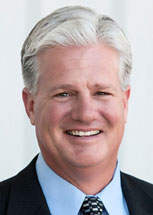
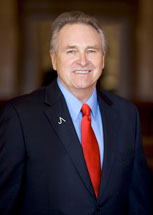
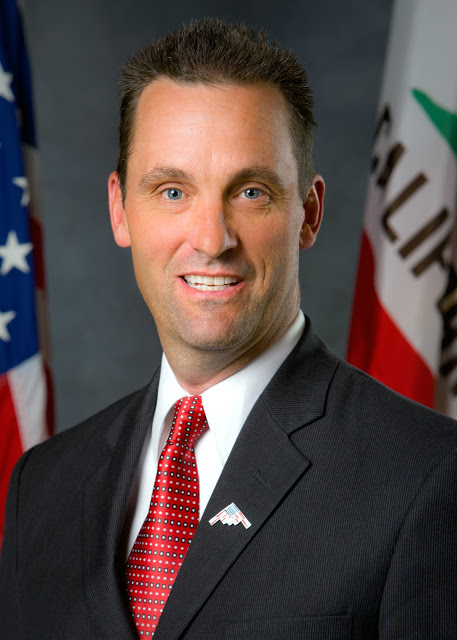
1 primary · 8 co-sponsors
Sponsors





Ask Maddy
·
AI policy assistant
Ask Maddy about SB 1379
Scope: CA
Hi! I can help you understand SB 1379. What would you like to know?
Try one of these
i
Maddy answers using official bill text and legislative records. Always verify before sharing.
Sources cited inline