

Health care: fair billing policies.
Summary
(1) Existing law requires a hospital, as defined, to maintain an understandable written policy regarding discount payments for financially qualified patients as well as a written charity care policy, and authorizes a hospital to negotiate the terms of a payment plan with a patient. Existing law requires that uninsured patients or patients with high medical costs who are at or below 350% of the federal poverty level be eligible for charity care or a discount payment policy from a hospital, as specified, and requires that specified patients be eligible for discount payments to an emergency physician. Existing law defines a patient with high medical costs as a person whose family income does not exceed 350% of the federal poverty level and who does not receive a discounted rate from the hospital or physician as a result of his or her 3rd-party coverage. This bill would instead require a hospital to negotiate with a patient regarding a payment plan, taking into consideration the patient's family income and essential living expenses. This bill would require the hospital to use a specified formula to create a reasonable payment plan, as defined, if the hospital and the patient cannot agree to a payment plan. This bill would change the definition of a person with high medical costs to include those persons who do receive a discounted rate from the hospital as a result of 3rd-party coverage. This bill would also require an emergency physician or his or her assignee to use a specified formula to calculate a reasonable payment formula when a patient is attempting to qualify for eligibility under the emergency physician's discount payment policy. This bill would authorize an emergency physician or his or her assignee to rely on the determination of family income and essential living expenses made by the hospital at which emergency care was provided for purposes of calculating the reasonable payment formula, and would authorize an emergency physician or his or her assignee, at his or her discretion, to accept self-attestation of family income and essential living expenses by a patient or a patient's legal representative. (2) Existing law requires a hospital or emergency physician to make a reasonable effort to obtain from the patient, or his or her representative, information about whether private or public health insurance or sponsorship may fully or partially cover the charges for care, including private health insurance, and requires the hospital or emergency physician to provide a patient who has not shown proof of 3rd-party coverage with specified information, including a statement that he or she may be eligible for specified health coverage programs, including Medi-Cal and the California Children's Services program, and applications for those programs. This bill would require the hospital or emergency physician to obtain information as to whether the patient may be eligible for the California Health Benefit Exchange and to include in the information provided to a patient that has not shown proof of 3rd-party coverage a statement that the consumer may be eligible for coverage through the California Health Benefit Exchange or other state- or county-funded health coverage programs. The bill would also specify that when a patient applies, or has a pending application, for another health coverage program at the same time he or she applies for charity care or a discount payment program, that neither application precludes eligibility for the other program. (3) Existing law requires a hospital or an emergency physician to have a written policy defining standards and practices for the collection of debt, and a written agreement from any agency that collects debt that it will adhere to the standards and practices. This bill would require the affiliate, subsidiary, or external collection agency that is collecting hospital or emergency physician receivables to comply with the definition and application of a reasonable payment plan, as defined.
Bill status
signed
all 5 stages cleared
Introduction
Feb 2014
Committee Review
Aug 2014
Senate Passage
May 2014
Assembly Passage
Aug 2014
Signed into Law
Sep 2014
Introduced Feb 21, 2014
Signed Sep 28, 2014
Floor votes · Senate May 27, 2014 · Assembly Aug 11, 2014
How they voted
21–9
Passed · 6 other
Total votes 36
May 27, 2014
D
Democratic26
80% Yea
R
Republican10
90% Nay
Vote distribution
All Yea
All Nay
Mixed
No data
Full legislative history
Actions timeline
Total actions
24
Key actions
6
Committee
5
Amendments
1
Sep 28, 2014
Signed into law
Approved by the Governor.
legislature
Aug 13, 2014
Upper · Passed
Assembly amendments concurred in. (Ayes 24. Noes 11. Page 4474.) Ordered to engrossing and enrolling.
upper
Aug 11, 2014
Assembly · Passed
Assembly Vote: pass (48-19-3)
assembly
Aug 11, 2014
Introduced
In Senate. Concurrence in Assembly amendments pending.
upper
Jun 25, 2014
Lower · Passed
From committee: Do pass as amended. (Ayes 14. Noes 4.) (June 24).
lower
Jun 2, 2014
Committee
Referred to Com. on HEALTH.
lower
May 27, 2014
Senate · Passed
Senate Vote: pass (21-9-6)
senate
Apr 10, 2014
Upper · Passed
From committee: Do pass. (Ayes 5. Noes 2. Page 3162.) (April 9).
upper
Mar 6, 2014
Committee
Referred to Com. on HEALTH.
upper
Feb 21, 2014
Introduced
Introduced. To Com. on RLS. for assignment. To print.
upper
1 primary · 0 co-sponsors
Sponsors
Role
Legislator
Party
State
District
P
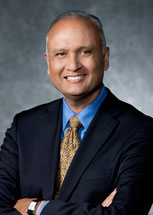
Ed Hernandez
DDemocratic
Ask Maddy
·
AI policy assistant
Ask Maddy about SB 1276
Scope: CA
Hi! I can help you understand SB 1276. What would you like to know?
Try one of these
i
Maddy answers using official bill text and legislative records. Always verify before sharing.
Sources cited inline