

Controlled substances: prescriptions: reporting.
Summary
(1) Existing law classifies certain controlled substances into designated schedules. Existing law requires the Department of Justice to maintain the Controlled Substance Utilization Review and Evaluation System (CURES) for the electronic monitoring of the prescribing and dispensing of Schedule II, Schedule III, and Schedule IV controlled substances by all practitioners authorized to prescribe or dispense these controlled substances. Existing law requires specified information regarding prescriptions for Schedule II, Schedule III, and Schedule IV controlled substances, including the ultimate user of the prescribed controlled substance and the National Drug Code number of the controlled substance dispensed, to be reported to the Department of Justice. This bill would additionally require the prescribing and dispensing of Schedule V controlled substances to be monitored in CURES and would require specified information regarding prescriptions for Schedule V controlled substances to be reported to the Department of Justice. (2) Existing law requires licensed health care practitioners, as specified, and pharmacists to apply to the Department of Justice to obtain approval to access information contained in the CURES Prescription Drug Monitoring Program (PDMP) regarding the controlled substance history of a patient under his or her care. Existing law requires the Department of Justice, upon approval of that application, to provide to that health care practitioner or pharmacist the history of controlled substances dispensed to an individual under his or her care. This bill would also authorize an individual designated to investigate a holder of a professional license to apply to the Department of Justice to obtain approval to access information contained in the CURES PDMP regarding the controlled substance history of a licensee for the purpose of investigating the alleged substance abuse of a licensee. The bill would, upon approval of that application, require the department to provide to that individual the history of controlled substances dispensed to the applicant or licensee. (3) Existing law generally requires, subject to specified exceptions, that a prescription for Schedule II, Schedule III, Schedule IV, or Schedule V controlled substances be made on a certain controlled substance prescription form and meet several requirements, including that the prescription be signed and dated by the prescriber in ink. Existing law authorizes, as an exception to that requirement, a Schedule III, Schedule IV, or Schedule V controlled substance to be dispensed upon an oral or electronically transmitted prescription, which must be produced in hard copy form and signed and dated by the pharmacist filling the prescription or another authorized person. This bill would instead require, subject to specified exceptions, commencing January 1, 2016, that a prescription for a controlled substance be made by an electronically transmitted prescription that complies with regulations promulgated by the Drug Enforcement Agency, which, except as specified, must be produced in hard copy form and signed and dated by the pharmacist filling the prescription or another authorized person. The bill would provide that those requirements apply to medical practices with 2 or fewer physicians and medical providers in underserved rural areas commencing January 1, 2017. (4) Existing law prohibits a prescription for a Schedule II controlled substance from being refilled and prohibits a prescription for a Schedule III or IV controlled substance from being refilled more than 5 times and in an amount, for all refills of that prescription taken together, exceeding a 120-day supply. This bill would prohibit, subject to specified exceptions, a person from prescribing a controlled substance, or filling, compounding, or dispensing a prescription for a controlled substance, in a quantity exceeding a 30-day supply. The bill would also prohibit a person from issuing a prescription for a controlled substance, or from filling, compounding, or dispensing a prescription for a controlled substance, for an ultimate user for whom a previous prescription for that controlled substance was issued within the immediately preceding 30 days until the ultimate user has exhausted all but a 7-day supply of that controlled substance filled, compounded, or dispensed from the previous prescription.
Bill status
failed
1 of 4 stages cleared
Introduction
Feb 2014
Committee Review
Floor Vote
Governor
Introduced Feb 21, 2014
Last action Nov 30, 2014
Floor votes
How they voted
No floor votes recorded yet.
Full legislative history
Actions timeline
Total actions
16
Key actions
5
Committee
7
May 23, 2014
Upper · Passed
Held in committee and under submission.
upper
Apr 30, 2014
Upper · Passed
From committee: Do pass and re-refer to Com. on APPR. (Ayes 5. Noes 1. Page 3311.) (April 29). Re-referred to Com. on APPR.
upper
Apr 23, 2014
Upper · Passed
From committee with author's amendments. Read second time and amended. Re-referred to Com. on PUB. S.
upper
Apr 22, 2014
Upper · Passed
From committee: Do pass and re-refer to Com. on PUB. S. (Ayes 7. Noes 2. Page 3211.) (April 21). Re-referred to Com. on PUB. S.
upper
Apr 3, 2014
Committee
Re-referred to Coms. on B., P. & E.D. and PUB. S.
upper
Mar 25, 2014
Upper · Passed
From committee with author's amendments. Read second time and amended. Re-referred to Com. on RLS.
upper
Mar 6, 2014
Committee
Referred to Com. on RLS.
upper
Feb 21, 2014
Introduced
Introduced. To Com. on RLS. for assignment. To print.
upper
1 primary · 0 co-sponsors
Sponsors
Role
Legislator
Party
State
District
P
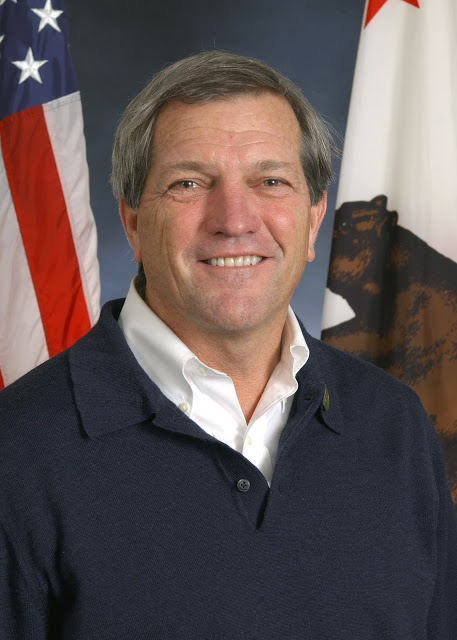
Mark DeSaulnier
DDemocratic
Ask Maddy
·
AI policy assistant
Ask Maddy about SB 1258
Scope: CA
Hi! I can help you understand SB 1258. What would you like to know?
Try one of these
i
Maddy answers using official bill text and legislative records. Always verify before sharing.
Sources cited inline