

Health facilities: outpatient care and patient assessment.
Summary
Existing law requires the State Department of Public Health to license and regulate health facilities. These provisions govern, among other things, patient care provided by those facilities. A person who violates these provisions is guilty of a misdemeanor. This bill would require a licensed health care professional acting within his or her scope of practice to assess a patient for followup care following stabilization in an emergency department or postsurgical outpatient service. The bill would require an outpatient to be discharged or admitted to inpatient status after no more than 24 hours, but as soon as reasonable and medically appropriate. The bill would require that a patient be assessed and frequently reassessed for a change in condition until admission, transfer, or discharge occurs. The bill would authorize an outpatient stay of longer than 24 hours under specified circumstances, including to arrange for a safe discharge and to make arrangements to provide public social services to a patient, and would authorize the department to specify, by regulation, other circumstances under which a longer stay would be permitted. The bill would additionally require, when a patient remains in a hospital as an outpatient for longer than 24 hours, as specified, that fact to be documented in the patient's medical record, along with the condition that necessitated an outpatient stay of longer than 24 hours. The bill would also require active monitoring of care extended to a patient for a period longer than 24 hours without an admission to inpatient status, with frequent reassessment, for a change in condition and would require placement to be made as soon as medically appropriate. Because a violation of these requirements would be a misdemeanor, the bill would impose a state-mandated local program. The California Constitution requires the state to reimburse local agencies and school districts for certain costs mandated by the state. Statutory provisions establish procedures for making that reimbursement. This bill would provide that no reimbursement is required by this act for a specified reason.
Bill status
failed
1 of 4 stages cleared
Introduction
Feb 2014
Committee Review
Floor Vote
Governor
Introduced Feb 20, 2014
Last action Nov 30, 2014
Floor votes
How they voted
No floor votes recorded yet.
Full legislative history
Actions timeline
Total actions
12
Key actions
4
Committee
4
Amendments
1
May 23, 2014
Upper · Passed
Held in committee and under submission.
upper
May 7, 2014
Upper · Passed
Read second time and amended. Re-referred to Com. on APPR.
upper
May 6, 2014
Upper · Passed
From committee: Do pass as amended and re-refer to Com. on APPR. (Ayes 7. Noes 0. Page 3343.) (April 30).
upper
Apr 10, 2014
Upper · Passed
From committee with author's amendments. Read second time and amended. Re-referred to Com. on HEALTH.
upper
Mar 6, 2014
Committee
Referred to Com. on HEALTH.
upper
1 primary · 0 co-sponsors
Sponsors
Role
Legislator
Party
State
District
P
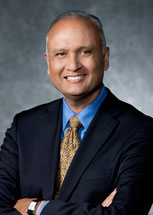
Ed Hernandez
DDemocratic
Ask Maddy
·
AI policy assistant
Ask Maddy about SB 1238
Scope: CA
Hi! I can help you understand SB 1238. What would you like to know?
Try one of these
i
Maddy answers using official bill text and legislative records. Always verify before sharing.
Sources cited inline