

Medical cannabis: state regulation and enforcement.
Summary
Existing law, the Compassionate Use Act of 1996, an initiative measure enacted by the approval of Proposition 215 at the November 6, 1996, statewide general election, authorizes the use of marijuana for medical purposes. Existing law enacted by the Legislature, commonly referred to as the Medical Marijuana Program Act, requires the establishment of a program for the issuance of identification cards to qualified patients so that they may lawfully use marijuana for medical purposes, and requires the establishment of guidelines for the lawful cultivation of marijuana grown for medical use. The Medical Practice Act provides for the regulation and licensing of physicians and surgeons by the Medical Board of California and requires the board to prioritize investigations and prosecutions of physicians and surgeons representing the greatest threat of harm, as specified. Existing law identifies the cases that are to be given priority, which include cases of repeated acts of excessively prescribing, furnishing, or administering controlled substances without a good faith prior examination of the patient. Existing law makes it unprofessional conduct for a physician and surgeon to prescribe, dispense, or furnish dangerous drugs without an appropriate prior examination and medical indication. Existing law also makes it unprofessional conduct to employ, aid, or abet an unlicensed person in the practice of medicine. Existing law generally makes any person who violates these provisions guilty of a misdemeanor. This bill would enact the Medical Cannabis Regulation and Control Act and would create the Division of Medical Cannabis Regulation and Enforcement within the Department of Alcoholic Beverage Control, to be administered by a person exempt from civil service who is appointed by the Director of Alcoholic Beverage Control. The bill would grant the department the exclusive power to register persons for the cultivation, manufacture, testing, transportation, storage, distribution, and sale of medical cannabis within the state subject to specified exemptions for a city or county. The bill would provide that the director and persons employed by the department to administer and enforce its provisions are peace officers. The bill would prescribe requirements for the issuance, renewal, suspension, and revocation of mandatory commercial registrations and fees in relation to these activities. The bill would permit the department to assist statewide taxation authorities in the development of uniform policies for the taxation of mandatory commercial medical cannabis registrants and to assist in the development of regulation in connection with work safety in this industry. The bill would authorize the division to establish a grant program for the purpose of funding medical cannabis regulation and enforcement. The bill would establish the Medical Cannabis Regulation Fund and would require deposit of fees into the fund. The bill would continuously appropriate moneys within the fund to the division for the purposes of administering the program. The bill would require the deposit of penalty money into the General Fund. The bill would require the department, on or before January 1, 2015, to issue regulations as necessary for the implementation and enforcement of mandatory commercial medical cannabis registration, as specified, and would prescribe requirements for provisional registrations to be operative January 1, 2014. The bill would prohibit approval of a mandatory commercial registration for specified reasons, including if a licensed physician making patient recommendations for medical cannabis is an interested party in the proposed operation, and would prohibit a physician from recommending medical cannabis to a patient while he or she is a mandatory commercial registrant, or associated, as specified, with a mandatory commercial registrant. The bill would provide that certain patient and caregiver information is excluded from disclosure to the public. The bill would provide that the actions of a mandatory commercial registrant or provisional registrant, its employees, and its agents that are permitted pursuant to a valid mandatory commercial registration issued by the division and that are conducted in accordance with the requirements of the act are not unlawful, as specified. The bill would provide a similar immunity for a property owner who allows his or her property to be used by a mandatory commercial registrant or provisional registrant. The bill would require the department to work in conjunction with law enforcement entities throughout the state to implement and enforce the rules and regulations regarding medical cannabis and to take appropriate action against businesses and individuals that fail to comply with the law. The bill would prohibit, on and after January 1, 2015, a person other than a mandatory commercial registrant from selling cannabis or cannabis products or performing other actions related to cannabis, except as specified. The bill would provide that its provisions do not affect local zoning ordinances or laws of general application. The bill would make certain violations of its provisions a crime, thereby imposing a state-mandated local program. The bill would establish requirements for the transportation of medical cannabis. The bill would specify that its provisions are severable. The bill would specify that recommending marijuana to patients without a good faith examination and medical reason is unprofessional conduct and is a type of case that should be given priority for investigation and prosecution by the Medical Board of California, as described above. The bill would also specify that employment by, or an agreement with, a mandatory medical cannabis registrant to provide recommendations for medical marijuana constitutes unprofessional conduct. By broadening the definition of a crime, the bill would impose a state-mandated local program. The bill would repeal, 90 days after the department posts a specified notice on its Internet Web site, the provisions described above prohibiting prosecution of qualified patients, persons with valid identification cards, and designated primary caregivers who associate in California, collectively or cooperatively, to cultivate marijuana for medical purposes. The California Constitution requires the state to reimburse local agencies and school districts for certain costs mandated by the state. Statutory provisions establish procedures for making that reimbursement. This bill would provide that no reimbursement is required by this act for a specified reason.
Bill status
failed
3 of 5 stages cleared
Introduction
Feb 2013
Committee Review
Sep 2013
Assembly Passage
May 2013
Senate Passage
Governor
Introduced Feb 20, 2013
Last action Nov 30, 2014
Floor votes · Assembly May 31, 2013
How they voted
31–29
Passed · 4 other
Total votes 64
May 31, 2013
D
Democratic43
72% Yea
R
Republican21
100% Nay
Vote distribution
All Yea
All Nay
Mixed
No data
Full legislative history
Actions timeline
Total actions
20
Key actions
5
Committee
8
Amendments
1
Sep 11, 2013
Introduced
From committee chair, with author's amendments: Amend, and re-refer to committee. Read second time, amended, and re-referred to Com. on PUB. S.
upper
Sep 9, 2013
Committee
Re-referred to Coms. on PUB. S. and B., P. & E.D.
upper
Sep 9, 2013
Committee
Re-referred to Com. on RLS. pursuant to Senate Rule 29.10(c).
upper
Aug 12, 2013
Upper · Passed
From committee: Do pass as amended. (Ayes 5. Noes 2.) (July 7).
upper
Jun 20, 2013
Upper · Passed
In committee: Set, first hearing. Hearing canceled at the request of author.
upper
Jun 13, 2013
Committee
Referred to Com. on PUB. S.
upper
May 31, 2013
Assembly · Passed
Assembly Vote: pass (31-29-4)
assembly
Apr 25, 2013
Lower · Passed
From committee: Do pass as amended. (Ayes 4. Noes 2.) (April 23).
lower
Mar 4, 2013
Committee
Referred to Com. on PUB. S.
lower
Feb 21, 2013
Lower · Passed
From printer. May be heard in committee March 23.
lower
1 primary · 2 co-sponsors
Sponsors
Role
Legislator
Party
State
District
P
TA
Tom Ammiano
DDemocratic
Co
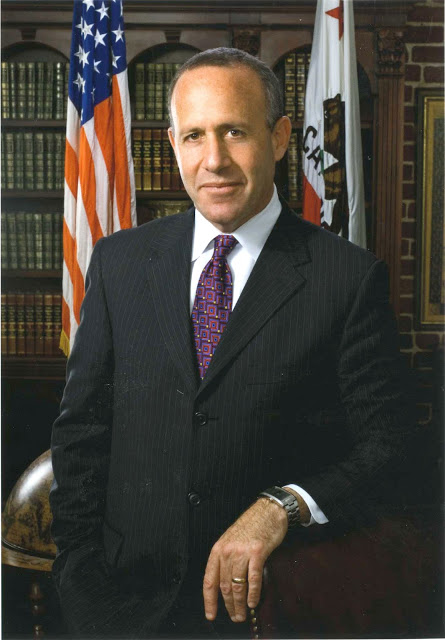
Darrell Steinberg
DDemocratic
Co
ML
Mark Leno
DDemocratic
Ask Maddy
·
AI policy assistant
Ask Maddy about AB 604
Scope: CA
Hi! I can help you understand AB 604. What would you like to know?
Try one of these
i
Maddy answers using official bill text and legislative records. Always verify before sharing.
Sources cited inline