

Electricity: distributed generation.
Summary
Under existing law, the Public Utilities Commission has regulatory authority over public utilities, including electrical corporations, as defined. Existing law authorizes the commission to fix the rates and charges for every public utility, and requires that those rates and charges be just and reasonable. Existing law requires the commission to require each electrical corporation under the operational control of the Independent System Operator as of January 1, 2001, to modify tariffs so that all customers that install new distributed energy resources, as defined, in accordance with specified criteria are served under rates, rules, and requirements identical to those of a customer within the same rate schedule that does not use distributed energy resources, and to withdraw any provisions in otherwise applicable tariffs that activate other tariffs, rates, or rules if a customer uses distributed energy resources. Existing law provides, notwithstanding these requirements, that a customer that installs new distributed energy resources not be exempted from (1) reasonable interconnection charges, (2) charges imposed pursuant to the Reliable Electric Service Investment Act, and (3) charges imposed to repay the Department of Water Resources for electricity procurement expenses incurred in response to the electricity crisis of 2000–01. Existing law requires the commission, in establishing the rates applicable to customers that install new distributed energy resources, to create a firewall that segregates distribution cost recovery so that any net costs, taking into account the actual costs and benefits of distributed energy resources, proportional to each customer class, as determined by the commission, resulting from the tariff modifications granted to members of each customer class may be recovered only from that class. This bill would make legislative findings and declarations as to clean onsite electricity generation and nonbypassable charges.
Bill status
failed
3 of 5 stages cleared
Introduction
Feb 2013
Committee Review
Jul 2014
Assembly Passage
Jan 2014
Senate Passage
Governor
Introduced Feb 14, 2013
Last action Nov 30, 2014
Floor votes · Assembly Jan 29, 2014
How they voted
43–20
Passed · 3 other
Total votes 66
Jan 29, 2014
D
Democratic45
95% Yea
R
Republican21
90% Nay
Vote distribution
All Yea
All Nay
Mixed
No data
Full legislative history
Actions timeline
Total actions
24
Key actions
5
Committee
9
Amendments
3
Jul 1, 2014
Committee
Re-referred to Com. on RLS.
upper
Jun 30, 2014
Upper · Passed
Read second time and amended. Re-referred to Com. on APPR.
upper
Jun 26, 2014
Upper · Passed
From committee: Do pass as amended and re-refer to Com. on APPR. (Ayes 7. Noes 2.) (June 23).
upper
Jun 17, 2014
Committee
Re-referred to Com. on E., U., & C.
upper
Jun 15, 2014
Committee
Re-referred to Com. on RLS.
upper
Jun 12, 2014
Introduced
From committee chair, with author's amendments: Amend, and re-refer to committee. Read second time, amended, and re-referred to Com. on JUD.
upper
Feb 6, 2014
Committee
Referred to Coms. on JUD. and APPR.
upper
Jan 29, 2014
Assembly · Passed
Assembly Vote: pass (43-20-3)
assembly
Apr 9, 2013
Lower · Passed
From committee: Do pass. (Ayes 7. Noes 3.) (April 9).
lower
Apr 4, 2013
Committee
Re-referred to Com. on JUD.
lower
Apr 3, 2013
Introduced
From committee chair, with author's amendments: Amend, and re-refer to Com. on JUD. Read second time and amended.
lower
Feb 28, 2013
Committee
Referred to Com. on JUD.
lower
Feb 15, 2013
Lower · Passed
From printer. May be heard in committee March 17.
lower
1 primary · 0 co-sponsors
Sponsors
Role
Legislator
Party
State
District
P
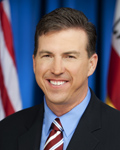
Kevin Mullin
DDemocratic
Ask Maddy
·
AI policy assistant
Ask Maddy about AB 365
Scope: CA
Hi! I can help you understand AB 365. What would you like to know?
Try one of these
i
Maddy answers using official bill text and legislative records. Always verify before sharing.
Sources cited inline