

Electricity: natural gas: rates: net energy metering: California Renewables Portfolio Standard Program.
Summary
Under existing law, the Public Utilities Commission has regulatory authority over public utilities, including electrical and gas corporations, as defined. Existing law authorizes the commission to fix the rates and charges for every public utility, and requires that those rates and charges be just and reasonable. Existing law requires the commission to designate a baseline quantity of electricity and gas necessary to supply a significant portion of the reasonable energy needs of the average residential customer and requires that electrical and gas corporations file rates and charges, to be approved by the commission, providing baseline rates. Existing law requires the commission, in establishing the baseline rates, to avoid excessive rate increases for residential customers. Existing law requires the commission to establish a program of assistance to low-income electric and gas customers, referred to as the California Alternate Rates for Energy (CARE) program. The CARE program provides lower rates to low-income customers that are financed through a separate rate component, which is required to be a nonbypassable element of the local distribution service and collected on the basis of usage. Eligibility for the CARE program is for those electric and gas customers with annual household incomes that are no greater than 200% of the federal poverty guideline levels. Existing law revises certain prohibitions upon raising residential electrical rates adopted during the energy crisis of 2000–01, to authorize the commission to increase the rates charged residential customers for electricity usage up to 130% of the baseline quantities by the annual percentage change in the Consumer Price Index from the prior year plus 1%, but not less than 3% and not more than 5% per year. Existing law additionally authorizes the commission to increase the rates in effect for CARE program participants for electricity usage up to 130% of baseline quantities by the annual percentage increase in benefits under the CalWORKs program, as defined, not to exceed 3%, and subject to the limitation that the CARE rates not exceed 80% of the corresponding rates charged to residential customers not participating in the CARE program. Existing law states the intent of the Legislature that CARE program participants be afforded the lowest possible electric and gas rates and, to the extent possible, be exempt from additional surcharges attributable to the energy crisis of 2000–01. This bill would repeal the limitations upon increasing the electric service rates of residential customers, including the rate increase limitations applicable to electric service provided to CARE customers, but would require the commission, in establishing rates for CARE program participants, to ensure that low-income ratepayers are not jeopardized or overburdened by monthly energy expenditures and to adopt CARE rates in which the level of discount for low-income electricity and gas ratepayers correctly reflects their level of need, as determined by a specified needs assessment. The bill would require that this needs assessment be performed not less often than every 3rd year. The bill would revise the CARE program eligibility requirements to provide that for one-person households, program eligibility would be based on 2-person household guideline levels. The bill would require the commission, when establishing the CARE discounts for an electrical corporation with 100,000 or more customer accounts in California, to ensure that the average effective CARE discount be no less than 30% and no more than 35% of the revenues that would have been produced for the same billed usage by non-CARE customers and that the entire discount be provided in the form of a reduction in the overall bill for the eligible CARE customer. The bill would require that increases to rates and charges in rate design proceedings, including any reduction in the CARE discount, be reasonable and subject to a reasonable phase-in schedule relative to the rates and charges in effect prior to January 1, 2014. The bill would authorize the commission to approve new, or expand existing, fixed charges, as defined, for an electrical corporation for the purpose of collecting a reasonable portion of the fixed costs of providing service to residential customers. The bill would require the commission to ensure that any new or expanded fixed charges reasonably reflect an appropriate portion of the different costs of serving small and large customers, do not unreasonably impair incentives for conservation and energy efficiency, and do not overburden low-income and moderate-income customers. The bill would impose a $10 limit per residential customer account per month for customers not enrolled in the CARE program, would impose a $5 per month limit per residential customer account per month for customers enrolled in the CARE program, and would, beginning January 1, 2016, authorize the commission to adjust this maximum allowable fixed charge by no more than the annual percentage increase in the Consumer Price Index for the prior calendar year. The bill would authorize the commission to consider whether minimum bills are an appropriate substitute for any fixed charges. Existing law prohibits the commission from requiring or permitting an electrical corporation to do any of the following: (1) employ mandatory or default time-variant pricing, as defined, with or without bill protection, as defined, for residential customers prior to January 1, 2013, (2) employ mandatory or default time-variant pricing, without bill protection, for residential customers prior to January 1, 2014, or (3) employ mandatory or default real-time pricing, without bill protection, for residential customers prior to January 1, 2020. Existing law authorizes the commission to authorize an electrical corporation to offer residential customers the option of receiving service pursuant to time-variant pricing and to participate in other demand response programs. Existing law requires the commission to only approve an electrical corporation's use of default time-variant pricing for residential customers, beginning January 1, 2014, if those residential customers have the option to not receive service pursuant to time-variant pricing and incur no additional charges, as specified, as a result of the exercise of that option. Existing law exempts certain customers from being subject to default time-variant pricing. This bill would delete these provisions and instead prohibit the commission from requiring or permitting an electrical corporation from employing mandatory or default time-variant pricing, as defined, for any residential customer, except that beginning January 1, 2018, the commission may require or authorize an electrical corporation to employ default time-of-use pricing to residential customers, subject to specified limitations and conditions. The bill would permit the commission to authorize an electrical corporation to offer residential customers the option of receiving service pursuant to time-variant pricing and to participate in other demand response programs. The bill would provide that a residential customer would have the option to not receive service pursuant to time-variant pricing and not incur any additional charge as a result of the exercise of that option. Unless the commission has authorized an electrical corporation to employ default time-of-use pricing, the bill would require the commission to require each electrical corporation to offer default rates to residential customers with at least 2 usage tiers and would require that the first tier include electricity usage of no less than the baseline quantity established by the commission. The bill would authorize the commission to modify the baseline seasonal definitions and applicable percentage of average consumption for one or more climate zones. Existing law requires every electric utility, defined to include an electrical corporation, local publicly owned electric utility, or an electrical cooperative, to develop a standard contract or tariff providing for net energy metering, as defined, and to make this contract or tariff available to eligible customer generators, as defined, upon request for generation by a renewable electrical generation facility, as defined. An electric utility, upon request, is required to make available to eligible customer generators contracts or tariffs for net energy metering on a first-come-first-served basis until the time that the total rated generating capacity used by eligible customer generators exceeds 5% of the electric utility's aggregate customer peak demand. Existing law authorizes a local publicly owned electric utility to elect to instead offer co-energy metering, which uses a generation-to-generation energy and time-of-use credit formula, as specified. This bill would require a large electrical corporation, defined as an electrical corporation with more than 100,000 service connections in California, to provide net energy metering to additional eligible customer-generators in its service area through July 1, 2017, or until the corporation reaches its net energy metering program limit, as specified. The bill would require the commission, no later than December 31, 2015, to develop a standard contract or tariff for eligible customer-generators with a renewable electrical generation facility that is a customer of a large electrical corporation. In developing the standard contract or tariff for large electrical corporations, the commission would be required to take specified actions. The bill would require the large electrical corporation to offer the standard contract or tariff to an eligible customer-generator beginning July 1, 2017, or prior to that date if ordered to do so by the commission because it has reached the net energy metering program limit established for the corporation. The bill would provide that there shall be no limitation on the number of new eligible customer-generators entitled to receive service pursuant to the new standard contract or tariff developed by the commission for a large electrical corporation. Existing law provides that a fuel cell electrical generation facility is not eligible for the tariff unless it commences operation before January 1, 2015. This bill would instead provide that a fuel cell electrical generation facility is not eligible for the tariff unless it commences operation before January 1, 2017. The Public Utilities Act requires each electrical corporation, as a part of its distribution planning process, to consider specified nonutility owned distributed energy resources as an alternative to investments in its distribution system to ensure reliable electric services at the lowest possible costs. This bill would require an electrical corporation, by July 1, 2015, to submit to the commission a distribution resources plan proposal, as specified, to identify optimal locations for the deployment of distributed resources, as defined. The bill would require the commission to review each distribution resources plan proposal submitted by an electrical corporation and approve, or modify and approve, a distribution resources plan for the corporation. The bill would require that any electrical corporation spending on distribution infrastructure necessary to accomplish the distribution resources plan be proposed and considered as part of the next general rate case for the corporation and would authorize the commission to approve this proposed spending if it concludes that ratepayers would realize net benefits and the associated costs are just and reasonable. The California Renewables Portfolio Standard Program requires the Public Utilities Commission to establish a rewewables portfolio standard requiring all retail sellers, as defined, to procure a minimum quantity of electricity products from eligible renewable energy resources, as defined, at specified percentages of the total kilowatthours sold to their retail end-customers during specified compliance periods. The program additionally requires each local publicly owned electric utility, as defined, to procure a minimum quantity of electricity products from eligible renewable energy resources to achieve the targets established by the program. Existing law prohibits the commission from requiring the procurement of eligible renewable energy resources in excess of the specified quantities. This bill would authorize the commission to require a retail seller to procure eligible renewable energy resources in excess of the specified quantities. Under existing law, a violation of the Public Utilities Act or any order, decision, rule, direction, demand, or requirement of the commission is a crime. Because portions of this bill are within the act and require action by the commission to implement their requirements, a violation of these provisions would impose a state-mandated local program by creating a new crime or expanding an existing crime. The California Constitution requires the state to reimburse local agencies and school districts for certain costs mandated by the state. Statutory provisions establish procedures for making that reimbursement. This bill would provide that no reimbursement is required by this act for a specified reason.
Bill status
signed
all 5 stages cleared
Introduction
Feb 2013
Committee Review
Sep 2013
Assembly Passage
May 2013
Senate Passage
Sep 2013
Signed into Law
Oct 2013
Introduced Feb 13, 2013
Signed Oct 7, 2013
Floor votes · Senate Sep 9, 2013 · Assembly May 23, 2013
How they voted
30–5
Passed
Total votes 35
Sep 9, 2013
D
Democratic25
80% Yea
R
Republican10
100% Yea
Vote distribution
All Yea
All Nay
Mixed
No data
Full legislative history
Actions timeline
Total actions
37
Key actions
15
Committee
13
Amendments
6
Oct 7, 2013
Signed into law
Approved by the Governor.
legislature
Sep 12, 2013
Lower · Passed
Senate amendments concurred in. To Engrossing and Enrolling. (Ayes 74. Noes 1. Page 3288.).
lower
Sep 11, 2013
Lower · Passed
From committee: That the Senate amendments be concurred in. (Ayes 14. Noes 0.) (September 11).
lower
Sep 10, 2013
Committee
Re-referred to Com. on U. & C. pursuant to Assembly Rule 77.2.
lower
Sep 9, 2013
Senate · Passed
Senate Vote: pass (30-5)
senate
Sep 9, 2013
Introduced
In Assembly. Concurrence in Senate amendments pending. May be considered on or after September 11 pursuant to Assembly Rule 77.
lower
Sep 4, 2013
Upper · Passed
Measure version as amended on September 3 corrected.
upper
Sep 3, 2013
Upper · Passed
Measure version as amended on September 3 corrected.
upper
Aug 30, 2013
Upper · Passed
From committee: Do pass as amended. (Ayes 6. Noes 0.) (August 30).
upper
Aug 26, 2013
Upper · Passed
In committee: Placed on APPR. suspense file.
upper
Aug 21, 2013
Introduced
From committee chair, with author's amendments: Amend, and re-refer to committee. Read second time, amended, and re-referred to Com. on APPR.
upper
Aug 12, 2013
Introduced
From committee chair, with author's amendments: Amend, and re-refer to committee. Read second time, amended, and re-referred to Com. on APPR.
upper
Jul 11, 2013
Upper · Passed
In committee: Hearing postponed by committee.
upper
Jul 8, 2013
Upper · Passed
Read second time and amended. Re-referred to Com. on APPR.
upper
Jul 3, 2013
Upper · Passed
From committee: Do pass as amended and re-refer to Com. on APPR. (Ayes 10. Noes 0.) (July 2).
upper
Jun 6, 2013
Committee
Referred to Com. on E., U., & C.
upper
May 23, 2013
Assembly · Passed
Assembly Vote: pass (53-3-7)
assembly
May 16, 2013
Lower · Passed
From committee: Do pass. (Ayes 17. Noes 0.) (May 15).
lower
Apr 24, 2013
Committee
Re-referred to Com. on APPR.
lower
Apr 22, 2013
Lower · Passed
From committee: Do pass as amended and re-refer to Com. on APPR. (Ayes 15. Noes 0.) (April 15).
lower
Feb 28, 2013
Committee
Referred to Com. on U. & C.
lower
Feb 14, 2013
Lower · Passed
From printer. May be heard in committee March 16.
lower
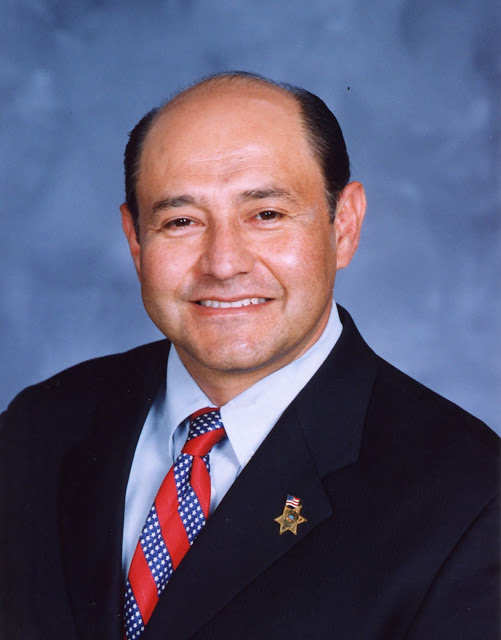
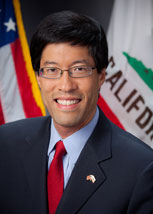
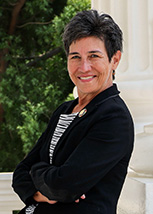
1 primary · 5 co-sponsors
Sponsors

Ask Maddy
·
AI policy assistant
Ask Maddy about AB 327
Scope: CA
Hi! I can help you understand AB 327. What would you like to know?
Try one of these
i
Maddy answers using official bill text and legislative records. Always verify before sharing.
Sources cited inline