

Migrant education.
Summary
(1) Existing law requires the State Board of Education to adopt a state master plan for services to children identified as migrant children. This bill would change references from "migrant child" to "migratory child," and would require the state master plan to be developed and revised as necessary by the Superintendent of Public Instruction in consultation with the State Parent Advisory Council. The bill would specify additional elements that would be required as part of the plan, and would require the Superintendent to develop a monitoring instrument and procedure to annually monitor each local educational agency and region receiving funds for the provision of services to migratory children. The bill would set forth the primary objectives of the state's monitoring activities, including, among others, improving educational results and outcomes for migratory children. The Superintendent would be required to periodically sponsor or conduct local training for the education of regional operating agency personnel responsible for evaluation of migrant education programs and for assisting regions and local educational agencies in the development and implementation of certain policies and procedures relating to the identification of certain youth for eligibility for migratory services and programs. The bill would require the Superintendent to submit to the State Board of Education, the Legislature, and the Governor a triennial performance report of the migrant education programs. (2) Existing law requires migrant education programs to include certain components and services, including, among others, an assessment of the educational and health needs of each participating pupil. This bill would require regional service centers to collect and report to the State Department of Education individual and aggregate data with specified information relating to migratory pupils. (3) Existing law requires the Superintendent to establish the service regional system as the primary method for delivery of services to migrant children, and requires the Superintendent to review and approve plans based on specified criteria. This bill would include among that criteria a written evaluation plan that describes how an operating agency will measure annual pupil progress and overall success of its program. (4) Existing law requires the Superintendent to establish rules and regulations to require each operating agency receiving migrant education funds or services to actively solicit parental involvement in the planning, operation, and evaluation of its programs through the establishment of, and consultation with, a parent advisory council. Existing law further requires each parent advisory council to hold meetings on a regular basis during the operation of the regular program, but not less than six times during the year. This bill would instead require each parent advisory council to hold meetings on a regular basis during the operation of the regular program, but not less than six times during the year for two consecutive days each time. (5) Existing law requires the Superintendent to establish a State Parent Advisory Council and requires the council to meet a minimum of 6 times per year. This bill would instead require the council to meet a minimum of 9 times per year, would provide that additional meetings may be called by mutual agreement between the Superintendent and the state director, and would require all meetings of the council to be held pursuant to certain open meeting provisions. The bill would also require the Superintendent, upon request and when practicable, to provide certain documents that the Superintendent is required to provide under existing law in a language understandable to each member of the council. (6) Existing law sets forth responsibilities of parent advisory councils at the district, regional, and state levels. This bill would revise one of those responsibilities. The bill would require a local educational agency and region receiving funds for the provision of services to migratory children to include an evaluation of the overall program effectiveness for the prior year, as provided. (7) This bill would make other related changes and various conforming and nonsubstantive changes.
Bill status
failed
1 of 4 stages cleared
Introduction
Feb 2013
Committee Review
Floor Vote
Governor
Introduced Feb 11, 2013
Last action Feb 3, 2014
Floor votes
How they voted
No floor votes recorded yet.
Full legislative history
Actions timeline
Total actions
14
Key actions
3
Committee
8
Amendments
3
May 24, 2013
Lower · Passed
In committee: Set, second hearing. Held under submission.
lower
May 15, 2013
Committee
In committee: Set, first hearing. Referred to APPR. suspense file.
lower
May 9, 2013
Committee
Re-referred to Com. on APPR.
lower
May 8, 2013
Introduced
From committee chair, with author's amendments: Amend, and re-refer to Com. on APPR. Read second time and amended.
lower
May 2, 2013
Lower · Passed
From committee: Do pass and re-refer to Com. on APPR. (Ayes 7. Noes 0.) (May 1). Re-referred to Com. on APPR.
lower
Apr 29, 2013
Committee
Re-referred to Com. on ED.
lower
Apr 25, 2013
Introduced
From committee chair, with author's amendments: Amend, and re-refer to Com. on ED. Read second time and amended.
lower
Mar 20, 2013
Committee
Re-referred to Com. on ED.
lower
Mar 19, 2013
Introduced
From committee chair, with author's amendments: Amend, and re-refer to Com. on ED. Read second time and amended.
lower
Mar 19, 2013
Committee
Referred to Com. on ED.
lower
Feb 12, 2013
Lower · Passed
From printer. May be heard in committee March 14.
lower
1 primary · 0 co-sponsors
Sponsors
Role
Legislator
Party
State
District
P
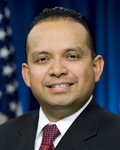
Luis Alejo
DDemocratic
Ask Maddy
·
AI policy assistant
Ask Maddy about AB 275
Scope: CA
Hi! I can help you understand AB 275. What would you like to know?
Try one of these
i
Maddy answers using official bill text and legislative records. Always verify before sharing.
Sources cited inline