

Toilet facilities.
Summary
Existing law, the California Retail Food Code, sets forth uniform health and sanitation standards for retail food facilities. Local health agencies are primarily responsible for enforcing this code. These provisions are also enforced by the State Department of Public Health, except as specified. Among other things, the code sets forth standards for toilet facilities located in permanent food facilities. A person who violates any provision of the code is guilty of a misdemeanor, except as otherwise provided. Existing law also requires every public agency that conducts an establishment serving the public or open to the public and that maintains in that establishment restroom facilities for the public, to make every water closet, or restroom, for each sex maintained within the facilities available without cost or charge to the patrons, guests, or invitees of the establishment. Existing law generally requires publicly and privately owned facilities, including sports and entertainment arenas, stadiums, community and convention halls, and specialty event centers, where the public congregates to be equipped with sufficient temporary or permanent restrooms to meet the needs of the public at peak hours. This bill would require each toilet stall in (1) toilet facilities located in permanent food facilities and provided for use by consumers, guests, and invitees, (2) restroom facilities maintained by a public agency in an establishment that serves or is open to the public, and (3) temporary or permanent restroom facilities in publicly and privately owned facilities where the public congregates to contain a waste receptacle, unless the addition of a waste receptacle would result in noncompliance with a local, state, or federal law relating to access for persons with disabilities, as determined by the local health officer. By imposing new duties on local health agencies and by revising the definition of a crime, the bill would impose a state-mandated local program. The bill would also make technical changes. The California Constitution requires the state to reimburse local agencies and school districts for certain costs mandated by the state. Statutory provisions establish procedures for making that reimbursement. This bill would provide that with regard to certain mandates no reimbursement is required by this act for a specified reason. With regard to any other mandates, this bill would provide that, if the Commission on State Mandates determines that the bill contains costs so mandated by the state, reimbursement for those costs shall be made pursuant to the statutory provisions noted above.
Bill status
failed
1 of 4 stages cleared
Introduction
Feb 2014
Committee Review
Floor Vote
Governor
Introduced Feb 21, 2014
Last action Nov 30, 2014
Floor votes
How they voted
No floor votes recorded yet.
Full legislative history
Actions timeline
Total actions
10
Key actions
3
Committee
6
May 23, 2014
Lower · Passed
In committee: Set, second hearing. Held under submission.
lower
May 14, 2014
Committee
In committee: Set, first hearing. Referred to APPR. suspense file.
lower
May 6, 2014
Committee
Re-referred to Com. on APPR.
lower
May 1, 2014
Lower · Passed
From committee: Do pass as amended and re-refer to Com. on APPR. (Ayes 13. Noes 3.) (April 29).
lower
Mar 17, 2014
Committee
Referred to Com. on HEALTH.
lower
Feb 23, 2014
Lower · Passed
From printer. May be heard in committee March 25.
lower
Feb 21, 2014
Introduced
Introduced. To print.
lower
1 primary · 0 co-sponsors
Sponsors
Role
Legislator
Party
State
District
P
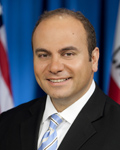
Adrin Nazarian
DDemocratic
Ask Maddy
·
AI policy assistant
Ask Maddy about AB 2644
Scope: CA
Hi! I can help you understand AB 2644. What would you like to know?
Try one of these
i
Maddy answers using official bill text and legislative records. Always verify before sharing.
Sources cited inline