

Gambling: Internet poker: unlawful gambling activity.
Summary
(1) The Gambling Control Act provides for the licensure of certain individuals and establishments that conduct controlled games, as defined, and for the regulation of these gambling activities by the California Gambling Control Commission. The Department of Justice has related investigatory and enforcement duties under the act. Any violation of these provisions is punishable as a misdemeanor, as specified. This bill would establish a framework to authorize intrastate Internet poker, as specified. The bill would authorize eligible entities to apply to the commission for a 10-year nontransferable license to operate an intrastate Internet poker Web site offering the play of authorized Internet poker games to registered players within California, as specified. The bill would require that the license be automatically renewed every 10 years upon application, as specified. The bill would prohibit the offer or play of any gambling game provided over the Internet that is not an authorized Internet poker game permitted by the state pursuant to this bill. The bill would prohibit, among others, a federally recognized California Indian tribe that operates a gaming facility that accepts bets from players within the state but who are not physically present on Indian lands when making bets from operating an Internet poker Web site. The bill also would provide that it is unlawful for a person to patronize, or to own or operate, a place of public accommodation within this state in which computer terminals, laptop computers, hand-held devices, or similar devices are made available for accessing Internet Web sites to play gambling games, or where those devices are otherwise empowered or enabled to access Internet Web sites to play gambling games. The bill would provide that it is unlawful for a person to aggregate computers or other access devices in a public setting within this state for the purpose of playing a gambling game on the Internet, or to promote, facilitate, or market that activity. The bill would provide that any violation of these provisions is punishable as a misdemeanor. By creating new crimes, the bill would impose a state-mandated local program. This bill would require the commission, and any other state agency with a duty pursuant to these provisions, to adopt regulations within 270 days after the operative date of this bill, in consultation with the department and federally recognized California Indian tribes, to implement these provisions, and to facilitate the operation of intrastate Internet poker Web sites and expedite the state's receipt of revenues. The bill would require a license applicant to apply to the commission and pay a registration fee sufficient to cover all costs associated with the issuance of the license, for deposit into the Internet Poker Fund, as created by the bill, to be continuously appropriated to the department and the commission in the amounts reasonably necessary to investigate and evaluate the suitability of the licensee's subcontractors. An applicant that is a federally reorganized Indian tribe also would be required to submit a limited waiver of its sovereign immunity. This bill would require the payment of an unspecified annual regulatory fee, for deposit into the Internet Poker Fund, to be continuously appropriated for the actual costs of license oversight, consumer protection, state regulation, problem gambling programs, and other purposes related to this bill. The bill would require each licensee to pay a one-time license fee in the amount of $5,000,000 for deposit in the General Fund. The license fee would be credited against quarterly fees equivalent to 5% of the licensee's gross gaming revenue proceeds, as specified. The bill would require an applicant for an intrastate Internet Poker license to provide documentation establishing that the applicant is qualified to pay the one-time license fee from its own assets, or its owner's assets, or through credit extended to the entity, as specified. This bill would establish the Unlawful Gambling Enforcement Fund as a special fund within the General Fund for purposes of ensuring adequate resources for law enforcement charged with enforcing the prohibitions and protections of the provisions described above. The bill would authorize the Attorney General, and other public prosecutors, as specified, to bring a civil action to recover a civil penalty in an unspecified amount against a person who engages in those prohibited activities described above, or other specified unlawful gambling activities involving lotteries and slot machines. The bill would provide for an unspecified percentage of revenues from civil penalties collected to be deposited into the fund and used for law enforcement activities pursuant to these provisions, upon appropriation by the Legislature. This bill would require the commission, in consultation with the department, the Treasurer, and the Franchise Tax Board, to issue a report to the Legislature describing the state's efforts to meet the policy goals articulated in this bill within one year of the operative date of this bill and, annually, thereafter. The bill would also require the Bureau of State Audits, at least 4 years after the issue date of any license by the state, but no later than 5 years after that date, to issue a report to the Legislature detailing the implementation of this bill, as specified. This bill would prohibit the state from affirmatively electing to be subject to a federal Internet gambling law, as specified, and would require the state to opt out of, or would prohibit the state from opting into, any federal Internet gambling scheme. The bill would provide that if the state violates these prohibitions, a licensee shall not be required to pay the one-time license fee or the quarterly fees described above and would require the state to refund within 30 days all unused license fees paid to the state, as specified. The bill would authorize a licensee to enforce this provision in state court. The bill also would prohibit the state from participating in any Internet gambling agreement between states or foreign jurisdictions. This bill authorizes the department to revoke or suspend any license or work permit upon reaching a finding that the licensee or employee is in violation of the provisions described above, or any regulation adopted pursuant to these provisions. However, the bill would prohibit a tribal licensee from having its license suspended or revoked, or be fined or otherwise penalized for complying with any applicable federal law or regulation when operating an Internet poker Web site on Indian lands. The bill would specify that to the extent that any state requirement is more strict than any applicable federal law requirement, the tribal licensee is required to comply with the state requirement. (2) Existing law, subject to exceptions, generally prohibits the possession and use of a "slot machine or device," as defined, and prohibits certain other acts and transactions pertaining to slot machines or devices. Existing law provides varying definitions of "slot machine or device" for these purposes. A violation of these provisions is punishable as a misdemeanor. This bill would provide that an "electronic sweepstakes device," as defined, is a slot machine or device within the meaning of these provisions. By expanding the scope of existing crimes, the bill would impose a state-mandated local program. (3) The bill would provide that its provisions are not severable. (4) The California Constitution requires the state to reimburse local agencies and school districts for certain costs mandated by the state. Statutory provisions establish procedures for making that reimbursement. This bill would provide that no reimbursement is required by this act for a specified reason. (5) This bill would declare that it is to take effect immediately as an urgency statute.
Bill status
failed
1 of 4 stages cleared
Introduction
Feb 2014
Committee Review
Floor Vote
Governor
Introduced Feb 21, 2014
Last action Nov 30, 2014
Floor votes
How they voted
No floor votes recorded yet.
Full legislative history
Actions timeline
Total actions
5
Key actions
1
Committee
2
Mar 17, 2014
Committee
Referred to Com. on G.O.
lower
Feb 23, 2014
Lower · Passed
From printer. May be heard in committee March 25.
lower
Feb 21, 2014
Introduced
Introduced. To print.
lower
1 primary · 0 co-sponsors
Sponsors
Role
Legislator
Party
State
District
P
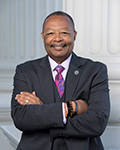
Reggie Jones-Sawyer
DDemocratic
Ask Maddy
·
AI policy assistant
Ask Maddy about AB 2291
Scope: CA
Hi! I can help you understand AB 2291. What would you like to know?
Try one of these
i
Maddy answers using official bill text and legislative records. Always verify before sharing.
Sources cited inline