

Mammals: use of dogs to pursue bears.
Summary
(1) Existing law, with specified exceptions, makes it unlawful to permit or allow a dog to pursue any bear, as defined, at any time. Existing law authorizes the Department of Fish and Wildlife to capture a dog not under the reasonable control of its owner or handler that is pursuing any bear in violation of this prohibition or to capture or dispatch a dog inflicting injury or immediately threatening to inflict injury on any bear at any time. This bill would eliminate the authority for the department to capture a dog not under the reasonable control of its owner or handler when the dog is pursuing any bear or to capture or dispatch a dog inflicting injury or immediately threatening injury on any bear. This bill would require the Department of Fish and Wildlife to make a specified report to the Fish and Game Commission on the status of bear populations, management, and related issues every 3 years. The bill would require the first report to be submitted on or before December 15, 2015, and would require the department, not later than December 15 of each year the report is submitted, to notify, by certified mail, the board of supervisors of each county affected by bear interactions with the general public, of public safety impacts or concerns, bear depredation permit requests, and economic impacts due to bear damage to the extent of those incidences or impacts, and of its recommendations to the commission. This bill would generally prohibit a person from using dogs to hunt, pursue, or molest bears, except when recommended to the Department of Fish and Wildlife by a vote of the board of supervisors of any affected county following a public hearing, as specified. The bill would require the commission to authorize the use of dogs under those circumstances. This bill would permit the use of one dog per hunter for the hunting of bears during open deer season, and the use of more than one dog per hunter during the open bear season except during the period when archery deer seasons or regular deer seasons are open. By imposing new duties on local public officials, the bill would impose a state-mandated local program. (2) Existing law permits the Department of Fish and Wildlife to authorize qualified individuals, educational institutions, governmental agencies, or nongovernmental organizations to use dogs to pursue bears for the purpose of prescribed scientific research. Existing law allows the pursuit of bears by dogs that are guarding or protecting livestock or crops on property owned, leased, or rented by the owner of the dogs if the dogs are maintained with, and remain in reasonable proximity to, the livestock or crops being guarded or protect. This bill would eliminate these authorizations. (3) Existing law authorizes the Fish and Game Commission to establish a hound tag program, imposing certain requirements on the licensure and use of hounds, as defined, to pursue mammals. For these purposes, existing law defines a hound as a dog used to pursue mammals. This bill would repeal this authorization. This bill would define a hound as a dog used to pursue bears and require a hound stamp issued by the Department of Fish and Wildlife to lawfully pursue bears with hounds in a county where the use of hounds to pursue or take bears has been authorized by the commission. This bill would require the amount of the fee to be determined by the commission to fully recover, but not exceed, all reasonable administrative and implementation costs of the department and commission relating to the hound stamp and the use of dogs to pursue bears. This bill would require the revenues from the fee for a hound stamp to be deposited in the Bear Report Account, which this bill would create, in the Fish and Game Preservation Fund, and available upon appropriation by the Legislature, to permit separate accountability for the receipt and expenditure of these funds. (4) Under existing law, except as excluded, violations of the Fish and Game Code are misdemeanors. By changing the definition of a crime, this bill would impose a state-mandated local program. (5) The California Constitution requires the state to reimburse local agencies and school districts for certain costs mandated by the state. Statutory provisions establish procedures for making that reimbursement. This bill would provide that with regard to certain mandates no reimbursement is required by this act for a specified reason. With regard to any other mandates, this bill would provide that, if the Commission on State Mandates determines that the bill contains costs so mandated by the state, reimbursement for those costs shall be made pursuant to the statutory provisions noted above.
Bill status
failed
1 of 4 stages cleared
Introduction
Feb 2014
Committee Review
Floor Vote
Governor
Introduced Feb 20, 2014
Last action May 28, 2014
Floor votes
How they voted
No floor votes recorded yet.
Full legislative history
Actions timeline
Total actions
7
Key actions
1
Committee
3
Amendments
1
Apr 24, 2014
Committee
Re-referred to Com. on W.,P. & W.
lower
Apr 23, 2014
Introduced
From committee chair, with author's amendments: Amend, and re-refer to Com. on W.,P. & W. Read second time and amended.
lower
Mar 6, 2014
Committee
Referred to Com. on W.,P. & W.
lower
Feb 21, 2014
Lower · Passed
From printer. May be heard in committee March 23.
lower
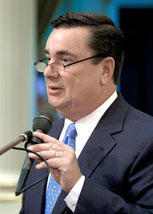
1 primary · 6 co-sponsors
Sponsors



Ask Maddy
·
AI policy assistant
Ask Maddy about AB 2205
Scope: CA
Hi! I can help you understand AB 2205. What would you like to know?
Try one of these
i
Maddy answers using official bill text and legislative records. Always verify before sharing.
Sources cited inline