

Student financial aid: Cal Grant Program.
Summary
Existing law, the Ortiz-Pacheco-Poochigian-Vasconcellos Cal Grant Program (Cal Grant Program) , establishes the Cal Grant A and B Entitlement awards, the California Community College Transfer Entitlement awards, the Competitive Cal Grant A and B awards, the Cal Grant C awards, and the Cal Grant T awards under the administration of the Student Aid Commission (commission) , and establishes eligibility requirements for awards under these programs for participating students attending qualifying institutions, as defined. Existing law requires the Student Aid Commission to certify by October 1 of each year a qualifying institution's latest 3-year cohort default rate as most recently reported by the United States Department of Education. Existing law provides that, for purposes of the 2012–13 academic year, and every academic year thereafter, an otherwise qualifying institution with a 3-year cohort default rate that is equal to or greater than 15.5% is ineligible for initial and renewal Cal Grant awards at the institution. Existing law also requires that an otherwise qualifying institution is ineligible for an initial or renewal Cal Grant award at the institution if the institution has a graduation rate of 30% or less for students taking 150% or less of the expected time to complete degree requirements, as specified, with certain exceptions. If an otherwise qualifying institution has a student body composed of at least 23 students who are receiving federal Pell grants, and a default rate that exceeds the existing statutory maximum for eligibility or a graduation rate less than the existing statutory minimum for eligibility, as prescribed, this bill would deem the institution eligible if the commission certifies that the institution satisfies specified conditions. The bill would require the commission to adopt any rules or regulations necessary to implement these provisions by March 1, 2015, and to report to the Legislature, by January 1, 2016, on its review and recommendations regarding additional criteria that would be appropriately considered in determining eligibility.
Bill status
failed
1 of 4 stages cleared
Introduction
Jan 2014
Committee Review
Floor Vote
Governor
Introduced Jan 22, 2014
Last action Nov 30, 2014
Floor votes
How they voted
No floor votes recorded yet.
Full legislative history
Actions timeline
Total actions
10
Key actions
4
Committee
7
Amendments
1
May 23, 2014
Lower · Passed
In committee: Set, second hearing. Held under submission.
lower
Apr 9, 2014
Committee
In committee: Set, first hearing. Referred to APPR. suspense file.
lower
Apr 2, 2014
Lower · Passed
From committee: Do pass and re-refer to Com. on APPR. (Ayes 13. Noes 0.) (April 1). Re-referred to Com. on APPR.
lower
Mar 27, 2014
Committee
Re-referred to Com. on HIGHER ED.
lower
Mar 26, 2014
Introduced
From committee chair, with author's amendments: Amend, and re-refer to Com. on HIGHER ED. Read second time and amended.
lower
Mar 18, 2014
Lower · Passed
In committee: Hearing postponed by committee.
lower
Jan 30, 2014
Committee
Referred to Com. on HIGHER ED.
lower
Jan 23, 2014
Lower · Passed
From printer. May be heard in committee February 22.
lower
1 primary · 2 co-sponsors
Sponsors
Role
Legislator
Party
State
District
P
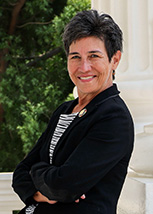
Susan Eggman
DDemocratic
Co

Cathleen Galgiani
DDemocratic
Co

Jerry Hill
DDemocratic
Ask Maddy
·
AI policy assistant
Ask Maddy about AB 1538
Scope: CA
Hi! I can help you understand AB 1538. What would you like to know?
Try one of these
i
Maddy answers using official bill text and legislative records. Always verify before sharing.
Sources cited inline