

Enhanced treatment programs.
Summary
Existing law establishes state hospitals for the care, treatment, and education of mentally disordered persons. These hospitals are under the jurisdiction of the State Department of State Hospitals, which is authorized by existing law to adopt regulations regarding the conduct and management of these facilities. Existing law requires each state hospital to develop an incident reporting procedure that can be used to, at a minimum, develop reports of patient assaults on employees and assist the hospital in identifying risks of patient assaults on employees. Existing law provides for the licensure and regulation of health facilities, including acute psychiatric hospitals, by the State Department of Public Health. A violation of these provisions is a crime. This bill would, commencing July 1, 2015, and subject to available funding, authorize the State Department of State Hospitals to establish and maintain pilot enhanced treatment programs (ETPs) , as defined, for the treatment of patients who are at high risk of most dangerous behavior, as defined, and when safe treatment is not possible in a standard treatment environment. The bill would authorize the State Department of Public Health to approve, on or after July 1, 2015, an ETP, which meets specified requirements and regulations, as a supplemental service for an acute psychiatric hospital that submits a completed application and is operated by the State Department of State Hospitals. The bill would authorize a state hospital psychiatrist or psychologist to refer a patient to an ETP for temporary placement and risk assessment upon a determination that the patient may be at high risk for most dangerous behavior. The bill would require the forensic needs assessment panel (FNAP) to conduct a placement evaluation to determine whether the patient clinically requires ETP placement and ETP treatment can meet the identified needs of the patient. The bill would also require a forensic needs assessment team (FNAT) psychologist to perform an in-depth violence risk assessment and make a treatment plan upon the patient's admission to an ETP. The bill would require the FNAP to conduct a treatment placement meeting with specified individuals prior to the expiration of 90 days from the date of placement in the ETP to determine whether the patient may return to a standard treatment environment or the patient clinically requires continued ETP treatment. If the FNAP determines that the patient clinically requires continued ETP treatment, the bill would require the FNAP to certify the patient for further ETP treatment for one year, subject to FNAP reviews at least every 90 days, as specified. The bill would require the FNAP to conduct another treatment placement meeting prior to the expiration of the one-year certification of ETP placement to determine whether the patient may return to a standard treatment environment or be certified for further ETP treatment for another year. The bill would also require, if the FNAP determines that the patient requires continued ETP placement, that the patient's case be referred to a forensic psychiatrist or psychologist outside of the State Department of State Hospitals for independent review, that a hearing be conducted, and notice given, as specified. The bill would require the State Department of State Hospitals to monitor the ETPs, evaluate outcomes, and report its findings and recommendations to the Legislature. Because this bill would create a new crime, it imposes a state-mandated local program. The California Constitution requires the state to reimburse local agencies and school districts for certain costs mandated by the state. Statutory provisions establish procedures for making that reimbursement. This bill would provide that no reimbursement is required by this act for a specified reason.
Bill status
signed
all 5 stages cleared
Introduction
Feb 2013
Committee Review
Aug 2014
Assembly Passage
May 2013
Senate Passage
Aug 2014
Signed into Law
Sep 2014
Introduced Feb 22, 2013
Signed Sep 28, 2014
Floor votes · Senate Aug 21, 2014 · Assembly May 30, 2013
How they voted
32–0
Passed · 3 other
Total votes 35
Aug 21, 2014
D
Democratic25
92% Yea
R
Republican10
90% Yea
Vote distribution
All Yea
All Nay
Mixed
No data
Full legislative history
Actions timeline
Total actions
38
Key actions
17
Committee
18
Amendments
7
Sep 28, 2014
Signed into law
Approved by the Governor.
legislature
Aug 27, 2014
Lower · Passed
Senate amendments concurred in. To Engrossing and Enrolling. (Ayes 78. Noes 0. Page 6534.).
lower
Aug 26, 2014
Lower · Passed
From committee: That the Senate amendments be concurred in. (Ayes 16. Noes 0.) (August 26).
lower
Aug 22, 2014
Committee
Re-referred to Com. on HEALTH. pursuant to Assembly Rule 77.2.
lower
Aug 21, 2014
Senate · Passed
Senate Vote: pass (32-0-3)
senate
Aug 21, 2014
Introduced
In Assembly. Concurrence in Senate amendments pending. May be considered on or after August 23 pursuant to Assembly Rule 77.
lower
Aug 19, 2014
Upper · Passed
From committee: Do pass as amended. (Ayes 6. Noes 0.) (August 14).
upper
Aug 4, 2014
Upper · Passed
In committee: Placed on APPR. suspense file.
upper
Jul 2, 2014
Upper · Passed
Read second time and amended. Re-referred to Com. on APPR.
upper
Jul 1, 2014
Upper · Passed
From committee: Do pass as amended and re-refer to Com. on APPR. (Ayes 7. Noes 0.) (June 24).
upper
Jun 16, 2014
Upper · Passed
Read second time and amended. Re-referred to Com. on PUB. S.
upper
Jun 15, 2014
Upper · Passed
From committee: Do pass as amended and re-refer to Com. on PUB. S. (Ayes 8. Noes 0.) (June 11).
upper
Apr 3, 2014
Introduced
From committee chair, with author's amendments: Amend, and re-refer to committee. Read second time, amended, and re-referred to Com. on HEALTH.
upper
Jun 24, 2013
Upper · Passed
In committee: Set, first hearing. Hearing canceled at the request of author.
upper
Jun 18, 2013
Introduced
From committee chair, with author's amendments: Amend, and re-refer to committee. Read second time, amended, and re-referred to Com. on HEALTH.
upper
Jun 13, 2013
Committee
Referred to Coms. on HEALTH and PUB. S.
upper
May 30, 2013
Assembly · Passed
Assembly Vote: pass (62-0-2)
assembly
May 24, 2013
Lower · Passed
From committee: Do pass as amended. (Ayes 17. Noes 0.) (May 24).
lower
May 8, 2013
Committee
In committee: Set, first hearing. Referred to APPR. suspense file.
lower
May 1, 2013
Lower · Passed
From committee: Do pass and re-refer to Com. on APPR. (Ayes 6. Noes 0.) (April 30). Re-referred to Com. on APPR.
lower
Apr 17, 2013
Lower · Passed
From committee: Do pass and re-refer to Com. on PUB. S. (Ayes 17. Noes 0.) (April 16). Re-referred to Com. on PUB. S.
lower
Apr 11, 2013
Committee
Re-referred to Com. on HEALTH.
lower
Apr 10, 2013
Introduced
From committee chair, with author's amendments: Amend, and re-refer to Com. on HEALTH. Read second time and amended.
lower
Apr 9, 2013
Lower · Passed
In committee: Set, first hearing. Hearing canceled at the request of author.
lower
Apr 2, 2013
Committee
Re-referred to Com. on HEALTH.
lower
Apr 1, 2013
Introduced
From committee chair, with author's amendments: Amend, and re-refer to Com. on HEALTH. Read second time and amended.
lower
Mar 14, 2013
Committee
Referred to Coms. on HEALTH and PUB. S.
lower
Feb 24, 2013
Lower · Passed
From printer. May be heard in committee March 26.
lower
Feb 22, 2013
Introduced
Introduced. To print.
lower
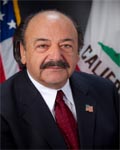
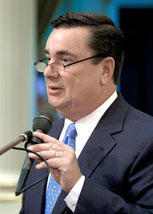
1 primary · 6 co-sponsors
Sponsors


Ask Maddy
·
AI policy assistant
Ask Maddy about AB 1340
Scope: CA
Hi! I can help you understand AB 1340. What would you like to know?
Try one of these
i
Maddy answers using official bill text and legislative records. Always verify before sharing.
Sources cited inline