

Human resources.
Summary
Existing law provides that the Department of Human Resources succeeds to and is vested with all of the powers and duties exercised and performed by the Department of Personnel Administration and powers, duties, and authorities necessary to operate the state civil service system in accordance with Article VII of the California Constitution, the Government Code, the merit principle, and applicable rules duly adopted by the State Personnel Board. This bill would transfer certain functions and duties of the board to the department. The bill would also designate the department to share certain functions and duties with the board. The bill would make other related changes. Existing law, with regard to the civil service, requires the appointing power to provide service of notice of certain actions, including a disciplinary action, a rejection during probation, a medical action, and various termination actions, by personal service or by mail or express service carrier, pursuant to a specified process. The bill would modify the above-mentioned process by deleting certain requirements and would instead require service to be conducted in the manner provided in specified provisions of the Code of Civil Procedure that relate to service of process. Existing law authorizes the State Personnel Board to hold hearings and make investigations concerning all matters relating to the enforcement and effect of the State Civil Service Act, as specified. Existing law prohibits the board from holding hearings and making investigations on certain disciplinary matters relating to state employees in State Bargaining Unit 5. This bill would delete the above-mentioned prohibition. Existing law requires, among other things, the board to render its decision within a reasonable time after the conclusion of a hearing or investigation, except that the period from the filing of the petition to the decision of the board cannot exceed 6 months or 90 days from the time of the submission, whichever time period is less, and except that the board may extend the 6-month period up to 45 additional days. This bill would instead require the board to reach a decision within 6 months and would delete the board's authorization to extend the 6-month period by 45 additional days. Existing law requires the State Personnel Board, by resolution, to define the term "salary step" for the purpose of administering civil service laws and rules that control movement of employees between classifications subject to specified requirements. This bill would repeal these provisions. Existing law authorizes the State Personnel Board to require various types of documentary evidence in establishing minimum qualifications for determining the identity, fitness, and qualifications of employees for each class of position in the state civil service, for temporary appointments, and for applicants for examination. This bill would revise these provisions and would additionally require, whenever the law requires that an applicant for a position as a peace officer be screened to ensure that the applicant is free from emotional and mental impairment, that the department or the designated appointing authority undertake the screening subject to the applicant's right to appeal to the board. Existing law authorizes the department to refuse to examine or, after examination, to refuse to declare as eligible, or to withhold or withdraw from certification, prior to appointment, anyone who, among other things, is physically or mentally so disabled as to be rendered unfit to perform the duties of the position to which he or she seeks appointment or who is addicted to the use of controlled substances. This bill would instead authorize the department or a designated appointing power to refuse to examine, or after examination to refuse to declare as eligible, or to withhold or withdraw from an eligible list, before the appointment, anyone who, among other things, was found to be unsuited or not qualified for employment pursuant to rule. Existing law authorizes an applicant for state employment to elect to avail himself or herself of a specified procedure to take an examination on a different date when the examination is scheduled to be given during the period from sundown on a Friday until sundown on the following day, and it is the practice of an applicant, based upon his or her religious convictions, to observe the Sabbath during that period. This bill would repeal these provisions and would instead authorize any applicant for examination to request reasonable accommodation for a disability or sincerely held religious belief pursuant to the Fair Employment and Housing Act or any other applicable law. Existing law requires the board to provide, by rule, for the grant of a blanket waiver of a requirement that would allow a dismissed employee who meets standards to be determined by the board to apply for any civil service examination so that he or she would not need a separate waiver for each examination. This bill would repeal these provisions. The bill would authorize any former state employee who was dismissed from state service, as specified, to petition the department to be permitted to take a civil service examination in order to establish eligibility for appointment to state service, as specified. Existing law requires the appointing power to submit to the department, in accordance with board rules, a statement of the duties of the position, the necessary and desired qualifications of the person to be appointed, and a request that the names of persons eligible for appointment to the position be certified whenever a vacancy in any position is to be filled and not by transfer, demotion, or reinstatement. This bill would instead require the appointing power to provide any information the department requests including the classification of the position, the number of vacancies to be filled, the tenure and time base of the position, the location of the position, and any other information as the department may require. Existing law permits any person, except for a current ward of the Division of Juvenile Facilities, a current inmate of the Department of Corrections and Rehabilitation, or a current patient of a facility operated by the State Department of State Hospitals, with the consent of the State Personnel Board of the appointing power, to file charges against a state employee in State Bargaining Unit 5 requesting that adverse action be taken for one or more causes for discipline, as specified. This bill would repeal these provisions. Existing law requires the board to either grant or deny a petition for rehearing a decision within 60 days after service of notice of filing the petition for rehearing. This bill would instead require the board to either grant or deny a petition within 90 days. Existing law prohibits a person from bringing a cause of action of any type, as specified, based on or related to any civil service law in this state, or the administration thereof, unless that action is commenced and served within one year after the cause of action first arose. Existing law also provides that where an appeal is taken from a decision of the board, the cause of action does not arise until the final decision of the board has been issued. This bill would instead require any petition for a writ challenging a decision of the board to be filed within 6 months of the date of the final decision of the board. Existing law establishes certain rights and benefits that accrue to civil service employees during and after leave for military service, including, but not limited to, appointment and reinstatement rights. Existing law requires that both the State Personnel Board and the Department of Human Resources be responsible for carrying out certain provisions related to leave for military service. This bill would delete the provisions that require both the State Personnel Board and the Department of Human Resources to be responsible for carrying out certain provisions related to leave for military service. Existing law authorizes the board, for specific state services or employments, in examination to allow general or individual preference in ratings to veterans who have suffered permanent disability in the line of duty, if the disability will not prevent the proper performance of the duties required under the service or employment, and if the disability is of record in the files of the United States Veterans' Administration. This bill would repeal those provisions. Existing law requires the State Personal Board to submit a census report to the Governor, the Legislature, and the Department of Finance that includes, among other things, demographic information on employees in the state civil service, as specified, and information to the Legislature on laws that discriminate or have the effect of discriminating on the basis of race, ethnicity, gender, and disability. This bill would instead require the department to either submit the report to the Governor, the Legislature, and the Department of Finance or to post the data on its Internet Web site. The bill would also delete the requirement that the report include, among other things, identified underutilizations, steps taken to ensure equal employment opportunity in the state civil service, and information to the Legislature on laws that discriminate or have the effect of discriminating on the basis of race, ethnicity, gender, and disability. Existing law provides that the department succeeds to and is vested with the duties, purposes, responsibilities, and jurisdiction exercised by the California Victim Compensation and Government Claims Board, the Department of General Services, and the Department of Finance, as specified. This bill would repeal those provisions. Existing law authorizes the department to designate an appointing power to allocate positions to the Personnel Classification Plan, as specified. Existing law authorizes the department to audit any position allocations and to order corrective action. This bill would instead authorize the department to order corrective action, as specified, only if it finds that an appointing power has allocated positions inappropriately. The bill would also authorize the Department of Finance to transfer a sufficient number of personnel from the appointing power to the department, as specified, if an appointing power's allocation authority is revoked. Existing law requires every state agency, as specified, to employ a sufficient number of qualified bilingual persons in public contact positions to ensure provision of information and services to the public, in the language of the non-English-speaking person. Existing law requires each agency to conduct a survey, related to its bilingual services, of each of its local offices every two years to determine among other things, the number of qualified bilingual employees in public contact positions, as specified. Existing law requires, beginning in 2009 and in every odd-numbered year thereafter, that each state agency develop an implementation plan that, at a minimum, addresses, among other things, the name, position, and contact information of the employee designated by the agency to be responsible for overseeing implementation of the plan. This bill would require the language survey to also include, among other things, a detailed description of the agency's procedures for identifying written materials that are required to be translated, a detailed description of the agency's procedures for identifying language needs at local offices and assigning qualified bilingual staff to those offices, and a detailed description of how the agency complies with any federal or other state laws that require the provision of linguistically accessible services to the public. The bill would instead only require each agency that serves a substantial number of non-English-speaking people who comprise 5 percent or more of the people served to develop an implementation plan, as specified, in every odd-numbered year. This bill would also make technical, nonsubstantive changes to these provisions.
Bill status
signed
all 5 stages cleared
Introduction
Feb 2013
Committee Review
Aug 2013
Assembly Passage
May 2013
Senate Passage
Aug 2013
Signed into Law
Sep 2013
Introduced Feb 22, 2013
Signed Sep 30, 2013
Floor votes · Senate Aug 26, 2013 · Assembly Aug 30, 2013
How they voted
35–0
Passed
Total votes 35
Aug 26, 2013
D
Democratic25
100% Yea
R
Republican10
100% Yea
Vote distribution
All Yea
All Nay
Mixed
No data
Full legislative history
Actions timeline
Total actions
28
Key actions
11
Committee
10
Amendments
3
Sep 30, 2013
Signed into law
Approved by the Governor.
legislature
Aug 30, 2013
Assembly · Passed
Assembly Vote: pass (62-0-1)
assembly
Aug 30, 2013
Lower · Passed
Senate amendments concurred in. To Engrossing and Enrolling. (Ayes 77. Noes 0. Page 2784.).
lower
Aug 26, 2013
Senate · Passed
Senate Vote: pass (35-0)
senate
Aug 26, 2013
Introduced
In Assembly. Concurrence in Senate amendments pending. May be considered on or after August 28 pursuant to Assembly Rule 77.
lower
Aug 12, 2013
Upper · Passed
From committee: Be placed on second reading file pursuant to Senate Rule 28.8.
upper
Jul 11, 2013
Introduced
From committee chair, with author's amendments: Amend, and re-refer to committee. Read second time, amended, and re-referred to Com. on APPR.
upper
Jun 26, 2013
Upper · Passed
Read second time and amended. Re-referred to Com. on APPR.
upper
Jun 25, 2013
Upper · Passed
From committee: Do pass as amended and re-refer to Com. on APPR. (Ayes 5. Noes 0.) (June 24).
upper
Jun 6, 2013
Committee
Referred to Com. on P.E. & R.
upper
May 16, 2013
Lower · Passed
From committee: Do pass. To consent calendar. (Ayes 17. Noes 0.) (May 15).
lower
Apr 30, 2013
Lower · Passed
From committee: Do pass and re-refer to Com. on APPR. with recommendation: to consent calendar. (Ayes 10. Noes 0.) (April 30). Re-referred to Com. on APPR.
lower
Apr 16, 2013
Committee
Re-referred to Com. on JUD.
lower
Apr 11, 2013
Lower · Passed
From committee: Do pass as amended and re-refer to Com. on JUD. with recommendation: to consent calendar. (Ayes 7. Noes 0.) (April 10).
lower
Mar 14, 2013
Committee
Referred to Coms. on P.E.,R. & S.S. and JUD.
lower
Feb 24, 2013
Lower · Passed
From printer. May be heard in committee March 26.
lower
Feb 22, 2013
Introduced
Introduced. To print.
lower
1 primary · 0 co-sponsors
Sponsors
Role
Legislator
Party
State
District
P
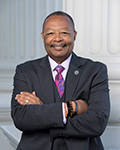
Reggie Jones-Sawyer
DDemocratic
Ask Maddy
·
AI policy assistant
Ask Maddy about AB 1062
Scope: CA
Hi! I can help you understand AB 1062. What would you like to know?
Try one of these
i
Maddy answers using official bill text and legislative records. Always verify before sharing.
Sources cited inline