

Medi-Cal: managed care plan tax: Healthy Families Program transition: skilled nursing facility and managed care plan charges.
Summary
(1) Existing law provides for the Medi-Cal program, which is administered by the State Department of Health Care Services, under which qualified low-income individuals receive health care services. The Medi-Cal program is, in part, governed and funded by federal Medicaid Program provisions. Under existing law, one of the methods by which Medi-Cal services are provided is through contracts with various types of managed care plans. Existing law imposes a tax at a specified rate on the gross premiums of an insurer, as defined, and, until July 1, 2012, on the total operating revenue, as specified, of a Medi-Cal managed care plan, as defined. Existing law exempts from that tax the total operating revenue of a Medi-Cal managed care plan, if specified events occur before July, 1, 2012. Existing law continuously appropriates the revenues derived from the tax on Medi-Cal managed care plans for specified purposes. This bill would extend the imposition of the tax on the total operating revenue of Medi-Cal managed care plans until July 1, 2014, and would make other conforming changes. This bill also would authorize the Controller to loan funds in the Children's Health and Human Services Special Fund to the General Fund, as provided, until July 1, 2013. By extending the imposition of a tax whose revenues are continuously appropriated, this bill would make an appropriation. (2) Existing law requires, until July 1, 2012, every return required to be filed with the Insurance Commissioner pursuant to provisions governing taxes on the total operating revenue of Medi-Cal managed care plans to be signed by the insurer or the Medi-Cal managed care plan or an executive officer of the insurer or the plan and to be made under oath or contain a written declaration that is made under penalty of perjury. This bill would instead apply this signature requirement until July 1, 2013. By expanding the crime of perjury, this bill would impose a state-mandated local program. (3) Existing law creates the Healthy Families Program, administered by the Managed Risk Medical Insurance Board (MRMIB) , to arrange for the provision of health, vision, and dental benefits to eligible children pursuant to a federal program, the Children's Health Insurance Program. Under existing law, the Director of Health Care Services may contract with any qualified individual, organization, or entity to provide services to, arrange for, or case manage the care of Medi-Cal beneficiaries, subject to specified requirements. Existing law requires a Medi-Cal applicant or beneficiary to be informed of the managed care and fee-for-service options available regarding methods of receiving Medi-Cal benefits. Existing law provides for the transition of specified enrollees of the Healthy Families Program to the Medi-Cal program, to the extent that those individuals are otherwise eligible, no sooner than January 1, 2013. Existing law requires this transition to take place in 4 phases, as prescribed. This bill would repeal the provisions requiring the transfer of Healthy Families Program enrollees into the Medi-Cal program. (4) Existing law requires the State Department of Health Care Services to impose a uniform quality assurance fee on each skilled nursing facility, with certain exceptions, in accordance with a prescribed formula. The formula is based on the determination of the projected net revenues, as defined, of skilled nursing facilities. Under existing law, the charge will cease to be assessed after July 31, 2013, and these provisions will be repealed on January 1, 2014. Existing law, the Medi-Cal Long-Term Care Reimbursement Act, requires the department to implement a facility-specific reimbursement ratesetting system for certain skilled nursing facilities. Reimbursement rates for freestanding skilled nursing facilities are funded by a combination of federal funds and moneys collected pursuant to the skilled nursing uniform quality assurance fee. Existing law also establishes the Skilled Nursing Facility Quality and Accountability Special Fund in the State Treasury, which is a continuously appropriated fund that contains moneys from the assessment of specified administrative penalties and set asides of General Fund moneys, for the purposes of making quality and accountability payments. Existing law provides that this rate methodology shall cease to be implemented after July 31, 2013, and that these provisions shall be repealed on January 1, 2014. This bill would modify the calculation of rates under the above-referenced rate methodology, and would extend the assessment of the charge, implementation of the rate methodology, and implementation of related provisions until July 31, 2015. By extending the period of time during which transfers are made to the Skilled Nursing Facility Quality and Accountability Special Fund, this bill would make an appropriation. This bill would also modify the amount of moneys to be deposited into the Skilled Nursing Facility Quality and Accountability Special Fund, by, among other things, requiring that specified set-asides under the rate methodology remain in the General Fund instead of transferring to the Skilled Nursing Facility Quality and Accountability Special Fund and increasing the amount of certain set-asides to be transferred to the fund. This bill would instead require that the quality and accountability payments be made beginning with the 2013–14 rate year. (5) Existing federal Medicaid law requires nursing facilities, as defined, to perform an assessment of each resident's functional capacity that is based on a uniform minimum data set, as specified. This bill would require nursing facilities, the State Department of Health Care Services, and the State Department of Public Health to perform various duties with respect to the federal government's nursing home quality initiative and this assessment. (6) Section 92 of Chapter 11 of the First Extraordinary Session of the Statutes of 2011 provides that act becomes inoperative if any of its provisions are amended or repealed. This bill would repeal that provision and would provide that, notwithstanding Section 92 of Chapter 11 of the First Extraordinary Session of the Statutes of 2011, the provisions of Chapter 11 of the First Extraordinary Session of the Statutes of 2011 do not become inoperative upon the amendment or repeal of any provision of that chapter made by this bill. (7) The California Constitution requires the state to reimburse local agencies and school districts for certain costs mandated by the state. Statutory provisions establish procedures for making that reimbursement. This bill would provide that no reimbursement is required by this act for a specified reason. (8) This bill would include a change in state statute that would result in a taxpayer paying a higher tax within the meaning of Section 3 of Article XIIIA of the California Constitution, and thus would require for passage the approval of 23 of the membership of each house of the Legislature.
Bill status
passed
4 of 5 stages cleared
Introduction
Feb 2011
Committee Review
Aug 2012
Senate Passage
Apr 2011
Assembly Passage
Aug 2012
Governor
Introduced Feb 14, 2011
Last action Aug 27, 2012
Floor votes · Senate Apr 14, 2011 · Assembly Aug 24, 2012
How they voted
28–0
Passed · 3 other
Total votes 31
Apr 14, 2011
D
Democratic20
90% Yea
R
Republican11
90% Yea
Vote distribution
All Yea
All Nay
Mixed
No data
Full legislative history
Actions timeline
Total actions
27
Key actions
4
Committee
7
Amendments
1
Aug 27, 2012
Committee
Re-referred to Com. on HEALTH pursuant to Assembly Rule 77.2.
lower
Aug 24, 2012
Assembly · Passed
Assembly Vote: pass (42-18-10)
assembly
Aug 9, 2012
Lower · Passed
From committee: Do pass. Ordered to consent calendar. (Ayes 17. Noes 0.) (August 8).
lower
Jul 3, 2012
Committee
From committee: Do pass and re-refer to Com. on APPR. with recommendation: To consent calendar. (Ayes 6. Noes 0.) (July 3). Re-referred to Com. on APPR.
lower
Jun 20, 2011
Committee
From committee: Be re-referred to Com. on J., E.D. & E. (Ayes 8. Noes 0.) (June 2). Re-referred to Com. on J., E.D. & E.
lower
Jun 1, 2011
Committee
Re-referred to Com. on RLS.
lower
Apr 28, 2011
Committee
Referred to Com. on H. & C.D.
lower
Apr 14, 2011
Senate · Passed
Senate Vote: pass (28-0-3)
senate
Apr 6, 2011
Upper · Passed
From committee: Do pass as amended. Ordered to consent calendar. (Ayes 9. Noes 0. Page 496.) (March 29).
upper
Feb 24, 2011
Committee
Referred to Com. on T. & H.
upper
Feb 14, 2011
Introduced
Introduced. Read first time. To Com. on RLS. for assignment. To print.
upper
1 primary · 10 co-sponsors
Sponsors
Role
Legislator
Party
State
District
P
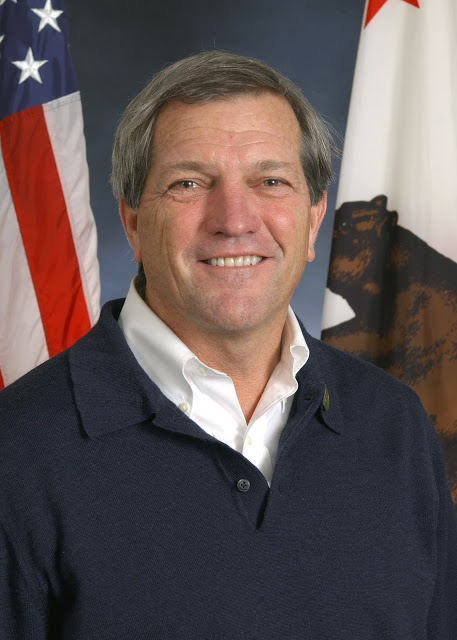
Mark DeSaulnier
DDemocratic
Co

Anthony Cannella
RRepublican
Co

Bill Emmerson
RRepublican
Co

Bob Wieckowski
DDemocratic
Co
DW
Das Williams
DDemocratic
Co

Fran Pavley
DDemocratic
Co
HP
Henry Perea
DDemocratic
Co

Leland Yee
DDemocratic
Co
Richard Pan
DDemocratic
Co
SS
Sandré Swanson
DDemocratic
Co
VM
V. Manuel Pérez
DDemocratic
Ask Maddy
·
AI policy assistant
Ask Maddy about SB 301
Scope: CA
Hi! I can help you understand SB 301. What would you like to know?
Try one of these
i
Maddy answers using official bill text and legislative records. Always verify before sharing.
Sources cited inline