

Public employees' retirement.
Summary
(1) The State Teachers' Retirement Law (STRL) establishes the Defined Benefit Program of the State Teachers' Retirement System, which provides a defined benefit to members of the system based on final compensation, credited service, and age at retirement, subject to certain variations. STRL also establishes the Defined Benefit Supplement Program, which provides supplemental retirement, disability, and other benefits, payable either in a lump-sum payment, an annuity, or both to members of the State Teachers' Retirement Plan. STRL defines creditable compensation for these purposes as remuneration that is payable in cash to all persons in the same class of employees, as specified, for performing creditable service. This bill would revise the definition of creditable compensation for these purposes and would identify certain payments, reimbursements, and compensation that are creditable compensation to be applied to the Defined Benefit Supplement Program. The bill would prohibit one employee from being considered a class. The bill would revise the definition of compensation with respect to the Defined Benefit Supplement Program to include remuneration earnable within a 5-year period, which includes the last year in which the member's final compensation is determined, when it is in excess of 125% of that member's compensation earnable in the year prior to that 5-year period, as specified. The bill would prohibit a member who retires on or after January 1, 2013, who elects to receive his or her retirement benefit under the Defined Benefit Supplement Program as a lump-sum payment from receiving that sum until 180 days have elapsed following the effective date of the member's retirement. (2) Existing law permits a retired member of STRS to perform specified activities as an employee of an employer in the system, as an employee of a 3rd party, or as an independent contractor within the California public school system, but prohibits the member from making contributions to the retirement fund or accruing service credit based on compensation earned from that service. Existing law conditions this authorization on a variety of factors including limitations on the rate of pay of the member and the total amount of compensation. Existing law prohibits compensation, in this regard, for a member who is below normal retirement age for the first 6 months after retirement for service. This bill would apply the prohibition described above to employees retiring on or after January 1, 2013, for the first 180 days after retirement for service. The bill, beginning January 1, 2013, and until June 30, 2014, would exclude from that postretirement compensation limitation up to $2,500 of compensation earned by a member who retired for service and returned to work during the first 180 days after retirement as a substitute employee, as specified, if other conditions are met. (3) Existing law establishes the Cash Balance Benefit Program, administered by the Teachers' Retirement Board, as a separate benefit program within the State Teachers' Retirement Plan in order to provide a retirement plan for persons employed to perform creditable service for less than 50% of full-time service. Existing law provides that the normal form of benefit under the program is a lump-sum payment, after which further benefits are not payable. This bill would permit the board to assess penalties for late and improper adjustments on contributions in connection with the Cash Balance Benefit Program. The bill would prohibit a member who retires on or after January 1, 2013, from receiving the lump-sum payment under the program until 180 days have elapsed following the effective date of the member's termination of employment. (4) The Public Employees' Retirement Law (PERL) establishes the Public Employees' Retirement System, which is administered by its board of administration, and which provides a defined benefit to its members based on age at retirement, service credit, and final compensation. PERL defines compensation earnable and other related terms for purposes of calculating a member's retirement allowance. PERL requires employers and contracting agencies participating in the system to provide notice to the board of the change of status of a member. This bill would require a participating employer and contracting agencies to immediately notify the board of a change that may affect a member's payrate for purposes of compensation earnable and would authorize the board to assess a reasonable fee upon an employer that fails to do so. The bill would authorize the board to assess a reasonable amount to cover the cost of audit, adjustment, or correction, if it determines that an employer knowingly failed to comply with requirements regarding the reporting of compensation. The bill would specify that payrate means, among other things, the member's monthly base pay, would connect payrate to publicly available pay schedules, and would establish requirements for computation of the payrate of a member for a leave without pay. The bill would prescribe a process for determining if specific compensation items are special compensation. The bill would prohibit a person who retires on or after January 1, 2013, from being employed in any capacity by the state, the University of California, a school employer, or a contracting agency until that person has been separated from service for a period of at least 180 days, subject to existing exceptions, unless the employee is subject to a collectively bargained early retirement plan with the California State University in effect prior to January 1, 2013. The bill also would make additional related changes and would make a statement of legislative findings. This bill would provide that its provisions would become operative on July 1, 2012, except as specified.
Bill status
passed
3 of 5 stages cleared
Introduction
Dec 2010
Committee Review
Aug 2011
Senate Passage
Jun 2011
Assembly Passage
Governor
Introduced Dec 6, 2010
Last action Aug 25, 2011
Floor votes · Senate Jun 1, 2011
How they voted
30–0
Passed · 1 other
Total votes 31
Jun 1, 2011
D
Democratic20
100% Yea
R
Republican11
90% Yea
Vote distribution
All Yea
All Nay
Mixed
No data
Full legislative history
Actions timeline
Total actions
21
Key actions
4
Committee
6
Amendments
1
Aug 25, 2011
Lower · Passed
Hearing postponed by committee.
lower
Aug 17, 2011
Committee
Set, first hearing. Referred to APPR. suspense file.
lower
Jul 6, 2011
Lower · Passed
From committee: Do pass as amended and re-refer to Com. on APPR. (Ayes 5. Noes 0.) (July 6).
lower
Jun 20, 2011
Committee
Referred to Com. on P.E., R. & S.S.
lower
Jun 1, 2011
Senate · Passed
Senate Vote: pass (30-0-1)
senate
May 26, 2011
Upper · Passed
From committee: Do pass. (Ayes 8. Noes 0. Page 1111.) (May 26).
upper
Mar 22, 2011
Committee
From committee: Do pass and re-refer to Com. on APPR. (Ayes 5. Noes 0. Page 416.) (March 21). Re-referred to Com. on APPR.
upper
Jan 20, 2011
Committee
Referred to Com. on P.E. & R.
upper
Dec 6, 2010
Introduced
Introduced. Read first time. To Com. on RLS. for assignment. To print.
upper
1 primary · 2 co-sponsors
Sponsors
Role
Legislator
Party
State
District
P

Joseph Simitian
DDemocratic
Co
EA
Elaine Alquist
DDemocratic
Co
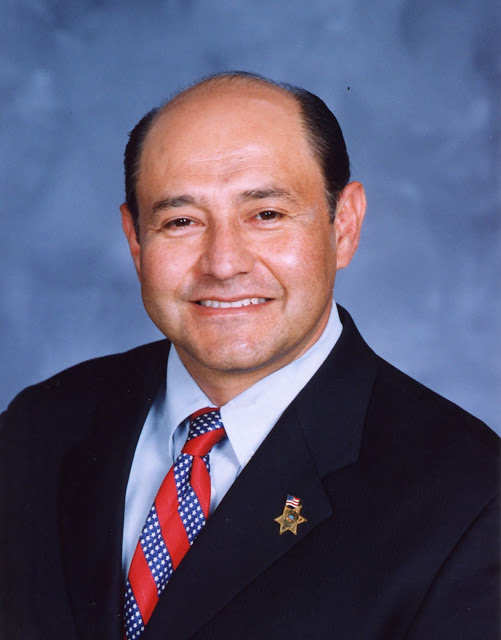
Lou Correa
DDemocratic
Ask Maddy
·
AI policy assistant
Ask Maddy about SB 27
Scope: CA
Hi! I can help you understand SB 27. What would you like to know?
Try one of these
i
Maddy answers using official bill text and legislative records. Always verify before sharing.
Sources cited inline