

School employees: dismissal, suspension, and leave of absence procedures.
Summary
(1) Under existing law, a permanent school employee is prohibited from being dismissed, except for one or more of certain enumerated causes, including for immoral or unprofessional conduct and unsatisfactory performance. Upon a charging that there exists cause for the dismissal or suspension of a permanent employee, existing law authorizes the governing board of a school district to give notice to the employee of its intention to dismiss or suspend the employee, as specified. Existing law prohibits the governing board of a school district from giving notice of dismissal or suspension of a permanent employee between May 15 and September 15 of any year. This bill would include serious or egregious unprofessional conduct, as specified, as a ground for dismissal of a permanent school employee, and would except from the prohibition of giving notice to the employee between May 15 and September 15 proceedings where the charges involve specified offenses. (2) Existing law authorizes the governing board of a school district to immediately suspend a permanent employee under specified conditions, including immoral conduct, and give the employee notice of the suspension, as specified. This bill would include serious or egregious unprofessional conduct, as defined, within the conditions that a governing board may immediately suspend a permanent employee. (3) Existing law provides that a certificated employee may be charged with a mandatory leave of absence offense for certain specified sex offenses or controlled substance offenses with the exception of marijuana, mescaline, peyote, or tetrahydrocannabinols. Existing law also provides that a certificated employee may be charged with an optional leave of absence offense for certain offenses, including controlled substance offenses, as specified, with the exception of marijuana, mescaline, peyote, or tetrahydrocannabinols. Existing law requires the governing board of a school district to immediately place a certificated employee on compulsory leave of absence if the employee is charged with a mandatory leave of absence offense. This bill would remove marijuana, mescaline, peyote, and tetrahydrocannabinols as exceptions to the controlled substance offenses for which a certificated employee may be charged with a mandatory leave of absence offense or an optional leave of absence offense. Because this bill would increase the number of employees subject to immediate placement on compulsory leave of absence, thereby increasing the duties of school districts, the bill would impose a state-mandated local program. (4) Existing law requires that a requested hearing on the dismissal or suspension of a permanent employee be conducted by a Commission on Professional Competence, as specified, and provides that the decision of the commission is deemed to be the final decision of the governing board of a school district. Existing law prohibits testimony from being given and evidence from being introduced relating to matters that occurred more than 4 years prior to the filing of the notice, and prohibits a decision relating to the dismissal or suspension of an employee from being made based on charges or evidence relating to matters that occurred more than 4 years before the filing of the notice of charges for the dismissal or suspension of the employee. This bill would, for hearings on the dismissal or suspension of a permanent employee that involve certain sex offenses, controlled substance offenses, or child abuse offenses, as specified, require these hearings to be conducted solely by an administrative law judge of the Office of Administrative Hearings and would provide that the decision of the administrative law judge related to these specified offenses would be advisory, and require the final decision regarding the discipline of the employee to be determined by action of the governing board of the school district, as specified. The bill would require the governing board, before making its final determination, to allow the employee to submit a written statement or response or, at the election of the governing board, an oral statement concerning the disciplinary action, and to only consider the record produced during the hearing conducted by the administrative law judge, and would require the governing board's final determination to be subject to review and appeal, as specified. The bill also would exempt hearings that involve these specified offenses from the prohibition on giving testimony and introducing evidence relating to matters that occurred more than 4 years before the date of the filing of the notice, and would, for hearings that involve the specified offenses, permit a decision relating to the dismissal or suspension of an employee to be made based on charges or evidence related to matters occurring more than 4 years before the date of the filing of the notice of charges for the dismissal or suspension of the employee. (5) This bill also would make nonsubstantive and conforming changes to these provisions. (6) The California Constitution requires the state to reimburse local agencies and school districts for certain costs mandated by the state. Statutory provisions establish procedures for making that reimbursement. This bill would provide that, if the Commission on State Mandates determines that the bill contains costs mandated by the state, reimbursement for those costs shall be made pursuant to these statutory provisions.
Bill status
died
3 of 5 stages cleared
Introduction
Feb 2012
Committee Review
Jun 2012
Senate Passage
May 2012
Assembly Passage
Governor
Introduced Feb 24, 2012
Last action Jun 27, 2012
Floor votes · Senate May 29, 2012
How they voted
32–4
Passed · 3 other
Total votes 39
May 29, 2012
D
Democratic24
75% Yea
R
Republican15
93% Yea
Vote distribution
All Yea
All Nay
Mixed
No data
Full legislative history
Actions timeline
Total actions
21
Key actions
4
Committee
4
Amendments
3
Jun 27, 2012
Committee
Set, first hearing. Failed passage in committee. Reconsideration granted.
lower
Jun 18, 2012
Committee
Referred to Com. on ED.
lower
May 29, 2012
Senate · Passed
Senate Vote: pass (32-4-3)
senate
May 29, 2012
Introduced
Amendments by Senator Huff tabled on motion of Senator Corbett. (Ayes 23. Noes 14. Page 3657.)
upper
May 24, 2012
Upper · Passed
From committee: Do pass as amended. (Ayes 5. Noes 2. Page 3598.) (May 24).
upper
Apr 25, 2012
Upper · Passed
From committee: Do pass as amended and re-refer to Com. on APPR. (Ayes 9. Noes 0. Page 3232.) (April 18).
upper
Apr 11, 2012
Upper · Passed
Hearing postponed by committee.
upper
Mar 22, 2012
Committee
Referred to Com. on ED.
upper
Feb 24, 2012
Introduced
Introduced. To Com. on RLS. for assignment. To print.
upper
1 primary · 0 co-sponsors
Sponsors
Role
Legislator
Party
State
District
P
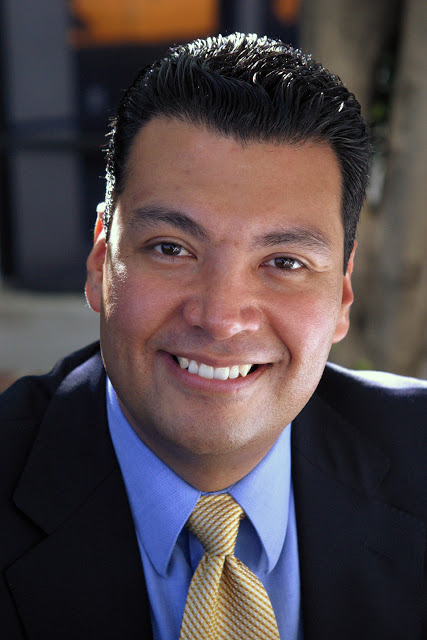
Alex Padilla
DDemocratic
Ask Maddy
·
AI policy assistant
Ask Maddy about SB 1530
Scope: CA
Hi! I can help you understand SB 1530. What would you like to know?
Try one of these
i
Maddy answers using official bill text and legislative records. Always verify before sharing.
Sources cited inline