

Trapping.
Summary
(1) Existing law, except as specified, requires every person, other than a fur dealer, who traps fur-bearing mammals or nongame mammals, designated by the Fish and Game Commission, or who sells raw furs of those mammals, to have a trapping license from the Department of Fish and Game. Certain persons taking mammals injurious to growing crops or other property are exempted from the trapping license requirement, except those persons providing trapping services for profit are required to obtain a trapping license from the department. This bill, commencing July 1, 2013, would establish 2 classes of trapping licenses. The bill would authorize a person who has complied with all applicable licensing and license renewal requirements to trap wildlife for recreation or fur to be issued a class I trapping license. The bill, commencing July 1, 2013, would authorize specified persons trapping wildlife for a profit be issued a class II trapping license. The bill, commencing July 1, 2013, would require the department to publish a list of class II trapping licensees on its Internet Web site. The bill would authorize the commission to issue a formal warning or suspend a license when a licensee is found, after a duly noticed hearing, to have published inconsistent information on wildlife diseases, as specified. The bill would require the commission to establish a base fee for a class II trapping license, in an amount sufficient to recover all reasonable administrative, implementation, and enforcement costs of the department and commission relating to the license, and would require the commission to implement this fee structure on or before July 1, 2013. The bill, commencing July 1, 2013, would make available, upon appropriation by the Legislature, revenues of those class II trapping license fees to fund reimbursement of the department and commission for the reasonable costs of the administration, implementation, and enforcement of provisions of law relating to class II trapping licenses and of regulations adopted pursuant to those provisions. The bill, commencing July 1, 2013, would require a class II trapping licensee to make a reasonable effort, as defined, to determine whether dependent young are present within a home or business premise and to prevent orphaning young animals as a consequence of trapping and killing the mother. The bill, commencing July 1, 2013, would further require class II trapping licensees to provide clients with a written contract, containing prescribed information, prior to setting traps. (2) Existing law, except as expressly provided, makes any violation of the Fish and Game Code, or any rule, regulation, or order made or adopted under that code, a misdemeanor. Existing law makes certain actions relating to trapping unlawful. The bill also would make it unlawful to kill any trapped mammal by listed methods or to solicit trapping services business from the public for reasons of health or safety pursuant to specified laws. The bill also would prohibit the trapping of bats, except where expressly authorized under specified circumstances. By specifying these new Fish and Game Code violations, thereby defining new crimes, this bill would impose a state-mandated local program. (3) Existing law, except as specified, prohibits the taking or possession of nongame mammals, as defined. Existing law authorizes the department to enter into cooperative agreements with state and federal agencies for the purpose of controlling harmful nongame mammals. This bill would authorize the department to enter into cooperative agreements with a special district or a state or local agency having responsibility for levee maintenance for the purpose of controlling nongame mammals to maintain irrigation, water supply, drainage, and flood control works. (4) The California Constitution requires the state to reimburse local agencies and school districts for certain costs mandated by the state. Statutory provisions establish procedures for making that reimbursement. This bill would provide that no reimbursement is required by this act for a specified reason.
Bill status
vetoed
4 of 5 stages cleared
Introduction
Feb 2012
Committee Review
Aug 2012
Senate Passage
May 2012
Assembly Passage
Aug 2012
Vetoed
Sep 2012
Introduced Feb 24, 2012
Vetoed Sep 26, 2012
Floor votes · Senate May 31, 2012 · Assembly Aug 23, 2012
How they voted
21–12
Passed · 2 other
Total votes 35
May 31, 2012
D
Democratic23
91% Yea
R
Republican12
91% Nay
Vote distribution
All Yea
All Nay
Mixed
No data
Full legislative history
Actions timeline
Total actions
32
Key actions
7
Committee
4
Amendments
5
Sep 26, 2012
Vetoed
In Senate. Consideration of Governor's veto pending.
upper
Sep 26, 2012
Vetoed
Vetoed by the Governor.
upper
Aug 27, 2012
Upper · Passed
Assembly amendments concurred in. (Ayes 21. Noes 16. Page 4866.) Ordered to engrossing and enrolling.
upper
Aug 24, 2012
Introduced
In Senate. Concurrence in Assembly amendments pending.
upper
Aug 23, 2012
Assembly · Passed
Assembly Vote: pass (40-27-5)
assembly
Aug 16, 2012
Lower · Passed
From committee: Do pass as amended. (Ayes 12. Noes 5.) (August 16).
lower
Aug 8, 2012
Committee
Set, first hearing. Referred to APPR. suspense file.
lower
Jul 3, 2012
Lower · Passed
From committee: Do pass as amended and re-refer to Com. on APPR. (Ayes 8. Noes 2.) (June 26).
lower
Jun 14, 2012
Committee
Referred to Com. on W., P. & W.
lower
May 31, 2012
Senate · Passed
Senate Vote: pass (21-12-2)
senate
May 29, 2012
Upper · Passed
From committee: Do pass as amended. (Ayes 5. Noes 2. Page 3597.) (May 24).
upper
May 1, 2012
Upper · Passed
From committee: Do pass as amended and re-refer to Com. on APPR. (Ayes 5. Noes 3. Page 3122.) (April 10).
upper
Mar 22, 2012
Committee
Referred to Com. on N.R. & W.
upper
Feb 24, 2012
Introduced
Introduced. To Com. on RLS. for assignment. To print.
upper
1 primary · 3 co-sponsors
Sponsors
Role
Legislator
Party
State
District
P

Ellen Corbett
DDemocratic
Co

Jerry Hill
DDemocratic
Co

Loni Hancock
DDemocratic
Co
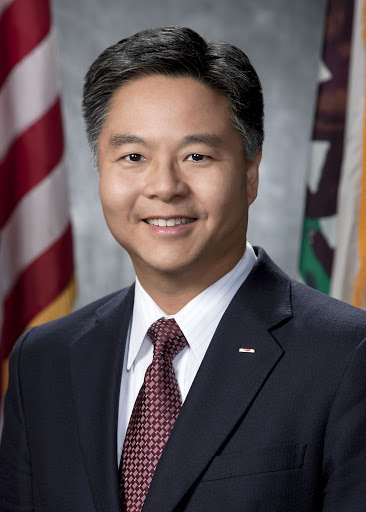
Ted Lieu
DDemocratic
Ask Maddy
·
AI policy assistant
Ask Maddy about SB 1480
Scope: CA
Hi! I can help you understand SB 1480. What would you like to know?
Try one of these
i
Maddy answers using official bill text and legislative records. Always verify before sharing.
Sources cited inline