

Collection of criminal fines and penalties.
Summary
(1) Under existing law, in every case where a person is convicted of a crime and whose sentence includes parole, the court is required to assess a parole revocation fine, as specified, for deposit into the Restitution Fund in the State Treasury. This bill would require the court to assess an additional postrelease community supervision revocation restitution fine or mandatory supervision revocation restitution fine in every case where a person is convicted of a crime and is subject to postrelease community supervision or mandatory supervision, for deposit into the Restitution Fund in the State Treasury, a continuously appropriated fund. Because the bill creates a new source of revenue for deposit into the Restitution Fund, the bill would make an appropriation. (2) Existing law generally provides that in any case in which a defendant is ordered to pay restitution, the order to pay restitution shall be deemed a money judgment that is fully enforceable by the victim as if the restitution order were a civil judgment, and any portion of the restitution order that remains unsatisfied after a defendant is no longer on probation or parole is enforceable by the victim, as specified. This bill would also specify that any portion of a restitution order that remains unsatisfied after a defendant is no longer on postrelease community supervision or mandatory supervision is enforceable by the victim pursuant to those provisions. (3) Existing law requires the Department of Corrections and Rehabilitation to deduct and retain certain funds from the wages, trust account deposits, or settlement or trial awards of a prisoner for the payment of certain fees and fines, including restitution orders, restitution fines, and specified administrative fees, and also authorizes the department to collect funds from a parolee for the payment of restitution orders and fines, unless prohibited by federal law. Under existing law, these funds are required to be deposited in the Restitution Fund in the State Treasury. This bill would specify that, when a prisoner is punished by imprisonment in a county jail for a felony, an agency designated by the county board of supervisors is authorized to deduct and retain those funds, and would also authorize that agency to collect funds from a parolee. The bill would require these agencies to transfer these funds for deposit in the Restitution Fund, or would permit direct payment to the victim. If the board of supervisors designates the county sheriff as the collecting agency, the bill would require the board of supervisors to first obtain the concurrence of the county sheriff. (4) Existing law authorizes delinquent fines, state or local penalties, forfeitures, restitution fines and orders, and any other amounts imposed by a superior court upon a person or entity for criminal offenses, that total at least $100 in the aggregate, to be referred by the superior court, the county, or the state to the Franchise Tax Board for collection. This bill would also authorize the referral of delinquent fines, state and local penalties, forfeitures, restitution fines and orders, and other amounts imposed by a juvenile court to the board for collection.
Bill status
signed
all 5 stages cleared
Introduction
Feb 2012
Committee Review
Aug 2012
Senate Passage
May 2012
Assembly Passage
Aug 2012
Signed into Law
Sep 2012
Introduced Feb 22, 2012
Signed Sep 29, 2012
Floor votes · Senate May 31, 2012 · Assembly Aug 22, 2012
How they voted
34–0
Passed · 1 other
Total votes 35
May 31, 2012
D
Democratic23
100% Yea
R
Republican12
91% Yea
Vote distribution
All Yea
All Nay
Mixed
No data
Full legislative history
Actions timeline
Total actions
31
Key actions
8
Committee
5
Amendments
4
Sep 29, 2012
Signed into law
Approved by the Governor.
legislature
Aug 23, 2012
Upper · Passed
Assembly amendments concurred in. (Ayes 37. Noes 0. Page 4768.) Ordered to engrossing and enrolling.
upper
Aug 22, 2012
Assembly · Passed
Assembly Vote: pass (71-0-1)
assembly
Aug 22, 2012
Introduced
In Senate. Concurrence in Assembly amendments pending.
upper
Aug 16, 2012
Lower · Passed
From committee: Do pass as amended. (Ayes 17. Noes 0.) (August 16).
lower
Aug 8, 2012
Lower · Passed
Hearing postponed by committee.
lower
Jun 26, 2012
Committee
From committee: Do pass and re-refer to Com. on APPR. with recommendation: To consent calendar. (Ayes 6. Noes 0.) (June 26). Re-referred to Com. on APPR.
lower
Jun 11, 2012
Committee
Referred to Com. on PUB. S.
lower
May 31, 2012
Senate · Passed
Senate Vote: pass (34-0-1)
senate
May 30, 2012
Upper · Passed
From committee: Do pass as amended. (Ayes 7. Noes 0. Page 3593.) (May 24).
upper
Apr 24, 2012
Upper · Passed
From committee: Do pass as amended and re-refer to Com. on APPR. (Ayes 7. Noes 0. Page 3209.) (April 17).
upper
Mar 1, 2012
Committee
Referred to Com. on PUB. S.
upper
Feb 22, 2012
Introduced
Introduced. Read first time. To Com. on RLS. for assignment. To print.
upper
1 primary · 0 co-sponsors
Sponsors
Role
Legislator
Party
State
District
P
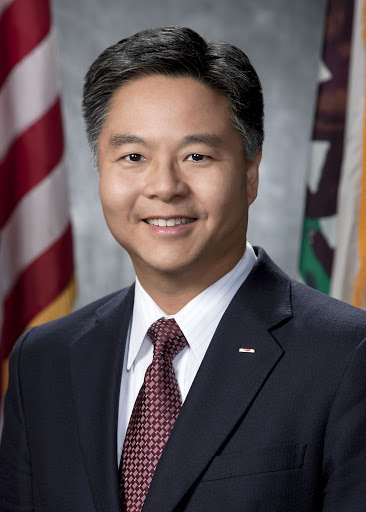
Ted Lieu
DDemocratic
Ask Maddy
·
AI policy assistant
Ask Maddy about SB 1210
Scope: CA
Hi! I can help you understand SB 1210. What would you like to know?
Try one of these
i
Maddy answers using official bill text and legislative records. Always verify before sharing.
Sources cited inline