

School employees: discipline: suspension and dismissal.
Summary
(1) Existing law prohibits a permanent school employee from being dismissed except for one or more specified offenses. This bill would prohibit a collective bargaining agreement entered into or renewed on or after January 1, 2013, from requiring the removal, after a specified time period, from an employee's record of records pertaining to discipline, complaints, reprimands, or investigations relating to the employee's commission, or potential commission, of one of those specified offenses. (2) Existing law authorizes a governing board of a school district to give notice to a permanent employee of its intention to dismiss or suspend him or her for specified causes at the expiration of 30 days from the date of service of the notice, unless the employee demands a hearing. Existing law prohibits that notice from being given between May 15th and September 15th in any year. This bill would remove that prohibition. (3) Existing law prohibits the governing board of a school district from acting upon any charges of unprofessional conduct, or unsatisfactory performance, unless at least 45, or 90, calendar days, respectively, prior to the date of the filing of the charges the governing board, or its authorized representative, has given the employee written notice, as specified. This bill would remove those 45-day and 90-day requirements. (4) Existing law requires the governing board of a school district to immediately place an employee on compulsory leave of absence if the employee is charged with a mandatory leave of absence offense, as defined. This bill would require the governing board to transfer a certificated employee to nonclassroom duties that do not involve contact with pupils if the governing board has reasonable cause to believe that the employee is under investigation by a law enforcement agency for commission of a mandatory leave of absence offense. The bill would require an employee transferred under these provisions to continue to receive his or her regular salary during the period of the transfer. If the governing board returns the employee to classroom duties, the bill would require the governing board to record the reason or reasons for the return in a resolution adopted by the governing board. By placing additional duties on school district governing boards regarding the transfer of employee duties, this bill would impose a state-mandated local program. (5) Existing law establishes a Commission on Professional Competence for each dismissal or suspension hearing requested by an employee, consisting of specified members. Existing law deems the decision of the Commission on Professional Competence to be the final decision of the governing board of the school district. This bill would make various changes to the provisions relating to the hearing, including requiring the Commission on Professional Competence to consist solely of an administrative law judge, as well as providing that the decision of the commission would be advisory, and the final decision regarding the discipline of the employee would be determined by action of the governing board of the school district. The bill would provide that an employee requesting a hearing may be placed on administrative leave without pay, and that an employee who is placed on administrative leave would be required to be paid his or her regular salary if he or she furnishes to the school district acceptable security, as specified. (6) Existing law prohibits testimony from being given or evidence being introduced at the hearing relating to matters that occurred more than 4 years prior to the date of the filing of the notice of dismissal or suspension. This bill would remove that 4-year limitation. (7) This bill would make nonsubstantive and conforming changes. (8) The California Constitution requires the state to reimburse local agencies and school districts for certain costs mandated by the state. Statutory provisions establish procedures for making that reimbursement. This bill would provide that, if the Commission on State Mandates determines that the bill contains costs mandated by the state, reimbursement for those costs shall be made pursuant to these statutory provisions.
Bill status
died
1 of 4 stages cleared
Introduction
Feb 2012
Committee Review
Floor Vote
Governor
Introduced Feb 13, 2012
Last action Apr 19, 2012
Floor votes
How they voted
No floor votes recorded yet.
Full legislative history
Actions timeline
Total actions
9
Key actions
1
Committee
4
Apr 19, 2012
Committee
Set, first hearing. Failed passage in committee. (Ayes 2. Noes 4. Page 3230.) Reconsideration granted.
upper
Apr 11, 2012
Upper · Passed
Hearing postponed by committee.
upper
Mar 26, 2012
Committee
Re-referred to Coms. on ED. and JUD.
upper
Mar 1, 2012
Committee
Referred to Com. on RLS.
upper
Feb 13, 2012
Introduced
Introduced. Read first time. To Com. on RLS. for assignment. To print.
upper
1 primary · 10 co-sponsors
Sponsors
Role
Legislator
Party
State
District
P

Bob Huff
RRepublican
Co

Anthony Cannella
RRepublican
Co

Bill Emmerson
RRepublican
Co
DL
Doug La Malfa
RRepublican
Co

Jean Fuller
RRepublican
Co
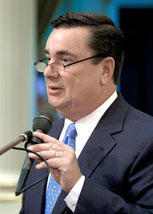
Joel Anderson
RRepublican
Co

Mark Wyland
RRepublican
Co
MW
Mimi Walters
RRepublican
Co

Robert Dutton
RRepublican
Co
SB
Sam Blakeslee Ph.D.
RRepublican
Co
TH
Tom Harman
RRepublican
Ask Maddy
·
AI policy assistant
Ask Maddy about SB 1059
Scope: CA
Hi! I can help you understand SB 1059. What would you like to know?
Try one of these
i
Maddy answers using official bill text and legislative records. Always verify before sharing.
Sources cited inline