

Graffiti offenses: penalties: abatement program fine: driver's license: suspension.
Summary
(1) Existing law provides that every person who maliciously commits any act to deface, damage, or destroy any real or personal property not his or her own, in cases other than those specified by state law, is guilty of vandalism. Existing law provides that any person who knowingly commits any act of vandalism to a church, synagogue, mosque, temple, building owned and occupied by a religious educational institution, or other place primarily used as a place of worship where religious services are regularly conducted, or a cemetery is guilty of a crime. Existing law also provides that any person who willfully and maliciously injects into or throws upon, or otherwise defaces, damages, destroys, or contaminates, any structure with butyric acid, or any other similar noxious or caustic chemical or substance, is guilty of a public offense. Existing law requires a court, upon conviction of any person under those provisions for acts of vandalism consisting of defacing property with graffiti or other inscribed materials, when appropriate and feasible, in addition to any other punishment that the court may impose in the form of a fine or imprisonment, or both, to order the defendant to clean up, repair, or replace the damaged property himself or herself, or order the defendant, and his or her parents or guardians if the defendant is a minor, to keep the damaged property or another specified property in the community free of graffiti for up to one year. This bill would, in addition to the punishment imposed under the above provisions, require the court to impose a $30 graffiti abatement program fine for deposit into the Graffiti Abatement Program Fund, which the bill would create in the State Treasury. The bill would require, upon appropriation by the Legislature, that the moneys in the fund be allocated to city and county graffiti abatement programs in proportion to the number of convictions occurring in each city or county that has a graffiti abatement program. (2) Existing law requires the court, for every conviction of a person for a violation of offenses described in paragraph (1) , to suspend the person's driving privilege for not more than 2 years, except when the court finds that a personal or family hardship exists that requires the person to have a driver's license for his or her own, or a member of his or her family's, employment, school, or medically related purposes. Existing law also requires the court, if the person convicted does not yet have the privilege to drive, to order the Department of Motor Vehicles to delay issuing the privilege to drive for not less than one year nor more than 3 years subsequent to the time the person becomes legally eligible to drive. Existing law, if there is no further conviction for violating the provisions of paragraph (1) in a 12-month period after the conviction, authorizes the court, upon petition of the person affected, to modify the order imposing the delay of the privilege. This bill would delete the exceptions from these provisions and the court's discretion to modify the order imposing the delay of a person's driving privilege.
Bill status
failed
1 of 4 stages cleared
Introduction
Feb 2011
Committee Review
Floor Vote
Governor
Introduced Feb 15, 2011
Last action Feb 1, 2012
Floor votes
How they voted
No floor votes recorded yet.
Full legislative history
Actions timeline
Total actions
8
Key actions
2
Committee
4
Jan 10, 2012
Lower · Passed
In committee: Set, first hearing. Hearing canceled at the request of author.
lower
Jan 4, 2012
Committee
Re-referred to Com. on PUB. S.
lower
Jan 4, 2012
Committee
Referred to Com. on PUB. S.
lower
Feb 16, 2011
Lower · Passed
From printer. May be heard in committee March 18.
lower
1 primary · 0 co-sponsors
Sponsors
Role
Legislator
Party
State
District
P
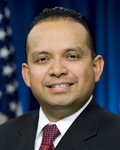
Luis Alejo
DDemocratic
Ask Maddy
·
AI policy assistant
Ask Maddy about AB 498
Scope: CA
Hi! I can help you understand AB 498. What would you like to know?
Try one of these
i
Maddy answers using official bill text and legislative records. Always verify before sharing.
Sources cited inline