

CalWORKs eligibility: asset limits: vehicles.
Summary
Existing federal law provides for the allocation of federal funds through the federal Temporary Assistance for Needy Families (TANF) block grant program to eligible states, with California's version of this program known as the California Work Opportunity and Responsibility to Kids (CalWORKs) program. Under the CalWORKs program, each county provides cash assistance and other benefits to qualified low-income families and individuals who meet specified eligibility criteria. Existing law imposes limits on the amount of income and personal and real property an individual or family may possess in order to be eligible for aid under the CalWORKs program, including specifying the allowable value of a licensed vehicle retained by an applicant for, or recipient of, that aid. This bill would delete existing requirements for assessing the value of a motor vehicle for purposes of CalWORKs program eligibility. The bill would exclude the value of a licensed motor vehicle from consideration when determining or redetermining CalWORKs eligibility. By increasing the duties of counties administering the CalWORKs program, this bill would impose a state-mandated local program. Existing law continually appropriates money from the General Fund to pay for a share of aid grant costs under the CalWORKs program. This bill would declare that no appropriation would be made for purposes of the bill pursuant to the provision continuously appropriating funds for the CalWORKs program. The California Constitution requires the state to reimburse local agencies and school districts for certain costs mandated by the state. Statutory provisions establish procedures for making that reimbursement. This bill would provide that, if the Commission on State Mandates determines that the bill contains costs mandated by the state, reimbursement for those costs shall be made pursuant to these statutory provisions.
Bill status
passed
3 of 5 stages cleared
Introduction
Feb 2012
Committee Review
Aug 2012
Assembly Passage
May 2012
Senate Passage
Governor
Introduced Feb 24, 2012
Last action Aug 16, 2012
Floor votes · Assembly May 17, 2012
How they voted
40–25
Passed · 7 other
Total votes 72
May 17, 2012
D
Democratic45
88% Yea
I
Independent1
0% Nay
R
Republican26
92% Nay
Vote distribution
All Yea
All Nay
Mixed
No data
Full legislative history
Actions timeline
Total actions
14
Key actions
5
Committee
8
Aug 16, 2012
Upper · Passed
In committee: Held under submission.
upper
Jun 25, 2012
Upper · Passed
In committee: Placed on APPR. suspense file.
upper
Jun 13, 2012
Committee
From committee: Do pass and re-refer to Com. on APPR. (Ayes 4. Noes 3.) (June 12). Re-referred to Com. on APPR.
upper
May 24, 2012
Committee
Referred to Com. on HUMAN S.
upper
May 17, 2012
Assembly · Passed
Assembly Vote: pass (40-25-7)
assembly
May 9, 2012
Lower · Passed
From committee: Do pass. (Ayes 12. Noes 5.) (May 9).
lower
Apr 25, 2012
Committee
From committee: Do pass and re-refer to Com. on APPR. (Ayes 5. Noes 0.) (April 24). Re-referred to Com. on APPR.
lower
Mar 15, 2012
Committee
Referred to Com. on HUM. S.
lower
Feb 26, 2012
Lower · Passed
From printer. May be heard in committee March 27.
lower
Feb 24, 2012
Introduced
Introduced. To print.
lower
1 primary · 2 co-sponsors
Sponsors
Role
Legislator
Party
State
District
P
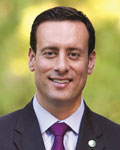
Roger Hernández
DDemocratic
Co
BB
Bob Blumenfield
DDemocratic
Co
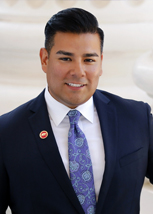
Ricardo Lara
DDemocratic
Ask Maddy
·
AI policy assistant
Ask Maddy about AB 2352
Scope: CA
Hi! I can help you understand AB 2352. What would you like to know?
Try one of these
i
Maddy answers using official bill text and legislative records. Always verify before sharing.
Sources cited inline