

School employees: employment.
Summary
(1) Existing law requires the governing board of a school district or community college district to establish the workday and workweek schedules of a classified employee, as defined. Existing law requires the regular workweek of a classified employee to be 40 hours and the regular workday of a classified employee to be 8 hours. Existing law authorizes a governing board of a school district or community college district to establish alternate workweek schedules of classified employees provided the establishment of such a workweek has the concurrence of the concerned employee or employee organization, as specified. This bill would require the regular workweek schedule of a school district employee in a position not requiring certification qualifications, as specified, and a community college employee in a nonacademic position, as specified, to be 40 hours a week and the regular workday schedule to be 8 hours a day. The bill would authorize a governing board of a school district or community college district to establish alternate workday and workweek schedules of school district employees, as specified, and community college district employees in nonacademic positions provided the establishment of such a workweek has the concurrence of the concerned employee or employee organization, as specified. (2) Existing law requires the governing board of a school district or community college district to provide the extent to which, and establish the method by which, ordered overtime is compensated for all classified positions or for certain classes of classified positions, as specified. This bill would require the governing board of a school district to provide the extent to which, and establish the method by which, ordered overtime is compensated for all positions not requiring certification or for certain classes of positions not requiring certification. The bill also would require the governing board of a community college district to provide the extent to which, and establish the method by which, ordered overtime is compensated for all nonacademic positions or for certain classes of nonacademic positions. (3) Existing law requires the governing board of every school district and community college district, or the personnel commission in any merit system school district or community college district, to determine the practices relating to morning and night shift salary differentials in the private employment fields in which it must compete for employees for its classified staff and to consider the advisability of providing comparable salary differentials for its classified staff. Existing law defines "shift" as the number of hours worked and includes a duty-free meal period, as specified. This bill would revise the definition of "shift" to also include a duty-free rest period, as specified, and would provide that an employee who is not provided a meal period or rest period would be required to receive one additional hour of pay at the employee's regular rate of compensation for each workday that the meal period or rest period is not provided. The bill also would make technical, nonsubstantive changes to these provisions.
Bill status
in committee
1 of 4 stages cleared
Introduction
Feb 2012
Committee Review
Floor Vote
Governor
Introduced Feb 24, 2012
Last action Apr 30, 2012
Floor votes
How they voted
No floor votes recorded yet.
Full legislative history
Actions timeline
Total actions
5
Key actions
2
Committee
3
Apr 30, 2012
Lower · Passed
In committee: Set, first hearing. Hearing canceled at the request of author.
lower
Mar 15, 2012
Committee
Referred to Com. on P.E., R. & S.S.
lower
Feb 26, 2012
Lower · Passed
From printer. May be heard in committee March 27.
lower
Feb 24, 2012
Introduced
Introduced. To print.
lower
1 primary · 0 co-sponsors
Sponsors
Role
Legislator
Party
State
District
P
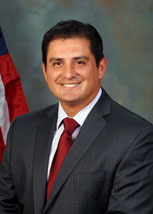
Ben Hueso
DDemocratic
Ask Maddy
·
AI policy assistant
Ask Maddy about AB 2236
Scope: CA
Hi! I can help you understand AB 2236. What would you like to know?
Try one of these
i
Maddy answers using official bill text and legislative records. Always verify before sharing.
Sources cited inline