

Clean Energy Jobs and Investment Act.
Summary
(1) Under the Public Utilities Act (the act) , the Public Utilities Commission (PUC) has regulatory authority over public utilities, including electrical corporations, as defined. The Reliable Electric Service Investments Act within the act requires the PUC to require an electrical corporation, until January 1, 2012, to identify a separate electrical rate component, which the PUC refers to as the "public goods charge," to fund energy efficiency, renewable energy, and research, development, and demonstration programs that enhance system reliability and provide in-state benefits. A violation of the Public Utilities Act is a crime. This bill would extend the requirement to collect the public goods charge January 1, 2020, and would increase the amount of funds the PUC would require the electrical corporations to collect through the public goods charge. Because a violation of this requirement is a crime, this bill would impose a state-mandated local program by extending the operation of a crime. By extending and expanding the collection of the public goods charge, the bill would result in a change in state taxes for the purpose of increasing state revenues within the meaning of Section 3 of Article XIII A of the California Constitution, and thus would require for passage the approval of 23 of the membership of each house of the Legislature. (2) Existing law requires that the moneys collected between January 1, 2007, and January 1, 2012, from the electrical corporations for public interest research, development, and demonstration projects be deposited in the Public Interest Research, Development, and Demonstration Fund and be used for the purposes of the Public Interest Research, Demonstration, and Development Program. This bill would repeal the Public Interest Research, Demonstration, and Development Program and would enact the Clean Energy Jobs and Investment Act. The bill would establish the Clean Energy Investment Council consisting of specified individuals to provide strategic policy guidance for the implementation of the act. The bill would require the State Energy Resources Conservation and Development Commission (Energy Commission) to establish and administer the California Energy Innovation Program (CEIP) to fund research, development, and demonstration projects that may lead to technological advancement and breakthroughs to overcome those barriers that prevent the achievement of the state's energy policy goals. The bill would require the Energy Commission to convene, no less than twice a year, meetings of the CEIP Advisory Council consisting of members representing specified entities and would require the council to identify the technological challenges that most warrant funding under the CEIP and opportunities for joint funding of projects and to make recommendations to avoid funding duplicative projects. The bill would require the Energy Commission to adopt regulations or modify existing regulations to implement the CEIP. The bill would require the Energy Commission to consult with the CEIP Advisory Council to establish a process for tracking the progress and outcome of funded projects. The bill would require the Energy Commission to consult with the CEIP Advisory Council and the Treasurer to establish terms that may be imposed as conditions for the receipt of CEIP funding. The bill would require the Energy Commission, no later than March 31 of each year, to prepare and submit to the Legislature an annual report regarding projects funded by the CEIP. The bill would establish the Clean Energy Innovation Program Fund in the State Treasury, and, upon appropriation by the Legislature, moneys in the fund would be expended by the Energy Commission to implement the CEIP. The bill would provide that moneys remaining in the Public Interest Research, Development, and Demonstration Fund as of January 1, 2012, be transferred to the Clean Energy Innovation Program Fund. (3) Existing law requires the Energy Commission to establish programs to optimize public investment and ensure that the most cost-effective and efficient investments in renewable energy resources are vigorously pursued (Renewable Energy Resources Program) . Existing law requires, until January 1, 2012, that moneys from the public goods charge collected for renewable energy be transferred to the Renewable Resource Trust Fund, a continuously appropriated fund except for administrative expenses, for the purpose of implementing the program. This bill would revise and recast the Renewable Energy Resources Program to, among other things, provide investment in energy storage technologies. The bill would establish the Clean Energy Investment Team within the Energy Commission for specified purposes of the program. The bill would extend to January 1, 2020, the transfer of the public goods charge collected for renewable energy to the Renewable Resource Trust Fund. Because the bill would revise the purposes for which the funds may be used and extend the deposit of moneys into a continuously appropriated fund, this bill would make an appropriation. (4) The California Constitution requires the state to reimburse local agencies and school districts for certain costs mandated by the state. Statutory provisions establish procedures for making that reimbursement. This bill would provide that no reimbursement is required by this act for a specified reason. (5) The California Constitution authorizes the Governor to declare a fiscal emergency and to call the Legislature into special session for that purpose. Governor Schwarzenegger issued a proclamation declaring a fiscal emergency, and calling a special session for this purpose, on December 6, 2010. Governor Brown issued a proclamation on January 20, 2011, declaring and reaffirming that a fiscal emergency exists and stating that his proclamation supersedes the earlier proclamation for purposes of that constitutional provision. This bill would state that it addresses the fiscal emergency declared and reaffirmed by the Governor by proclamation issued on January 20, 2011, pursuant to the California Constitution.
Bill status
failed
1 of 4 stages cleared
Introduction
Aug 2011
Committee Review
Floor Vote
Governor
Introduced Aug 29, 2011
Last action Sep 10, 2011
Floor votes
How they voted
No floor votes recorded yet.
Full legislative history
Actions timeline
Total actions
2
Key actions
0
Committee
1
Aug 29, 2011
Committee
Introduced. Read first time. Referred to Com. on E. U. & C.
upper
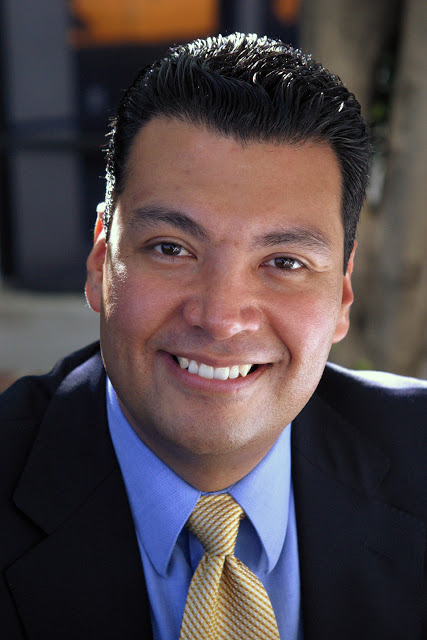
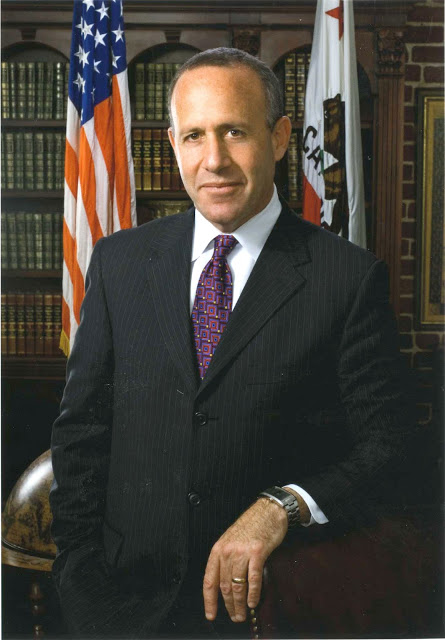
1 primary · 1 co-sponsor
Sponsors
Ask Maddy
·
AI policy assistant
Ask Maddy about SB 28
Scope: CA
Hi! I can help you understand SB 28. What would you like to know?
Try one of these
i
Maddy answers using official bill text and legislative records. Always verify before sharing.
Sources cited inline