

Public contracts: state agency: sweatshop labor: slave and sweat free code of conduct.
Summary
Existing law requires every contract entered into by a state agency for the procurement of equipment, materials, supplies, apparel, garments, and accessories and the laundering thereof, excluding public works contracts, to require a contractor to certify that no equipment, materials, supplies, apparel, garments, or accessories provided under the contract are produced by sweatshop labor, forced labor, convict labor, indentured labor under penal sanction, abusive forms of child labor, or exploitation of children in sweatshop labor. If a contractor knew or should have known the specified products furnished to the state were laundered or produced by the specified types of prohibited labor, the contractor may be removed from the bidder's list for 360 days. Existing law provides for misdemeanor liability in the case of a knowing false certification. Existing law requires the Department of Industrial Relations to establish a contractor responsibility program, on or before February 1, 2004, including a Sweat Free Code of Conduct. Existing law also requires the appropriate procurement agency, in consultation with the Director of Industrial Relations, to employ an approach to implement the Sweat Free Code of Conduct, as specified. Existing law requires the Department of Industrial Relations to explore mechanisms to ensure that businesses that contract with state agencies are in compliance with those provisions. This bill would rename the code of conduct as the Slave and Sweat Free Code of Conduct and would require every contract entered into by a state agency for the procurement of equipment, materials, supplies, apparel, garments, and accessories and the laundering thereof, excluding public works contracts, to require a contractor to certify that no equipment, materials, supplies, apparel, garments, or accessories provided under the contract are produced by abusive forms of labor performed by all persons, not only abusive forms of child labor, as prescribed. The bill would additionally extend the period that the contractor is removed from the bidder's list to 2 years, if the contractor knew or should have known the specified products were laundered or produced by the specified prohibited labor. This bill would require the Department of Industrial Relations to establish a contractor responsibility program on or before January 1, 2012, and would require specified actions by the Department of Industrial Relations and the Department of General Services with regard to the code of conduct. This bill would additionally require contractors whose manufacturing and assembly locations are outside the United States to comply with international laws or treaties binding on their countries and would require a subcontractor to sign a certification regarding the code of conduct under the penalty of perjury. By changing the definition of existing crimes, this bill would impose a state-mandated local program. The California Constitution requires the state to reimburse local agencies and school districts for certain costs mandated by the state. Statutory provisions establish procedures for making that reimbursement. This bill would provide that no reimbursement is required by this act for a specified reason.
Bill status
vetoed
4 of 5 stages cleared
Introduction
Feb 2010
Committee Review
Aug 2010
Senate Passage
Jun 2010
Assembly Passage
Aug 2010
Vetoed
Sep 2010
Introduced Feb 19, 2010
Vetoed Sep 27, 2010
Floor votes · Senate Jun 2, 2010 · Assembly Aug 19, 2010
How they voted
21–12
Passed · 4 other
Total votes 37
Jun 2, 2010
D
Democratic25
84% Yea
R
Republican12
100% Nay
Vote distribution
All Yea
All Nay
Mixed
No data
Full legislative history
Actions timeline
Total actions
38
Key actions
8
Committee
10
Sep 27, 2010
Vetoed
In Senate. To unfinished business. (Veto)
upper
Sep 25, 2010
Vetoed
Vetoed by Governor.
upper
Aug 19, 2010
Assembly · Passed
Assembly Vote: pass (42-25-2)
assembly
Aug 13, 2010
Lower · Passed
(Heard in committee August 12.)
lower
Aug 13, 2010
Lower · Passed
From committee: Do pass. (Ayes 12. Noes 5.)
lower
Aug 5, 2010
Committee
Set, first hearing. Referred to APPR. suspense file.
lower
Jun 30, 2010
Lower · Passed
(Heard in committee on June 29.)
lower
Jun 30, 2010
Committee
From committee: Do pass, but first be re-referred to Com. on APPR. (Ayes 7. Noes 4.) Re-referred to Com. on APPR.
lower
Jun 24, 2010
Lower · Passed
(Heard in committee on June 23.)
lower
Jun 24, 2010
Committee
From committee: Do pass, but first be re-referred to Com. on B.,P. & C.P. (Ayes 4. Noes 1.) Re-referred to Com. on B.,P. & C.P.
lower
Jun 2, 2010
Senate · Passed
Senate Vote: pass (21-12-4)
senate
May 27, 2010
Upper · Passed
From committee: Do pass. (Ayes 7. Noes 3. Page 3673.)
upper
Apr 26, 2010
Upper · Passed
Hearing postponed by committee.
upper
Apr 14, 2010
Committee
From committee: Do pass, but first be re-referred to Com. on APPR. (Ayes 7. Noes 1. Page 3180.) Re-referred to Com. on APPR.
upper
Feb 19, 2010
Introduced
Introduced. Read first time. To Com. on RLS. for assignment. To print.
upper
1 primary · 2 co-sponsors
Sponsors
Role
Legislator
Party
State
District
P

Ellen Corbett
DDemocratic
Co
CD
Curren D Price
DDemocratic
Co
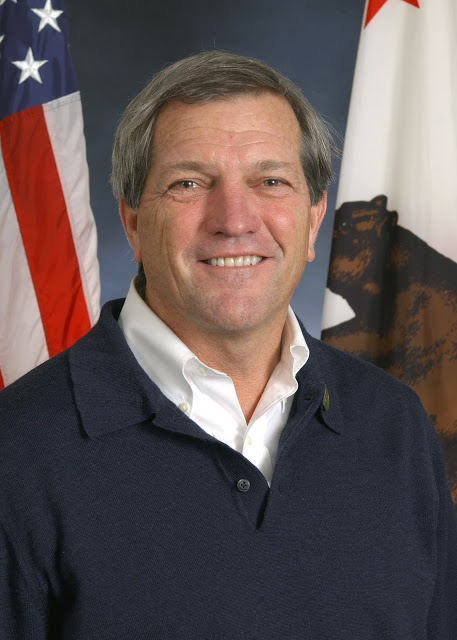
Mark DeSaulnier
DDemocratic
Ask Maddy
·
AI policy assistant
Ask Maddy about SB 1231
Scope: CA
Hi! I can help you understand SB 1231. What would you like to know?
Try one of these
i
Maddy answers using official bill text and legislative records. Always verify before sharing.
Sources cited inline