

Personal income tax: credit: prescription drugs: controlled substances tax: CURES.
Summary
The Personal Income Tax Law authorizes various credits against the tax imposed by that law. This bill would, on and after January 1, 2011, and before January 1, 2016, authorize a credit against that tax for a person who is 55 years of age or older in an amount equal to the amount paid or incurred for that taxpayer's own medicines or drugs, as described, that is not reimbursable or payable by public or private health insurance plans or by any 3rd party. Existing law imposes various taxes, including taxes on the privilege of engaging in certain activities. The Fee Collection Procedures Law, the violation of which is a crime, provides procedures for the collection of certain fees and surcharges. Existing law also requires the Department of Justice to maintain the Controlled Substance Utilization Review and Evaluation System (CURES) for the electronic monitoring of the prescribing and dispensing of Schedule II, Schedule III, and Schedule IV controlled substances by all practitioners authorized to prescribe or dispense these controlled substances. This bill would, on and after January 1, 2011, and before January 1, 2016, impose a tax upon every manufacturer and importer of a controlled substance classified as Schedule II, III, or IV upon the first sale of that substance at the rate of $0.0025 for each pill sold. The tax would be administered by the State Board of Equalization and would be collected pursuant to the procedures set forth in the Fee Collection Procedures Law. The bill would require the board to deposit all taxes, penalties, and interest collected, less refunds and administrative costs, in the CURES Fund, which this bill would create. This bill would require moneys in the fund, upon appropriation by the Legislature, to be allocated to the Department of Justice for the cost of administration of the CURES program, as specified. This bill would also require a person that manufactures controlled substances classified in Schedule II, III, or IV in this state, or that imports controlled substances classified in Schedule II, III, or IV into this state, to register with the Department of Justice to enable the department to report specified information to the board for purposes of collecting a tax on those persons. Those provisions would remain in effect until January 1, 2016. Because this bill would expand the application of the Fee Collection Procedures Law, the violation of which is a crime, it would impose a state-mandated local program. The California Constitution requires the state to reimburse local agencies and school districts for certain costs mandated by the state. Statutory provisions establish procedures for making that reimbursement. This bill would provide that no reimbursement is required by this act for a specified reason. This bill would take effect immediately as a tax levy.
Bill status
failed
1 of 4 stages cleared
Introduction
Feb 2010
Committee Review
Floor Vote
Governor
Introduced Feb 17, 2010
Last action Nov 30, 2010
Floor votes
How they voted
No floor votes recorded yet.
Full legislative history
Actions timeline
Total actions
18
Key actions
1
Committee
4
May 5, 2010
Committee
Set, first hearing. Failed passage in committee. (Ayes 4. Noes 5. Page 3466.) Reconsideration granted.
upper
Apr 15, 2010
Committee
Re-referred to Coms. on HEALTH and REV. & TAX.
upper
Apr 12, 2010
Upper · Passed
Hearing postponed by committee.
upper
Apr 5, 2010
Committee
Re-referred to Coms. on REV. & TAX. and HEALTH.
upper
Feb 17, 2010
Introduced
Introduced. Read first time. To Com. on RLS. for assignment. To print.
upper
1 primary · 0 co-sponsors
Sponsors
Role
Legislator
Party
State
District
P
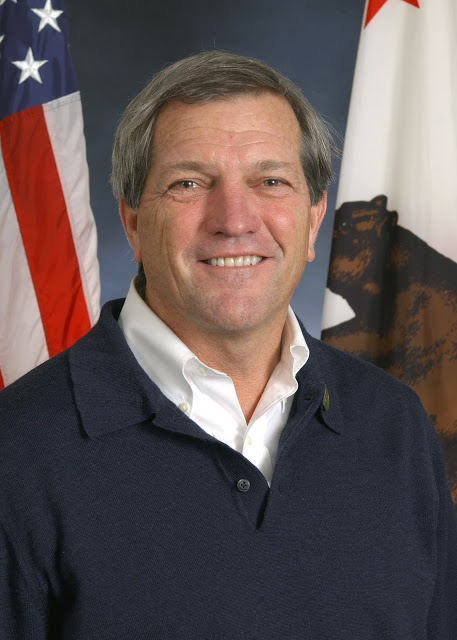
Mark DeSaulnier
DDemocratic
Ask Maddy
·
AI policy assistant
Ask Maddy about SB 1071
Scope: CA
Hi! I can help you understand SB 1071. What would you like to know?
Try one of these
i
Maddy answers using official bill text and legislative records. Always verify before sharing.
Sources cited inline