

Telecommunications universal service programs: California Advanced Services Fund.
Summary
The existing federal Telecommunications Act of 1996 establishes a program for the regulation of telecommunications to attain the goal of local competition, while implementing specific, predictable, and sufficient federal and state mechanisms to preserve and advance universal service, consistent with certain universal service principles. The universal service principles include the principle that consumers in all regions of the nation, including low-income consumers and those in rural, insular, and high-cost areas, should have access to telecommunications and information services, including interexchange services and advanced telecommunications and information services, that are reasonably comparable to those services provided in urban areas and that are available at rates that are reasonably comparable to rates charged for similar services in urban areas. Under existing law, the Public Utilities Commission has regulatory authority over public utilities, including telephone corporations, as defined. Existing law, until January 1, 2013, establishes the California Advanced Services Fund (CASF) in the State Treasury, and requires a surcharge, which is imposed by the commission and collected through retail telecommunications customers' bills, to be deposited in that fund. Existing law prohibits the commission from collecting more than $100,000,000 through the surcharge. Existing law requires the commission to develop, implement, and administer the CASF to provide for transfer payments to encourage deployment of high-quality advanced communications services to all Californians that will promote economic growth, job creation, and substantial social benefits of advanced information and communications technologies, as provided in a specified decision of the commission. Existing law requires the commission to conduct both a financial audit and a performance audit on the implementation and effectiveness of CASF and to report its findings to the Legislature by December 31, 2010. This bill would extend the operation of these provisions indefinitely, and would prohibit the commission from collecting more than $225,000,000 through the CASF surcharge pursuant to a specified schedule. The bill would establish 3 accounts within the fund and allocate a portion of the additional $125,000,000 that the bill authorizes to be collected, to be deposited into each of the accounts, for specified uses. The bill would require the commission to conduct an interim and final financial audit and interim and final performance audit on the implementation and effectiveness of CASF and to report to the Legislature its interim findings by April 1, 2011, and its final findings by April 1, 2017. The bill would require the commission to annually provide a report to the Legislature, until January 1, 2016, relating to the CASF and containing specified information. This bill would declare that it is to take effect immediately as an urgency statute.
Bill status
signed
all 5 stages cleared
Introduction
Feb 2010
Committee Review
Aug 2010
Senate Passage
May 2010
Assembly Passage
Aug 2010
Signed into Law
Sep 2010
Introduced Feb 12, 2010
Signed Sep 27, 2010
Floor votes · Senate May 3, 2010 · Assembly Aug 19, 2010
How they voted
32–0
Passed · 5 other
Total votes 37
May 3, 2010
D
Democratic25
84% Yea
R
Republican12
91% Yea
Vote distribution
All Yea
All Nay
Mixed
No data
Full legislative history
Actions timeline
Total actions
35
Key actions
10
Committee
5
Amendments
7
Sep 25, 2010
Signed into law
Approved by Governor.
legislature
Aug 25, 2010
Introduced
Senate concurs in Assembly amendments. (Ayes 32. Noes 1. Page 4888.) To enrollment.
upper
Aug 25, 2010
Introduced
Senate concurs in Assembly amendments. (Ayes 35. Noes 0. Page 4858.) To enrollment.
upper
Aug 19, 2010
Assembly · Passed
Assembly Vote: pass (53-14-2)
assembly
Aug 13, 2010
Lower · Passed
(Heard in committee August 12.)
lower
Aug 13, 2010
Lower · Passed
From committee: Do pass as amended. (Ayes 12. Noes 5.)
lower
Jun 30, 2010
Committee
Set, first hearing. Referred to APPR. suspense file.
lower
Jun 21, 2010
Committee
Read second time. Amended. Re-referred to Com. on APPR.
lower
Jun 17, 2010
Lower · Passed
(Heard in Committee on June 14.)
lower
Jun 17, 2010
Lower · Passed
From committee: Do pass as amended, but first amend, and re-refer to Com. on APPR. (Ayes 9. Noes 3.)
lower
May 3, 2010
Senate · Passed
Senate Vote: pass (32-0-5)
senate
Apr 26, 2010
Upper · Passed
From committee: Do pass as amended. (Ayes 9. Noes 0. Page 3334.)
upper
Apr 13, 2010
Upper · Passed
(April 13 amended version corrected April 21.)
upper
Apr 13, 2010
Committee
Read second time. Amended. Re-referred to Com. on APPR.
upper
Apr 12, 2010
Upper · Passed
From committee: Do pass as amended, but first amend, and re-refer to Com. on APPR. (Ayes 10. Noes 0. Page 3082.)
upper
Feb 12, 2010
Introduced
Introduced. Read first time. To Com. on RLS. for assignment. To print.
upper
1 primary · 0 co-sponsors
Sponsors
Role
Legislator
Party
State
District
P
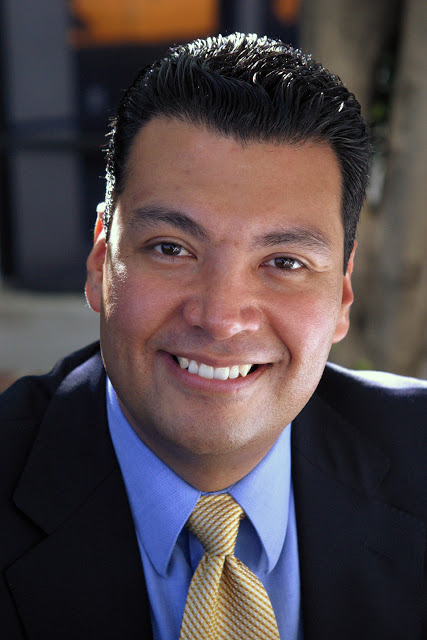
Alex Padilla
DDemocratic
Ask Maddy
·
AI policy assistant
Ask Maddy about SB 1040
Scope: CA
Hi! I can help you understand SB 1040. What would you like to know?
Try one of these
i
Maddy answers using official bill text and legislative records. Always verify before sharing.
Sources cited inline